![[등록] 2026-09-01 15:48:31](/support/_updata/banner2/tl181982910_6749.png)


SEOUL, South Korea – The South Korean mobile market is currently experiencing an unprecedented "subsidy war," with major telecommunication companies fiercely competing for subscribers. This intense competition is offering consumers lucrative deals, including free flagship smartphones and even cash incentives, signaling a significant shift in a market previously constrained by regulations.
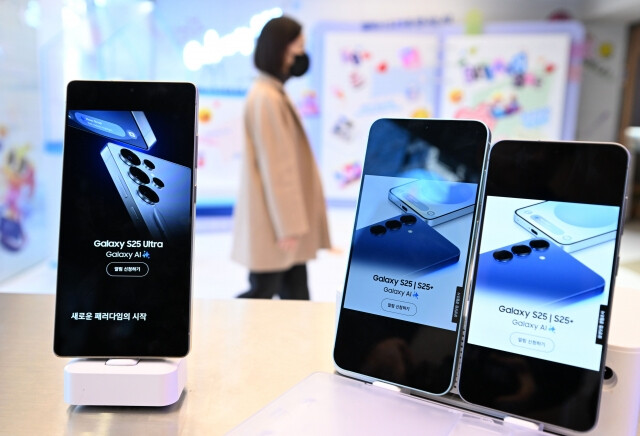
On June 22nd, at a popular "mobile mecca" in Sindorim Techno Mart, Seoul, the Samsung Galaxy S25, released in February of this year with a factory price of KRW 1,155,000 (256GB model), was being offered for free. While official public subsidies from telecom companies typically range from KRW 400,000 to KRW 500,000, a dramatic increase in sales commissions from mobile carriers has fueled aggressive customer acquisition strategies among dealerships and retailers.
The resurgence of this subsidy war is particularly notable given several converging factors. SK Telecom, which had suspended new customer acquisitions for two months due to a SIM card hacking incident, is anticipated to resume its sales activities soon. This return to the market by a major player is expected to further intensify competition. Furthermore, the impending launch of Samsung's new foldable phones next month (expected to be the Galaxy Z Fold 7 and Flip 7) and the planned repeal of the Mobile Device Distribution Improvement Act (MDDIA) on July 22nd are set to remove previous limitations on additional subsidies, creating a perfect storm for a heated market.
Retailers are not only offering the latest smartphones for free but are also providing "cash back" to customers who switch to KT or LG Uplus. One sales representative explained that with KT, customers could get a new phone for free by maintaining a KRW 100,000 monthly plan for six months and a value-added service for three months. For LG Uplus, customers could reportedly receive KRW 130,000 back by using a KRW 95,000 monthly plan for three months and a KRW 30,000 value-added service for three months.
Even SK Telecom, despite its temporary sales suspension, has reportedly offered substantial incentives. It is understood that SK Telecom paid sales commissions of up to KRW 880,000 per unit for the Galaxy S25 series to sales outlets not affected by the suspension, even for customers opting for low-cost plans around KRW 33,000. This is not only the largest commission offered since the Galaxy S25's launch but also represents the highest level of subsidy for a new mobile phone since the MDDIA was enacted in 2014.
Another sales employee emphasized the urgency of the situation, stating, "Mobile carriers are pouring out their last public subsidies. Samsung is scheduled to release the Galaxy Z Fold and Flip 7 next month, so this is the time when the subsidies for the Galaxy S25 series are set highest." Consequently, many consumers believe that now is the opportune moment to purchase a new mobile phone.
The impending repeal of the MDDIA on July 22nd, which has historically set a cap on additional subsidies to prevent excessive competition, is expected to further intensify the subsidy competition among telecom companies for customer acquisition. However, some analysts suggest that the competition may not escalate to the same level of cutthroat pricing wars seen in the past, primarily because the total number of mobile subscribers is already saturated. A telecommunications industry official commented, "If one of the three companies engages in aggressive marketing, the others will follow suit to defend their market share. However, with increasing investments in areas like artificial intelligence (AI), no one desires a truly destructive price war."
This renewed subsidy war highlights the dynamic and fiercely competitive nature of the South Korean mobile market. While it presents an attractive opportunity for consumers to acquire cutting-edge smartphones at significantly reduced costs, it also underscores the ongoing battle among telecom giants to secure and retain their subscriber base in an increasingly saturated and evolving technological landscape. The coming months, particularly with the launch of new devices and regulatory changes, will undoubtedly be a crucial period for both consumers and mobile carriers in South Korea.
[Copyright (c) Global Economic Times. All Rights Reserved.]