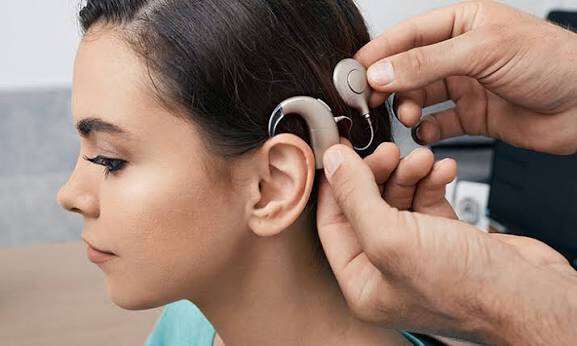
Advanced medical technologies are transforming the treatment of hearing loss. Gene therapies are helping patients recover their hearing, robotic systems are increasing the precision of cochlear implant surgeries, and newly developed cochlear implants allow patients to hear sound even while sleeping, eliminating the need for external devices. These groundbreaking research findings and treatment possibilities were recently shared in Seoul.
The Korean Otological Society hosted the 35th Politzer Society Meeting (Politzer 2026 Seoul) from November 4 to 7 at Seoul Dragon City, Yongsan-gu, Seoul. The event brought together approximately 630 experts from 41 countries. Named after the Austrian physician Adam Politzer, the Politzer Society Meeting is a world-renowned biennial academic conference on ear diseases, returning to South Korea for the first time in 21 years since 2005.
The slogan for this year's conference was "Dedicated to Healthy Ears for All Mankind." Koo Ja-won, President of the Organizing Committee (Professor of Otolaryngology at Seoul National University Bundang Hospital), stated, "The convergence of gene therapy, robotic surgery, and AI marks a critical turning point in the history of ear disease treatment."
Gene Therapy Restores Hearing: Long-Term Efficacy and Safety Verification Still Needed
The most prominent topic at the conference was gene therapy targeting the root causes of hereditary hearing loss. In particular, research has made significant strides in treating patients with mutations in the 'OTOF' gene, which is responsible for transmitting sound information to the auditory nerve, by delivering normal functional genes.
Dr. Zheng-Yi Chen of Harvard Medical School delivered a keynote lecture on December 7 regarding the development of gene-editing therapies for hereditary hearing loss. Dr. Jay Rubinstein of the University of Washington also presented clinical results concerning OTOF gene therapy.
Dr. Lawrence Lustig of Columbia University shared clinical outcomes from 24 pediatric patients treated with the OTOF gene therapy candidate 'DB-OTO.' Following treatment, patients showed notable hearing improvements, accompanied by positive changes in sound recognition and speech development. Additionally, a research team from Shanghai Jiao Tong University in China presented findings showing restored hearing in eight patients using a novel gene delivery technique.
However, experts noted that gene therapy is not a universal solution for all forms of hearing loss. While over 150 genes are linked to hearing loss, therapeutic efficacy in humans has been proven for only a fraction of them. Some patients may still require hearing aids post-treatment, and the long-term effectiveness and safety of these therapies require further validation.
Robotic Surgery Minimizes Ear Damage, While Sleep-Friendly Implants Emerge
Cochlear implant technology is also advancing rapidly. Cochlear implants are devices that stimulate the auditory nerve by placing electrodes inside the cochlea to help patients perceive sound. Modern surgical approaches focus on minimizing structural damage inside the ear and preserving residual hearing.
The conference showcased technology utilizing robots to insert electrodes at a slow and steady pace. Organizing Committee President Koo Ja-won explained, "The goal is to gently insert the electrode to minimize trauma to the delicate structures inside the cochlea." While related research is underway in South Korea, it has not yet been widely commercialized.
Another major highlight was the 'totally implantable cochlear implant,' which requires no external hardware. Unlike conventional implants, all components—including the microphone, sound processor, and battery—are embedded inside the body. This allows patients to hear sound continuously, even while sleeping or exercising. Nevertheless, improving sound quality and battery lifespan remains a key challenge for future development.
Gene Therapy and Cochlear Implants Work in Synergy; Auditory Brainstem Implants Draw Attention
Experts emphasized that gene therapy is not intended to immediately replace traditional hearing aids or cochlear implants. Because some patients still need hearing aids after gene treatment, and others achieve sufficient results from standard cochlear implants alone, waiting for unproven gene therapies should not cause patients to delay cochlear implantation and miss critical windows for speech and language development.
Choi Byung-yoon, Public Relations Director of the Korean Otological Society (Otolaryngology, Seoul National University Bundang Hospital), noted, "Given that we already have effective tools like hearing aids and cochlear implants, the clinical criteria for gene therapy must be very strict. We need thorough validation to ensure long-term stability and a lack of adverse side effects."
For patients who cannot benefit from standard cochlear implants, Auditory Brainstem Implants (ABI) received focused attention. ABI is a surgical procedure that directly stimulates the brainstem to help patients with damaged or missing auditory nerves perceive sound. A research team from Shanghai Jiao Tong University emphasized the importance of early surgical intervention based on treatment outcomes from 136 children with congenital hearing loss.
Expanding the 'Right to Hear': Addressing Elderly Populations Locked Out of Basic Care
Amid rapid technological breakthroughs, experts also stressed the urgent need to improve accessibility to existing treatments. According to data from the Korean Otological Society, the prevalence of moderate-to-severe hearing loss reaches 26.3% among individuals in their 70s and 52.8% among those in their 80s. In contrast, hearing aid adoption rates rose only marginally from roughly 2.1% in 2012 to 4.7% in 2022.
In response, the society is pursuing a pilot project to expand government support for hearing aids to include elderly individuals with mild-to-moderate hearing loss who are not formally registered as having a hearing disability. Over the long term, the society plans to advocate for the enactment of a 'Hearing Health Act' to systematically manage hearing screening, treatment, and rehabilitation.
Dr. Park Si-nae, President of the Korean Otological Society (Otolaryngology, Seoul St. Mary's Hospital), remarked, "We are noticing a more receptive response from the National Assembly compared to the past. Several lawmakers have shown a proactive attitude toward advancing this pilot project." The society hopes that a small-scale pilot program can be launched within the next one to two years.
[Copyright (c) Global Economic Times. All Rights Reserved.]