![[등록] 2026-09-01 15:48:31](/support/_updata/banner2/tl181982910_6749.png)


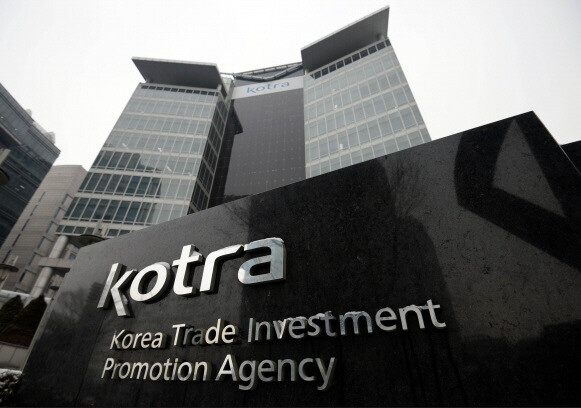
SEOUL, South Korea – The Korea Trade-Investment Promotion Agency (KOTRA) is gearing up for a major push in national export and economic security, announcing a record-breaking budget for the upcoming year. On December 7, KOTRA revealed that its 2026 budget will exceed 900 billion KRW ($692 million USD*) for the first time since its establishment, signaling an aggressive strategy to cultivate next-generation exporters and diversify markets, particularly focusing on the Global South.
Funding Surge Targets Export Pillars
KOTRA’s finalized 2026 budget stands at 915.2 billion KRW (approx. $705 million USD), marking a significant increase of 11% compared to the total 2025 budget (including supplementary budgets) and a massive 37.3% rise from the initial 2025 core budget. This substantial financial backing reflects the South Korean government's strong commitment to stabilizing and expanding exports amid persistent global economic volatility and intensifying geopolitical risks.
The cornerstone of this new financial commitment is the newly launched 'K-Export Star 500' initiative, for which KOTRA has allocated 40.2 billion KRW (approx. $31 million USD).
The core objective of K-Export Star 500 is to nurture 'central enterprises' that achieve annual exports of over $10 million USD. The agency aims to cultivate more than 500 such companies over the next five years, primarily focusing on promising industries such as Artificial Intelligence (AI), robotics, bio-health, and future mobility. This initiative is designed to strengthen the domestic export base by supporting businesses with high growth potential, offering tailored assistance in global marketing, technology commercialization, and entry into specialized supply chains.
Diversification and Global South Outreach
Beyond nurturing core exporters, a major strategic focus is market diversification, moving beyond traditional markets like the US, EU, and China. KOTRA has secured 42 billion KRW (approx. $32.3 million USD) for this endeavor, which includes a determined push into the Global South—a grouping of nations often comprising developing and newly industrialized countries in Africa, Latin America, and South Asia.
New Trade Centers: To physically anchor this strategy, KOTRA will establish new overseas trade centers (KOTRA Trade-Investment Promotion Centers, or KOTRA Overseas Offices) in strategic regions, including Costa Rica and Kyrgyzstan. Costa Rica provides a gateway to Central American and Caribbean markets, while Kyrgyzstan serves as a key access point to the burgeoning Central Asian economies.
Targeted Missions: Funding will be heavily directed toward organizing overseas exhibitions and trade delegations specifically focused on the Global South. These missions aim to forge new business relationships and reduce the nation's reliance on a few concentrated export destinations, thereby enhancing economic resilience.
Leveraging Hallyu and Supply Chain Security
In recognition of the global phenomenon of the Korean Wave (Hallyu), KOTRA has allocated 49.2 billion KRW (approx. $37.9 million USD) to the 'Overseas Expansion Support for Distribution Companies' project. This aims to facilitate the joint entry of domestic distribution networks and Hallyu-related consumer goods (K-Beauty, K-Food, K-Pop merchandise) into foreign markets. By integrating Korean retail channels with consumer interest driven by Hallyu, KOTRA seeks to create a sustainable platform for small and medium-sized enterprises (SMEs) to globalize their brands.
Furthermore, though the article highlights export support, a significant portion of the budget increase is understood to be related to reinforcing economic security. This includes supporting companies in securing stable access to critical raw materials and re-aligning supply chains in response to global geopolitical fragmentation. KOTRA, through its extensive global network, is tasked with preemptively responding to trade protectionism and providing essential market intelligence to ensure the stability of the Korean economy. The agency’s expanded role as an "economic security command center" is now fully reflected in its record budget, setting the stage for a critical year of national economic maneuvering.
[Copyright (c) Global Economic Times. All Rights Reserved.]