![[등록] 2026-09-01 15:48:31](/support/_updata/banner2/tl181982910_6749.png)


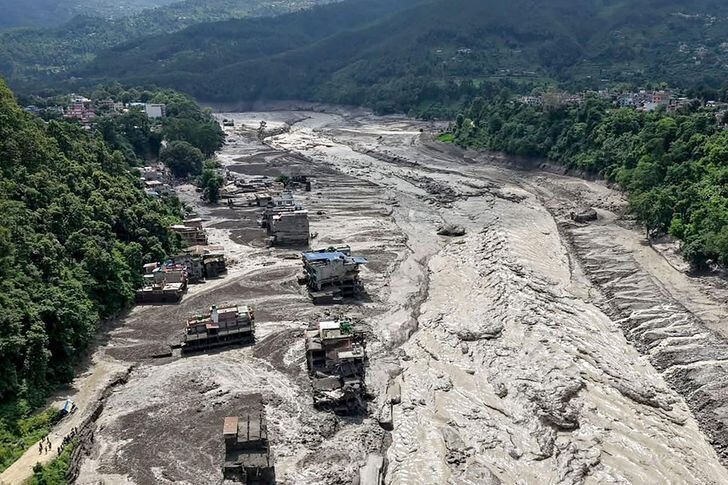
A devastating flash flood triggered by a catastrophic glacier collapse and ice avalanche near the China-Nepal border has plunged central Nepal into a profound crisis. According to recent updates from the National Disaster Risk Reduction and Management Authority (NDRRMA) and international news agencies, the death toll has climbed significantly, while the number of missing individuals has surged past 826 in Nepal alone, with combined missing figures exceeding 1,300 across the region including Tibet.
The disaster struck without warning on Wednesday morning, sending a massive wall of water, mud, and debris crashing down the Bhote Koshi and Trishuli river systems. Hard-hit areas include the mountainous districts of Rasuwa and Nuwakot, where critical transport links, bridges, markets, and multiple hydropower projects were heavily damaged or completely swept away. Eyewitnesses and local officials described the torrent as a sudden, terrifying wave that transformed local valleys into muddy devastation zones within minutes, leaving communities cut off from rescue operations.
Among the missing are hundreds of foreign nationals, pilgrims, and local residents. Authorities report that the missing foreign citizens originate from approximately 28 countries, including India, the United States, the United Kingdom, Australia, Malaysia, Ukraine, and Canada. Many of the missing tourists and pilgrims were traveling toward sacred regional sites or working at local infrastructure and hydropower construction camps.
Governments worldwide, along with international bodies, are expressing deep concern and mobilizing support. Emergency response teams, security forces, and military personnel have been deployed to conduct search and rescue operations, while survivors face severe shortages of shelter, clean water, and medical supplies. Meanwhile, scientists and disaster management officials continue to monitor high-altitude glacial regions, warning that unstable terrain and the threat of secondary flash floods or mudslides remain critical concerns for downstream communities.
[Copyright (c) Global Economic Times. All Rights Reserved.]