• 2026.06.05 (Fri)
  • All articles
  • LOGIN
  • JOIN
Global Economic Times
fashionrunwayshow2026
  • Synthesis
  • World
  • Business
  • Industry
  • ICT
  • Distribution Economy
  • Well+Being
  • Travel
  • Eco-News
  • Education
  • Korean Wave News
  • Opinion
  • Arts&Culture
  • Sports
  • People & Life
    • International Student Report
    • With Ambassador
  • Column
    • Cho Kijo Column
    • Cherry Garden Story
    • Ko Yong-chul Column
    • Kim Seul-Ong Column
    • Lee Yeon-sil Column
  • Photo News
  • New Book Guide
MENU
 
Home > Distribution Economy

Out-of-Town Investors Shaken as Seoul Targets Non-Resident Homeowners

Global Economic Times Reporter / Updated : 2026-03-04 18:56:37
  • -
  • +
  • Print


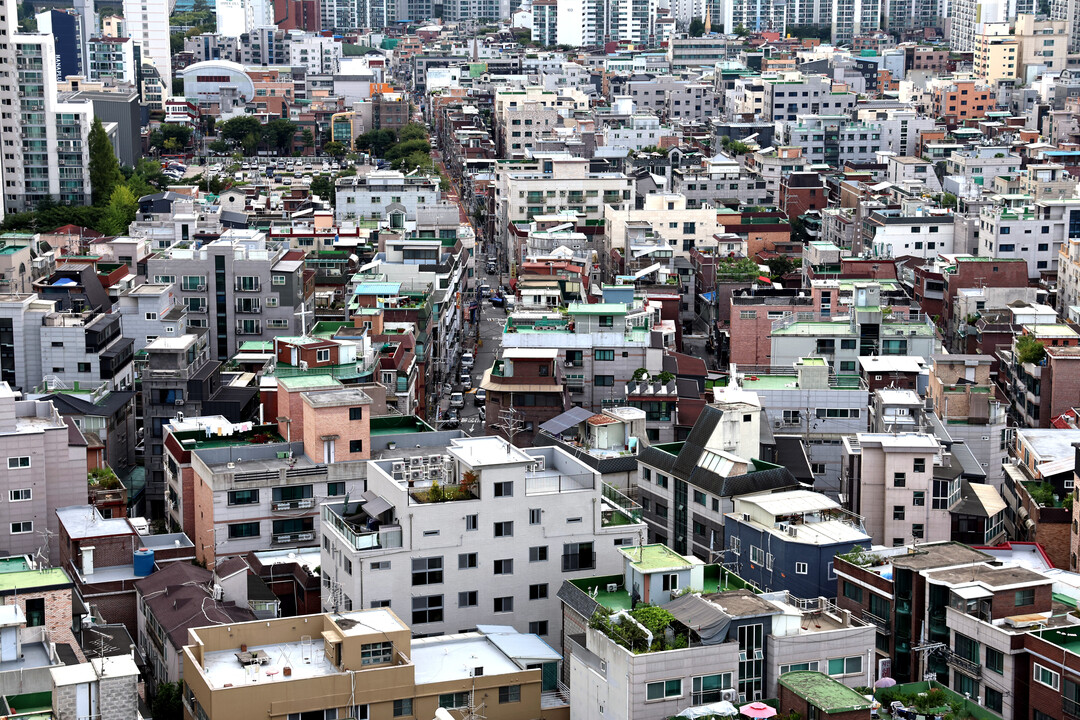
SEOUL — The long-preferred strategy of "remote investing"—where provincial residents purchase high-value apartments in Seoul’s affluent districts while living elsewhere—is facing its greatest challenge yet. As the South Korean government signals a legislative crackdown on non-resident single-homeowners, the market is bracing for a potential wave of "panic selling" from out-of-town landlords.

The End of the "Safe Haven" Strategy?
For years, investors from outside the capital have funneled capital into the "Gangnam Trio" (Gangnam, Seocho, and Songpa), accounting for roughly 20% of all Seoul apartment transactions. These buyers often viewed these properties as "trophy assets" that guaranteed capital appreciation, even if they never intended to occupy them.

However, recent comments from the administration suggest the honeymoon period is over. On March 1st, President Lee Jae-myung emphasized on social media that holding high-value homes for investment rather than residence should incur "burdens proportionate to their side effects." He vowed to design fiscal and financial regulations that make it more profitable to sell non-residential investment properties than to hold them.

The Regulatory Triple Threat
The proposed "Calculation of Burden" involves three primary levers:

Capital Gains Tax Reform: Currently, homeowners can receive up to an 80% "Special Deduction for Long-term Holding" if they hold and reside in a property for 10 years. Authorities are now considering decoupling "holding" from "residing," potentially eliminating tax breaks for those who do not live in the property.
Expansion of Deemed Rental Income: Historically, the "deemed rental income" tax—which treats security deposits as taxable interest income—targeted owners of three or more homes. This year, it was expanded to owners of two homes (with a combined value exceeding 1.2 billion KRW). Now, the government is looking to include non-resident single-homeowners in this bracket.
Credit Tightening: Financial authorities are reviewing plans to restrict mortgage and credit lines for buyers who do not intend to occupy the home, effectively cutting off the leverage that fuels speculative buying.

Market Outlook
The dilemma is particularly acute for "multi-homeowners" in the provinces. Even if they sell their regional properties to become "single-homeowners" in Seoul, the non-resident status of their Seoul asset will still trigger high tax liabilities.

"If deemed rental income taxes are expanded to high-value single homes, the tax burden will surge regardless of standard holding tax hikes," noted Park Won-gap, Senior Real Estate Specialist at KB Kookmin Bank. "We may see a significant increase in inventory as out-of-town owners realize the 'Seoul Dream' is becoming too expensive to maintain."

As the government prepares to finalize these "speculation-proof" policies, the Seoul real estate market remains in a tense "wait-and-see" mode, with the dominance of the remote investor finally showing signs of fatigue.

[Copyright (c) Global Economic Times. All Rights Reserved.]

  • #Korea
  • #Seoul
  • #Hallyu
  • #USA
  • #Economy
  • #Busoness
  • #Global
  • #World
  • #Consumer
  • #Export
  • #Import
  • #Hanguel
  • #Travel
  • #Tour
  • #Food
Global Economic Times Reporter
Reporter Page

Popular articles

  • Hyundai Motor Group Bets $700 Million on Mexico Amid Trade Policy Volatility

  • IRANIAN STATE MEDIA DEMONSTRATES ASSAULT RIFLES ON-AIR, TARGETING UAE FLAG AMID RISING REGIONAL PRESSURES

  • Tesla Model Y Becomes First to Pass Grueling New U.S. Autonomous Safety Tests

I like it
Share
  • Facebook
  • X
  • Kakaotalk
  • LINE
  • BAND
  • NAVER
  • https://globaleconomictimes.kr/article/1065606929446543 Copy URL copied.
Comments >

Comments 0

Weekly Hot Issue

  • Samsung Electronics Super-Enterprise Union Loses Majority Status Amid Backlash Over Bonus Disparities
  • Samsung to Embed Vital Signs and Heart Health Scores in Upcoming Galaxy Watch9 Lineup
  • Apple Honors Digital Excellence: 12 Exceptional Apps and Games Celebrated at the 2026 Design Awards
  • Nexon Revamps Signature Youth Coding Competition into AI-Driven 'Nexon Young Programmers Cup'
  • Tech University of Korea Gathers 200 Game and AI Researchers to Discuss Industrial Expansion
  • Major Korean Telcos Trim Online-Exclusive Plans by Up to 50% Amid Shift to Unified Mobile Tariffs

Most Viewed

1
From a moment of collective sacrifice to a moment of collective democracy: The Timing of the Election in Ethiopia and Korea
2
U.S. Holds Off on Immediate Comprehensive Semiconductor Tariffs, but Pressure Mounts for Samsung and SK Hynix to Accelerate Domestic Investments
3
[Interview] "Halal is Not a Religious Regulation, but a 'Trust Infrastructure'… Creating a Premium 'K-Halal' Centered on Data and Platforms"
4
‘600 Million Won Bonus’ at Samsung Electronics Triggers Deep Sense of Relative Deprivation Among Korean Workers
5
Bomb Attack Targets Moving Train in Pakistan: At Least 29 Dead, 102 Injured
광고문의
임시1
임시3
임시2

Hot Issue

Murata Unveils Next-Gen Resin Electrode MLCC for Automotive Applications

Samsung to Embed Vital Signs and Heart Health Scores in Upcoming Galaxy Watch9 Lineup

L&F Plus Secures KRW 220 Billion from National Growth Fund to Anchor South Korea’s First Mass LFP Cathode Production

Samsung Electronics Super-Enterprise Union Loses Majority Status Amid Backlash Over Bonus Disparities

Fashion Runway Show 2026

Global Economic Times
korocamia@naver.com
CEO : LEE YEON-SIL
Publisher : KO YONG-CHUL
Registration number : Seoul, A55681
Registration Date : 2024-10-24
Youth Protection Manager: KO YONG-CHUL
Singapore Headquarters
5A Woodlands Road #11-34 The Tennery. S'677728
Korean Branch
Phone : +82(0)10 4724 5264
#304, 6 Nonhyeon-ro 111-gil, Gangnam-gu, Seoul
Copyright © Global Economic Times All Rights Reserved
  • 에이펙2025
  • APEC2025가이드북TV
  • 반달곰 프로젝트
Search
Category
  • All articles
  • Synthesis
  • World
  • Business
  • Industry
  • ICT
  • Distribution Economy
  • Well+Being
  • Travel
  • Eco-News
  • Education
  • Korean Wave News
  • Opinion
  • Arts&Culture
  • Sports
  • People & Life 
    • 전체
    • International Student Report
    • With Ambassador
  • Column 
    • 전체
    • Cho Kijo Column
    • Cherry Garden Story
    • Ko Yong-chul Column
    • Kim Seul-Ong Column
    • Lee Yeon-sil Column
  • Photo News
  • New Book Guide
  • Multicultural News
  • Jobs & Workers