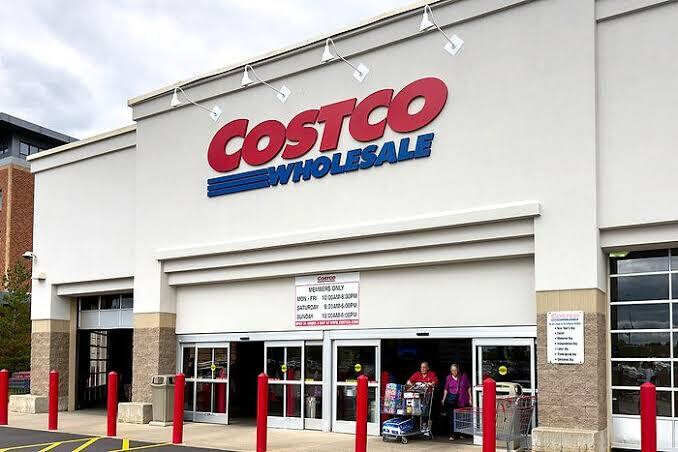
Costco, which requires an annual membership fee of 43,000 won, and Traders, which can be used without a membership, are clashing in the warehouse discount store market. While Costco has surpassed 8 trillion won in domestic sales and expanded its market dominance, Traders also recorded its highest-ever quarterly performance in the third quarter of this year. Attention is focused on whether Traders, leveraging its price competitiveness amid high inflation, can shake Costco's stronghold.
According to Emart's earnings data on the 21st, Traders' gross sales for the third quarter of this year reached 1.1668 trillion won, an increase of 16.6% compared to the same period last year. This is the largest quarterly figure on record. Operating profit also surged by 40.5% to 55.2 billion won, setting a new all-time high. It maintained its growth trend without opening new stores, with same-store sales rising 13.3% and visitor numbers increasing by 8.0%. The gross sales growth rate expanded from 9.7% in Q1 and 10.3% in Q2 to 16.6% in Q3. Cumulative gross sales for Q1 to Q3 reached 3.2196 trillion won, up 12.3% from the same period last year.
As high inflation led more consumers to prioritize price competitiveness, bulk-sized items and private-brand (PB) products drove the earnings growth. Third-quarter sales of Traders' private brand, "T Standard," jumped 16.6%, while sales at its in-store food court, "T Cafe," also rose 15.5%.
Costco is also continuing its growth trajectory. According to an audit report disclosed by Costco Korea on the 17th, sales for fiscal year 2026 (September 2025 – August 2026) reached 8.0179 trillion won, up 9.5% from the previous year. It surpassed 8 trillion won in annual sales for the first time since entering the South Korean market. Operating profit grew 23.7% to 314.9 billion won. Other operating revenue, which includes membership fees, also rose 12.9% to 187.1 billion won.
Costco's sales volume is more than double Traders' total annual sales of 3.852 trillion won last year. However, direct comparison under identical conditions is difficult because Costco's fiscal year ends in August, whereas Traders' figures are compiled based on Emart's annual gross sales.
Securing loyal customers with annual fees vs. Traders promoting free entry
The biggest difference between the two companies lies in their membership models. Costco secures loyal customers and generates stable profits based on a paid membership system. It lowers product prices through bulk purchasing and rapid inventory turnover while separately securing membership fee revenue. According to Costco's U.S. headquarters, the global membership renewal rate reached 89.8% at the end of fiscal year 2026, with the U.S. and Canada hitting 92.3%.
On May 1 last year, Costco raised its domestic annual membership fees for the first time in about eight years. The annual fee for Gold Star (standard individual membership) rose 11.7% from 38,500 won to 43,000 won, while Executive membership increased 7.5% from 80,000 won to 86,000 won. Reflecting the fee hike, other operating revenue for this fiscal year totaled 187.1 billion won, accounting for 59.4% of operating profit. Executive members receive a 2% reward on purchases, up to an annual limit of 1.2 million won.
In contrast, Traders maintains an open-door structure where anyone can use the store without a membership. From a consumer's perspective, the advantage is being able to buy needed goods without the burden of an annual fee. However, to encourage repeat visits, Traders introduced a paid membership called "Traders Club" in October 2022.
Individual memberships are divided into Standard (30,000 won annual fee) and Premium (70,000 won). They offer 1% and 2% cashback in "TR Cash" on eligible purchases, with annual accumulation limits of 500,000 won and 1 million won, respectively. Accumulated TR Cash can be used like cash after membership renewal. This strategy aims to induce return visits by offering extra benefits to members. However, as expanding rewards and discounts increases related costs, the company must also manage its profitability.
Showdown in Uijeongbu… Store accessibility and pricing likely to decide the winner
Traders is also accelerating store expansion and product competitiveness. It plans to open its Uijeongbu branch in Sangok-dong, Uijeongbu-si, Gyeonggi Province, on December 10. This will increase its store count from the current 24 to 25. A new store is also under construction in Wonju, Gangwon Province. Costco currently operates 20 stores in South Korea and aims to open its Iksan branch in North Jeolla Province in November 2027.
The Uijeongbu branch is drawing particular attention because it is entering an area where Costco is already operating. Costco, which requires an annual fee to shop, and Traders, which opens its doors to non-members, will directly compete in the same commercial district.
The outcome is expected to hinge on accessibility, pricing, and product competitiveness. Since many warehouse club shoppers drive to buy in bulk, travel distance and parking convenience heavily influence store choice. Additionally, whether consumers can buy items they previously purchased at Costco for similar or lower prices at Traders, as well as each store's differentiated products, will be crucial.
[Copyright (c) Global Economic Times. All Rights Reserved.]