![[등록] 2026-09-01 15:48:31](/support/_updata/banner2/tl181982910_6749.png)


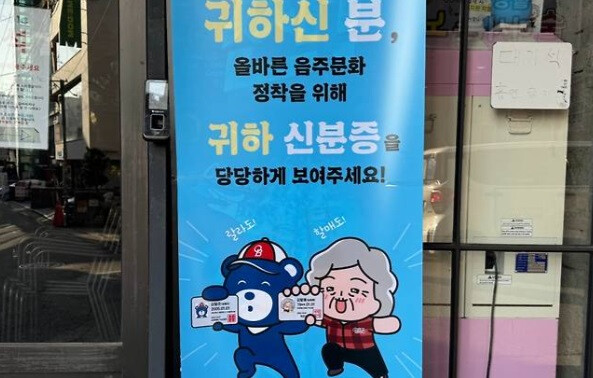
Seoul, South Korea – As South Korean high school students gear up for the highly anticipated College Scholastic Ability Test (CSAT), a parallel, illegal market is thriving: the sale of fake identification cards. With the exam just a day away, vendors are advertising their services on social media platforms, offering to create and deliver counterfeit IDs within hours.
One such vendor, identified only as "A," has been actively promoting their services on the messaging app Telegram, promising "same-day production and delivery." A simply requires customers to provide their name, address, photo, and resident registration number to initiate the process. The entire service costs 150,000 won (approximately $112 USD), payable exclusively through online gift cards.
The completed fake IDs are then delivered via courier or express delivery. When asked about the risk of being detected by bar or club owners, the vendor confidently assured customers that the forged documents were indistinguishable from the real thing.
Fear and Frustration Among Business Owners
The surge in demand for fake IDs has left business owners, particularly those in the food and beverage industry, feeling increasingly anxious. With the CSAT often followed by a period of celebration among students, many bars and restaurants anticipate an influx of underage customers attempting to purchase alcohol using counterfeit IDs.
"I'm really worried about students coming to my bar on exam day and the following weekend," said Kwon, a bar owner in Anyang. "I've repeatedly reminded my staff to carefully check IDs, but there's only so much we can do."
Kim, who operates a bar in Seoul's Mapo district, shared a similar concern. "I know someone who got caught selling alcohol to a minor and is now facing a business suspension," he said. "Losing business for even a month is devastating. It takes a long time to recover, and my employees would lose their jobs."
Under South Korean food safety regulations, businesses caught serving alcohol to minors face penalties ranging from a week to two months of suspension, depending on the severity of the offense. To avoid punishment, business owners must be able to prove that they took reasonable measures to verify the customer's age, such as through CCTV footage.
The Rise of Mobile ID Forgeries
The growing popularity of mobile ID cards has added another layer of complexity to the issue. Lee, a bartender in Gwangjin district, recently encountered three high school students who attempted to use a forged mobile ID to gain entry to his establishment. "I touched the screen, and it turned out to be a recorded video," he said. "It's really stressful. If we make a mistake, the owner gets punished, and we lose our jobs."
Kim Ki-hong, the chairman of the Korea Internet PC Cafe Cooperative, expressed concern about the increasing sophistication of counterfeit mobile IDs. "It's becoming difficult for older business owners to detect fake mobile IDs, especially when students are determined to deceive them," he said. "Simply showing a phone screen on CCTV is not enough to protect business owners from penalties."
Calls for Shared Responsibility
Many business owners are calling for stricter penalties for minors who use fake IDs to purchase alcohol. Yoo Duk-hyun, chairman of the Seoul Small Business Owners Federation, emphasized the significant impact that even a short-term business suspension can have on small businesses. "It's unfair that business owners bear the full brunt of the consequences when minors use fake IDs," he said. "There should be a shared responsibility, and minors who use forged identification should face consequences as well."
The growing prevalence of fake IDs and the challenges faced by business owners highlight the need for a more comprehensive approach to addressing underage drinking in South Korea.
[Copyright (c) Global Economic Times. All Rights Reserved.]