A recent study by South Korea's Rural Development Administration (RDA) has provided new insights into the greenhouse gas emission characteristics of different dairy cattle breeds raised under domestic environmental conditions.
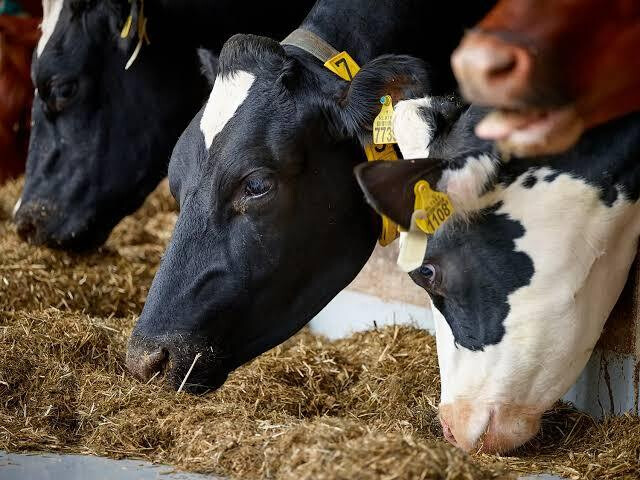
Researchers from the National Institute of Animal Science (NIAS) directly compared Jersey and Holstein cows—each group consisting of 10 animals—to measure feed intake, milk yield and composition, and enteric methane emissions.
Key Research Findings
Daily Methane Emissions: The Jersey cows emitted an average of 259g of methane per day, which is 27.4% less than the 356g recorded for the Holstein cows.
Feed Intake: Jersey cows consumed an average of 13.7kg of dry matter feed daily, compared to 18.9kg for Holsteins. This indicates that the lower individual methane output in Jerseys is closely linked to their lower feed consumption.
Milk Production and Quality:
Holsteins produced more milk, averaging 26.2kg per day, compared to 18.3kg for Jerseys.
However, Jersey milk had a higher nutritional content, with a butterfat content of 5.95% (vs. 4.69% in Holsteins) and a protein content of 3.64% (vs. 3.26% in Holsteins).
Methane Intensity (Emissions per kg of Milk): Crucially, when evaluating emissions relative to milk output, there was no statistically significant difference in methane produced per 1kg of milk between the two breeds.
Implications for Low-Carbon Livestock Policies
While looking solely at daily individual emissions might suggest that Jersey cows are more eco-friendly, factoring in milk productivity reveals that both breeds share a comparable emission efficiency per unit of milk produced.
Before this study, South Korea lacked concrete, localized empirical data on methane emissions from Jersey cattle, making precise breed-specific comparisons difficult. By securing these domestic measurements, the RDA has established a reliable baseline for greenhouse gas calculation.
Dr. Kim Sang-beom, Head of the Dairy Science Division at NIAS, noted that these findings provide critical domestic data on methane and production characteristics. The RDA plans to continuously secure data across various breeds and ages to refine greenhouse gas inventories and robustly support low-carbon dairy farming policies.
[Copyright (c) Global Economic Times. All Rights Reserved.]