• 2026.01.20 (Tue)
  • All articles
  • LOGIN
  • JOIN
Global Economic Times
APEC2025KOREA가이드북
  • Synthesis
  • World
  • Business
  • Industry
  • ICT
  • Distribution Economy
  • Well+Being
  • Travel
  • Eco-News
  • Education
  • Korean Wave News
  • Opinion
  • Arts&Culture
  • Sports
  • People & Life
  • Column
    • Cho Kijo Column
    • Lee Yeon-sil Column
    • Ko Yong-chul Column
    • Cherry Garden Story
  • Photo News
  • New Book Guide
MENU
 
Home > Industry

Last Year's Net Profit from Rice Farming Drops by Over 24% Compared to the Previous Year

Min Gyu Mi Reporter / Updated : 2025-03-28 18:16:58
  • -
  • +
  • Print

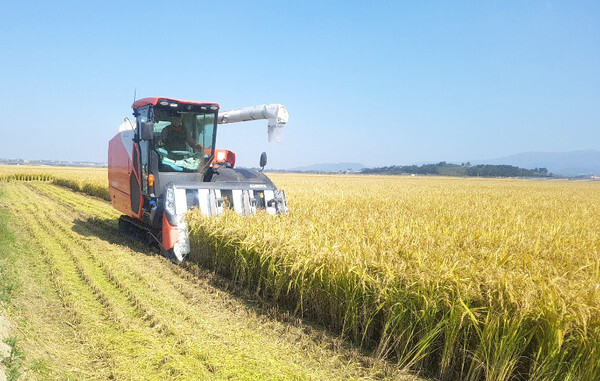
The net profit earned from rice farming last year decreased by over 24% compared to the previous year. This is attributed to increased production costs coupled with a decline in harvest yields due to abnormal weather conditions.

According to the '2024 Rice Production Cost Survey Results' released by Statistics Korea on the 28th, the net profit per 10a (1000㎡) last year was 271,000 won, a decrease of 87,000 won (24.3%) from the previous year. This marks the largest drop in two years since the 185,000 won (36.8%) decrease in 2022.

The net profit margin was 23.5%, a 5.5 percentage point decrease year-over-year. This is the lowest figure since 2016 (21.2%).

The sharp decline in profitability is due to falling farmgate rice prices and rising production costs. Farmgate rice prices fell by 8.9%, from 51,000 won per 20kg in 2023 to 46,000 won last year.

During the same period, the production cost of paddy rice per 10a increased by 7,000 won (0.8%) to 882,000 won. Direct production costs, which are expenses directly incurred in rice production, rose by 2.0% due to increases in contracted farming expenses and seedling costs (seed and seedling purchase costs). Indirect production costs decreased by 1.7% due to a fall in land service costs.

The production cost per 20kg of rice was 33,000 won, an increase of 845 won (2.6%). This is a result of the 1.7% decrease in rice production due to increased damage from pests and diseases caused by concentrated heavy rain and high temperatures during the grain-filling period, despite the rise in paddy rice production costs.

Imputed costs (self-labor costs, self-owned land service costs, and capital service costs) increased by 1.5% to 301,000 won per 10a. This increase is influenced by the rise in capital service costs due to higher interest rates.

[Copyright (c) Global Economic Times. All Rights Reserved.]

  • #globaleconomictimes
  • #글로벌이코노믹타임즈
  • #한국
  • #중기청
  • #재외동포청
  • #외교부
  • #micorea
  • #mykorea
  • #newsk
  • #nammidonganews
  • #singaporenewsk
Min Gyu Mi Reporter
Min Gyu Mi Reporter

Popular articles

  • World Gi-Seon Cup Kicks Off with $300,000 Grand Prize; Shin Jin-seo and Ding Hao to Clash

  • Cold Wave Hits Korea: Thermal Wear and Padded Jackets Fly Off the Shelves

  • Yongin Semiconductor Cluster Gains Momentum as Land Compensation Begins; Construction Slated for Late 2026

I like it
Share
  • Facebook
  • X
  • Kakaotalk
  • LINE
  • BAND
  • NAVER
  • https://globaleconomictimes.kr/article/1065604525018264 Copy URL copied.
Comments >

Comments 0

Weekly Hot Issue

  • “$3.20 for Coffee, 15 Cents for the Cup”: New Pricing Policy Leaves Café Owners Exhausted
  • “HBM Semiconductor Tech Stolen”: China Remains Top Destination for South Korea’s Leaked Technology
  • KOSPI Hits Historic 4,900 Mark After 12-Day Rally; Hyundai Motor Soars to 3rd in Market Cap
  • S. Korea Braces for Longest, Most Intense Cold Wave of the Season: Feels-like Temps to Plummet to -20°C
  • Trump Escalates Atlantic Tensions with ‘Greenland Tariffs’ Targeting European Allies
  • Wealthy Individuals Value Time Over Money: Insights into the "Rich Mindset"

Most Viewed

1
“The Answer Lies in the Field”... Incheon Superintendent Do Seong-hun Bets on ‘Educational Innovation’ for 2026
2
Territorial Plundering in the 21st Century: The Catastrophe Awaited by Trump’s ‘Order Through Force’
3
From 'Maduro Gray' to 'Hwang Hana Parka': Why Negative News Drives Fashion Consumption
4
Actress Goo Hye-sun Fast-tracks Master’s Degree at KAIST, Eyes Doctorate Next
5
South Korean Rebar Defies 50% Tariffs: A Strategic Pivot to the U.S. Amid Domestic Stagnation
광고문의
임시1
임시3
임시2

Hot Issue

KOSPI Hits Historic 4,900 Mark After 12-Day Rally; Hyundai Motor Soars to 3rd in Market Cap

“HBM Semiconductor Tech Stolen”: China Remains Top Destination for South Korea’s Leaked Technology

Hyundai’s ‘Atlas’ Shakes Up CES 2026: A Formidable Rival to Tesla’s Optimus

Long Queues in Sub-zero Temperatures: Hello Kitty Meets Jisoo as MZ Generation Flocks to Pop-up Store

Let’s recycle the old blankets in Jeju Island’s closet instead of incinerating them.

Global Economic Times
korocamia@naver.com
CEO : LEE YEON-SIL
Publisher : KO YONG-CHUL
Registration number : Seoul, A55681
Registration Date : 2024-10-24
Youth Protection Manager: KO YONG-CHUL
Singapore Headquarters
5A Woodlands Road #11-34 The Tennery. S'677728
Korean Branch
Phone : +82(0)10 4724 5264
#304, 6 Nonhyeon-ro 111-gil, Gangnam-gu, Seoul
Copyright © Global Economic Times All Rights Reserved
  • 에이펙2025
  • APEC2025가이드북TV
  • 독도는우리땅
Search
Category
  • All articles
  • Synthesis
  • World
  • Business
  • Industry
  • ICT
  • Distribution Economy
  • Well+Being
  • Travel
  • Eco-News
  • Education
  • Korean Wave News
  • Opinion
  • Arts&Culture
  • Sports
  • People & Life
  • Column 
    • 전체
    • Cho Kijo Column
    • Lee Yeon-sil Column
    • Ko Yong-chul Column
    • Cherry Garden Story
  • Photo News
  • New Book Guide
  • Multicultural News
  • Jobs & Workers