![[등록] 2026-09-01 15:48:31](/support/_updata/banner2/tl181982910_6749.png)


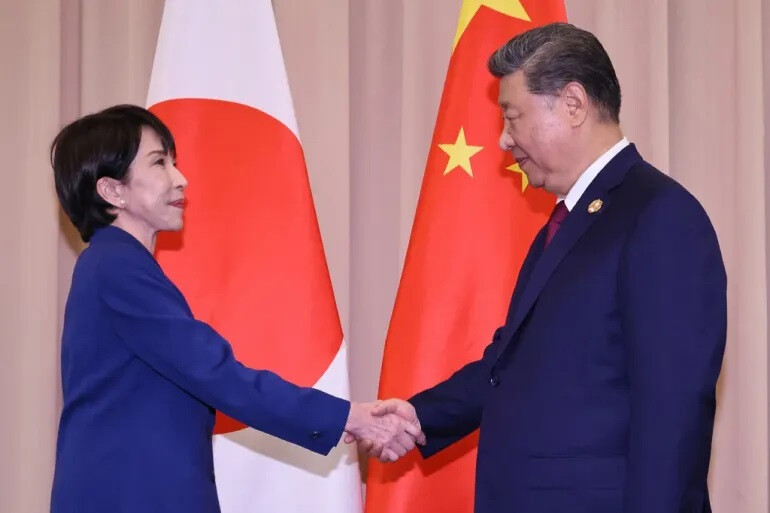
(C) Al Jazeera
The escalating conflict between China and Japan, initially triggered by Japanese Prime Minister Takaichi Sanae's statement hinting at intervention in the event of a Taiwan contingency, has transcended economic and cultural retaliation to reach a phase of direct military tension. This dangerous progression is raising serious concerns about its far-reaching consequences for the political and security landscape of Northeast Asia.
Beijing maintains that the withdrawal of Takaichi's remarks is the starting point for resolving the conflict, while Tokyo remains unyielding. This stalemate suggests a potential for an all-out confrontation between the two major powers, putting regional stability in severe jeopardy.
From Economic Sanctions to Military Coercion
The intensity of China’s response stems from its fundamental strategic conviction: "The Taiwan issue is a red line."
Immediately following Prime Minister Takaichi's statement—which explicitly linked Japan's security to a potential conflict across the Taiwan Strait—China launched multifaceted punitive measures. These included advisories against travel and study in Japan, the cancellation of Japanese film screenings and popular cultural performances, and a sweeping suspension of seafood imports from Japan. The severity of the backlash was underscored by an incident where a Japanese singer was physically removed from a performance stage in China.
Lin Jian, spokesperson for the Chinese Ministry of Foreign Affairs, reiterated Beijing's unwavering stance: "China's position is clear. We urge Japan to genuinely reflect, correct its mistakes, and withdraw the erroneous remarks made by Prime Minister Takaichi."
This diplomatic and economic pressure recently escalated into direct military friction.
On December 6, a Chinese J-15 fighter jet, launched from the aircraft carrier Liaoning, twice illuminated (targeted with radar) a radar of a Japanese Air Self-Defense Force F-15 fighter jet in international airspace near Okinawa.
Japan promptly summoned the Chinese Ambassador to Japan, Wu Jianghao, to lodge a strong protest, expressing "deep regret." China, however, countered by claiming the Japanese jet had first encroached upon its designated training area.
This exchange of military aggression and counter-accusations, occurring amid limited Sino-Japanese military communication channels, raises the alarming prospect that even a minor miscalculation could trigger an actual armed conflict.
The Taiwan Redline and Countering Japan’s Rightward Shift
Experts analyze China's actions not merely as retaliation but as a calculated strategic message intended to unequivocally define its red line regarding the Taiwan issue.
The primary goal is to compel a significant shift in Japan's stance on Taiwan, which China regards as its core interest.
China’s current strategy mirrors its robust military response following the visit of then-U.S. House Speaker Nancy Pelosi to Taiwan in 2022. On that occasion, the People’s Liberation Army (PLA) Eastern Theater Command mobilized forces for military drills that effectively simulated a blockade of Taiwan, firing ballistic missiles over the island's airspace.
Since then, in response to any statements by high-ranking Taiwanese officials or moves toward military cooperation with the U.S., China has normalized the practice of sending military aircraft and naval vessels across the median line of the Taiwan Strait and conducting large-scale Taiwan blockade exercises.
This strategy serves two key purposes: first, to erode Taiwan's resolve for independence; and second, to send a clear, coercive message to neighboring countries—specifically, "Intervention in the Taiwan issue equals severe retaliation."
Simultaneously, China aims to discourage the Taiwanese public from supporting the Democratic Progressive Party (DPP), which it views as hostile, by creating a persistent sense of security instability. Furthermore, Beijing seeks to contain Japan’s growing rightward shift in security policy and maintain the diplomatic upper hand on historical issues.
Beijing is also intensifying its global public opinion campaign to criticize Japan. Wang Yi, Director of the Office of the Central Commission for Foreign Affairs and Foreign Minister, recently met with French Foreign Minister Jean-Noël Barrot during French President Emmanuel Macron's state visit to China. Wang emphatically stated that China "will absolutely not allow Japan to use the Taiwan issue as an excuse to cause trouble and repeat historical mistakes," explicitly seeking international support for China's position.
Military Showdown: Escalation of Force and Risk of Accidental Conflict
The tension is mounting as the conflict remains unresolved and China intensifies its military displays of force.
The Japanese public broadcaster NHK reported that around December 6-7, the Chinese aircraft carrier Liaoning task force conducted exercises, launching its carrier-based aircraft approximately 100 times over two days while passing between the islands east of Okinawa.
Reuters separately reported on December 4 that China was conducting a major show of force across the Yellow Sea, East China Sea, South China Sea, and the Pacific, mobilizing up to 100 naval and coast guard vessels in the region.
Guo Ya-hui, spokesperson for Taiwan's Presidential Office, warned that the Chinese military's maneuvers "pose a threat and impact the entire Indo-Pacific."
Senior officials within Japan's Ministry of Defense have acknowledged that while de-escalating the Sino-Japanese conflict remains crucial, the current situation has ironically raised the risk of an unintended collision.
The Korean Peninsula is not exempt from these complex dynamics.
Should China's military power expand further into the waters surrounding the peninsula, it is expected to have complex repercussions for ROK-US-Japan security cooperation. Diplomatic analysts in Seoul worry that as the Sino-Japanese conflict deepens, South Korea's strategic space will narrow, increasing the burden of managing Seoul-Beijing relations.
Japan's Jiji Press noted that given the possibility of China engaging in further security provocations, the situation remains unpredictable, expressing concern over the potential for an accidental conflict due to the lack of active communication between Tokyo and Beijing.
The Nikkei Shimbun commented that "Sino-Japanese antagonism is becoming increasingly acute," and that the radar illumination incident "will be a factor that accelerates the conflict between China and Japan's defense authorities."
Given that the conservative Prime Minister Takaichi appears unwilling to retract her statement, and China has committed to an all-encompassing response, neither side finds it easy to back down.
As the U.S.-China strategic rivalry momentarily takes a breather, the Sino-Japanese conflict has emerged as the new fault line of tension in Northeast Asia. This development forces regional states, including South Korea, to confront the formidable challenge of recalibrating their balance diplomacy and security strategies.
The Regional Ramifications: Narrowing Strategic Space for South Korea
The increasingly hostile dynamic between Beijing and Tokyo presents a significant dilemma for South Korea. Seoul's foreign policy has historically sought to balance its deep economic ties with China against its vital security alliance with the United States and strategic partnership with Japan.
I. The Security Trilemma
South Korea's security is anchored by the ROK-US alliance, which has been recently strengthened through initiatives like the Washington Declaration and enhanced trilateral cooperation with Japan. However, the intensification of Sino-Japanese military tension places Seoul in an acutely difficult position:
Pressure from the US-Japan Axis: Washington and Tokyo will inevitably seek a stronger, more unified trilateral front to counter China’s growing military assertiveness in the East China Sea and near the Korean Peninsula. This places pressure on South Korea to align more closely with its allies, potentially antagonizing China.
China’s Economic Leverage: China remains South Korea’s largest trading partner. Any perceived alignment against Beijing in a military dispute could trigger retaliatory economic measures, similar to those experienced during the THAAD deployment controversy.
The North Korean Variable: North Korea’s strategic alignment with China and Russia adds another layer of complexity. If the Sino-Japanese conflict further polarizes Northeast Asia, it could embolden Pyongyang, relying on the support of its major patrons to intensify its own military provocations.
II. The Erosion of Diplomacy
South Korea's ability to act as a mediator or to maintain a degree of strategic ambiguity is being severely eroded. The military escalation between China and Japan transforms the regional security architecture into a zero-sum game, forcing nations to take sides.
Policy Challenges for Seoul:
Maintaining Dialogue: Seoul must continue efforts to maintain robust communication channels with Beijing to prevent misunderstandings and manage bilateral issues, even as its security cooperation with Tokyo deepens.
Defining Red Lines: South Korea needs to clearly articulate its own national interests regarding the Taiwan Strait and surrounding maritime security without unnecessarily provoking either of the primary belligerents.
Strengthening Self-Defense: The situation underscores the necessity of enhancing South Korea’s independent defense capabilities to reduce reliance on immediate external support in the event of regional instability. This includes bolstering maritime surveillance and rapid response systems.
Historical Context and Future Trajectories
The current friction is deeply rooted in the unresolved historical animosities and competing territorial claims, particularly over the Senkaku/Diaoyu Islands.
The Role of Nationalism
In both countries, the conflict is highly susceptible to the influence of nationalism. In Japan, Prime Minister Takaichi's statement aligns with a broader right-wing movement advocating for a more robust defense posture and an amendment of the pacifist constitution, viewing China's military expansion as an existential threat. In China, the response is fueled by historical grievances against Japanese militarism and the absolute imperative of national unification symbolized by the Taiwan issue.
Escalation Pathways
Should the current situation remain unchecked, the conflict could evolve along several dangerous pathways:
Normalization of Military Proximity: The repeated use of military assets (e.g., naval patrols, aircraft sorties) in close proximity by both sides risks normalizing aggressive behavior, increasing the probability of an accidental skirmish.
Weaponization of Economic Policy: The use of economic sanctions and cultural boycotts by China could become a permanent feature of its foreign policy, destabilizing regional supply chains and economic partnerships.
Deepening Bloc Formation: The conflict will inevitably accelerate the division of Northeast Asia into two rigid security blocs: the U.S.-led alliance structure versus the Sino-Russian axis. This reduces the diplomatic maneuvering room for all nations in the region.
The trajectory of the Sino-Japanese relationship, marked by the recent military friction, serves as a stark warning. The instability of this central relationship poses the most immediate and acute threat to peace in the Asia-Pacific, demanding immediate, concerted diplomatic effort from all regional and global powers to de-escalate the tension before miscalculation leads to an irreversible conflict.
[Copyright (c) Global Economic Times. All Rights Reserved.]