• 2026.11.25 (Wed)
  • All articles
  • LOGIN
  • JOIN
Global Economic Times
한인동포뉴스(상단)
  • Synthesis
  • World
  • Business
  • Industry
  • ICT
  • Distribution Economy
  • Well+Being
    • Pet Life
    • Halal Horizon
  • Travel
  • Eco-News
  • Education
  • Korean Wave News
  • Opinion
  • Arts&Culture
  • Sports
  • People & Life
    • International Student Report
    • With Ambassador
  • Column
    • Cho Kijo Column
    • Cherry Garden Story
    • Ko Yong-chul Column
    • Kim Bong-seon's Photo Column
    • Kim Seul-Ong Column
    • Lee Yeon-sil Column
    • Professor Lee Soo-young’s Life Essays
  • Photo News
  • New Book Guide
MENU
 
Home > World

Washington Targets South Korea in Section 301 Overcapacity Probe, Citing Trade Surpluses and Petrochemical Glut

Global Economic Times Reporter / Updated : 2026-11-25 17:54:23
  • -
  • +
  • Print


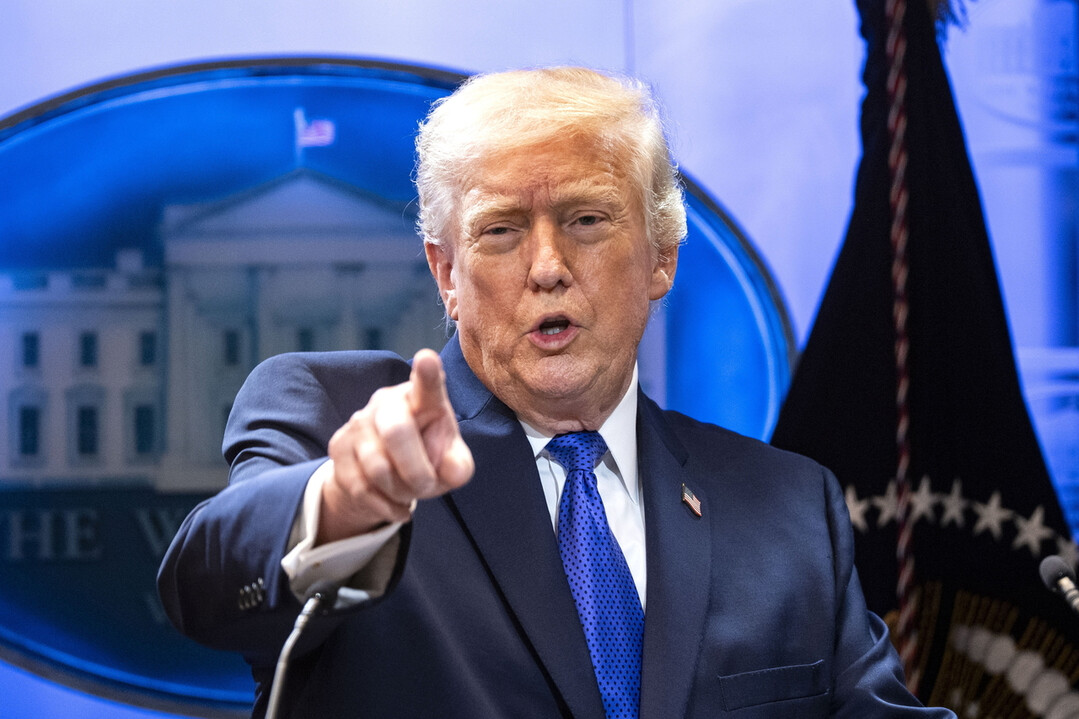
SEOUL / WASHINGTON — The Trump administration is preparing to unveil a fresh wave of tariffs aimed at curbing global manufacturing overcapacity, placing South Korea’s export-driven economy and persistent trade surpluses squarely in Washington’s crosshairs.

The Office of the United States Trade Representative (USTR) is expected to release the findings of its Section 301 investigation into 16 major trading partners—including South Korea, China, Japan, and the European Union—alongside new tariff measures. Launched in March, the probe serves as a strategic legal workaround to re-establish broad import duties after the U.S. Supreme Court struck down the administration’s previous global reciprocal tariffs under the International Emergency Economic Powers Act (IEEPA) in February.

Defining "Unfair" Overcapacity

At the core of the USTR’s argument is the distinction between natural market scale and state-backed distortion. Washington contends that foreign governments use non-market mechanisms—ranging from direct subsidies and financial repression to wage suppression and lax environmental standards—to keep idle industrial facilities running. When domestic demand cannot absorb this output, countries export the surplus, depressing global prices and hollowing out U.S. manufacturing.

While the USTR pointed to China’s record $1.2 trillion goods trade surplus as prime evidence of systemic oversupply, South Korea was flagged for its rapidly expanding trade balances and industrial structure.

Why Seoul is in the Crosshairs

In its investigation notice, the USTR highlighted South Korea’s sharp swing from a $10 billion global goods deficit in 2023 to a $52 billion surplus in 2024, fueled by strong shipments of automobiles, electronics, steel, machinery, and ships. Its bilateral goods surplus with the U.S. similarly surged to $56 billion in 2024 and held near $49 billion last year.

Washington also seized upon Seoul’s own domestic policy discussions, noting that the South Korean government has publicly recognized the need to downsize excess production capacity in its petrochemical sector.

However, trade analysts note a critical evidentiary gap: the USTR has yet to present concrete data proving that Korean government subsidies directly inflated capacity in core export pillars like autos, semiconductors, or shipbuilding. As a result, identifying which specific policies constitute actionable harm to U.S. firms is expected to dominate upcoming bilateral negotiations.

Tariff Caps and Looming Digital Friction

Despite the aggressive posture, immediate tariff shocks for South Korea may be buffered by prior diplomacy. Following a similar Section 301 track on forced labor that resulted in 10% to 12.5% duties on 60 nations in July, combined tariffs for overcapacity and forced labor are widely expected to stay within the 15% ceiling previously agreed upon by Seoul and Washington—though the U.S. may retain snapback clauses if capacity issues worsen.

A broader threat, however, is emerging in the digital sphere. Washington is reportedly weighing a separate Section 301 review of digital trade barriers in South Korea, Australia, and the EU. U.S. officials and lawmakers have repeatedly criticized Seoul’s regulatory push—including proposed online platform antitrust rules, network usage fee mandates, cloud security certifications (CSAP), and content moderation laws—as unfair non-tariff barriers targeting American tech giants. If Washington links digital disputes to goods tariffs, South Korea’s hard-won 15% tariff shield could face renewed jeopardy.

[Copyright (c) Global Economic Times. All Rights Reserved.]
  • #Cherry Garden
  • #HalalFood
  • #Halal
  • #Petlife
  • #Cats
  • #Dogs
  • #Halalhorizone
  • #Hormuz Impasse
  • #Joseon
  • #globaleconomicti
Global Economic Times Reporter
Reporter Page

Popular articles

  • World Citizens are Flying Directly to Busan... The Era of 4 Million Foreigners is Just Around the Corner

  • Restoring Hearing with Genes, Cochlear Implants with Robots: Where Does Hearing Loss Treatment Stand Today?

  • Cold Wave and Autumn Chill Hit Korea on "Ipdong": Gangwon -6°C, Seoul Real-Feel -4°C… Rain and Snow Expected in Central Regions on Sunday

I like it
Share
  • Facebook
  • X
  • Kakaotalk
  • LINE
  • BAND
  • NAVER
  • https://globaleconomictimes.kr/article/1065603202159324 Copy URL copied.
Comments >

Comments 0

Weekly Hot Issue

  • South Korea’s 33GW Offshore Wind Ambition Stalls at 2.8% Execution Rate Amid Supply Chain Bottlenecks
  • Gunpo City Wins ‘Administration Grand Prize’ for Climate Crisis Response via Solar Soundproof Panels and Resource Circulation
  • Automotive Greenhouse Gas Regulations Expand Beyond Tailpipe Emissions to Entire Supply Chain
  • Swapping One Daily Meal for Plant-Based Food Could Cut Australia’s Emissions More Than Grounding Domestic Flights
  • Shortage of Anticancer Drugs for Blood Cancers Such as Leukemia and Lymphoma
  • South Korea Eases Consent Rules to Speed Up Life-Saving Emergency Care

Most Viewed

1
South Korean Burger Chain Lotteria Expands Singapore Footprint with Halal Certification and New Teriyaki Lineup
2
AI Semiconductor Stocks Plummet: Philadelphia Index Drops 5.28% and Micron Plunges 7.59% Amid Executive Shakeup and Export Restrictions
3
"Stay Out, Get Paid, or Have Police Stay With You": Shenzhen Imposes Strict Security Ahead of APEC Summit
4
Taiwan Bans Short-Selling Below Previous Close Starting Nov. 23, Raises Margin Ratio to 150%
5
AI Music Tops Melon Chart: Is the K-Pop Production Formula Changing?
체리가든 스토리
nutri huevos
로타리
동포저널

Hot Issue

Trump Faces Rare Bipartisan Backlash Over Jensen Huang’s Return to Nvidia

Beyond the Click: How Agentic AI is Quietly Dismantling the App Economy

Jeju Tests Solar-Powered Greenhouses to Grow Carbon-Free ‘RE100’ Tangerines

Fashion Runway Show 2026

Let’s recycle the old blankets in Jeju Island’s closet instead of incinerating them.

Global Economic Times
korocamia@naver.com
CEO : LEE YEON-SIL
Publisher & Editor : KO YONG-CHUL
Registration number : Seoul, A55681
Registration Date : 2024-10-24
Youth Protection Manager: KO YONG-CHUL
Singapore Headquarters
5A Woodlands Road #11-34 The Tennery. S'677728
Korean Branch
Phone : +82(0)10 4724 5264
#304, 6 Nonhyeon-ro 111-gil, Gangnam-gu, Seoul
Copyright © Global Economic Times All Rights Reserved
  • News K
  • 반달곰 프로젝트
  • 광고문의
Search
Category
  • All articles
  • Synthesis
  • World
  • Business
  • Industry
  • ICT
  • Distribution Economy
  • Well+Being 
    • 전체
    • Pet Life
    • Halal Horizon
  • Travel
  • Eco-News
  • Education
  • Korean Wave News
  • Opinion
  • Arts&Culture
  • Sports
  • People & Life 
    • 전체
    • International Student Report
    • With Ambassador
  • Column 
    • 전체
    • Cho Kijo Column
    • Cherry Garden Story
    • Ko Yong-chul Column
    • Kim Bong-seon's Photo Column
    • Kim Seul-Ong Column
    • Lee Yeon-sil Column
    • Professor Lee Soo-young’s Life Essays
  • Photo News
  • New Book Guide
  • Overseas Koreans
  • Multicultural News