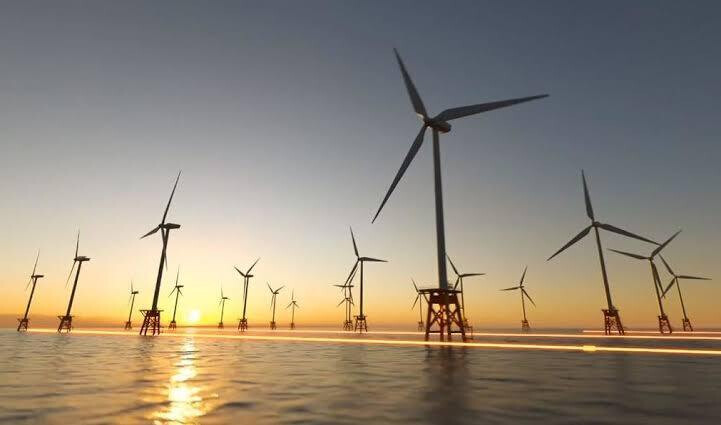
SEOUL — South Korea’s offshore wind sector is grappling with a stark disconnect between its massive development pipeline and actual on-the-water progress, prompting urgent calls to overhaul the nation's industrial strategy from hardware manufacturing to full-scale project execution.
According to a new policy brief released Wednesday by the Seoul-based think tank Energy & Space, roughly 33 gigawatts (GW) of offshore wind capacity across 100 projects is currently in the country's development pipeline. Yet only 2.8 percent of that capacity—comprising 762 megawatts (MW) under construction and 157MW in commercial operation—has moved past the planning and permitting phases.
The findings underscore a structural vulnerability in Asia’s fourth-largest economy: while decades of policy support have bolstered domestic component manufacturing, South Korea lacks the integrated engineering, logistics, and financial frameworks required to turn paper permits into operational wind farms.
Engineering Dependence and Infrastructure Deficits
A major bottleneck lies in high-value engineering. Although South Korean firms produce roughly 90 percent of localized hardware such as steel substructures, domestic self-reliance in core engineering hovers around 50 percent. Flagship domestic developments, including the Anma and Taean offshore wind projects, rely heavily on European consultancies like Denmark’s Ramboll and COWI for front-end engineering design (FEED) and detailed foundation work. Because early engineering dictates equipment specifications, this reliance limits the leverage of Korean manufacturers within their own domestic market.
Physical infrastructure poses an equally severe constraint. Industry estimates indicate that installing 4GW of offshore wind annually requires at least four to five specialized Wind Turbine Installation Vessels (WTIVs), alongside expansive marshaling ports. Currently, heavy-duty port facilities are overwhelmingly concentrated at Mokpo New Port, and domestic turbine technology—largely centered on 8MW to 10MW models—trails the 14MW to 15MW standards dominating global waters.
Even if all currently scheduled port expansions finish on time, South Korea’s maximum installation capacity by 2030 will cap out at 7.8GW, falling far short of the government’s official 14.3GW deployment target.
Rethinking Policy Ahead of Market Reforms
With the Special Act on Offshore Wind Power taking effect and the government preparing to replace the volatile Renewable Portfolio Standard (RPS) with a two-way Contract for Difference (CfD) bidding system next year, analysts warn that policy misalignment could further stall investments.
"Simply expanding auction volumes or streamlining permits will not guarantee steel in the water," the report noted, warning that an overemphasis on lowest-price bidding could undercut domestic supply chain growth.
To bridge the execution gap, Energy & Space outlined a five-pillar roadmap dubbed "Supply Chain 2.0":
Engineering Localization: Utilizing government-designated wind zones to commission domestic firms for early-stage FEED work.
Coordinated Logistics: Establishing a centralized, multi-year port and vessel deployment plan along the West Coast rather than leaving developers to compete for scarce infrastructure.
Non-Price Auction Incentives: Adopting mechanisms similar to the UK’s Clean Industry Bonus to reward developers that invest in local manufacturing and workforce training.
Financial De-risking: Expanding state-backed loan guarantees, tax credits, and export financing to lower capital costs, alongside public-private risk-sharing for floating wind demonstrations.
Public Utility Reform: Leveraging the ongoing merger of state-owned power generation companies (GENCOs) to create a well-capitalized public entity capable of leading end-to-end project development, contingent on easing strict feasibility and management evaluation rules.
As South Korea transitions into a new regulatory era for clean energy, industry observers emphasize that the true measure of success will not be the gigawatts registered on paper, but the domestic industrial value captured from seabed to grid.
[Copyright (c) Global Economic Times. All Rights Reserved.]