• 2026.01.19 (Mon)
  • All articles
  • LOGIN
  • JOIN
Global Economic Times
APEC2025KOREA가이드북
  • Synthesis
  • World
  • Business
  • Industry
  • ICT
  • Distribution Economy
  • Well+Being
  • Travel
  • Eco-News
  • Education
  • Korean Wave News
  • Opinion
  • Arts&Culture
  • Sports
  • People & Life
  • Column
    • Cho Kijo Column
    • Lee Yeon-sil Column
    • Ko Yong-chul Column
    • Cherry Garden Story
  • Photo News
  • New Book Guide
MENU
 
Home > Business

“$3.20 for Coffee, 15 Cents for the Cup”: New Pricing Policy Leaves Café Owners Exhausted

Desk / Updated : 2026-01-19 17:47:32
  • -
  • +
  • Print


(C) Live and Let's Fly


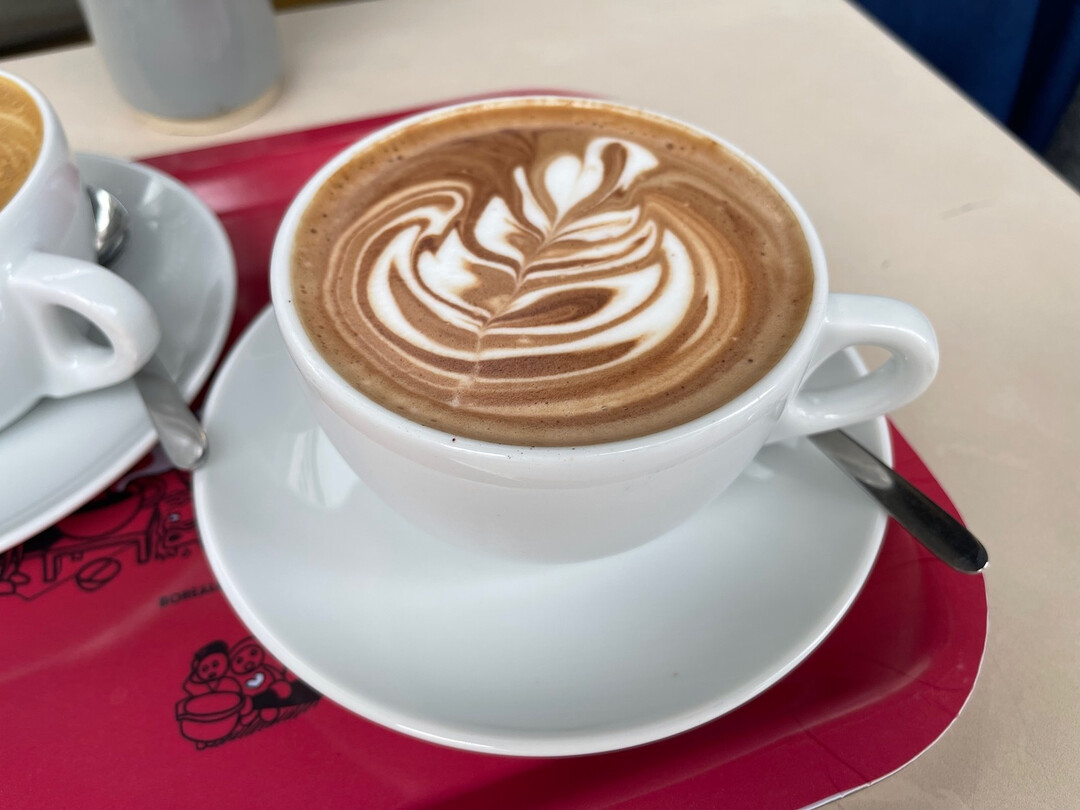
SEOUL — “A Cafe Latte is 4,300 won, and there is a separate 200 won charge for the cup.”

Small business owners running cafes are expressing deep frustration over the government's proposed "Separate Cup Pricing System" (also known as the Cup Price Labeling System). While the government intends to increase transparency regarding the environmental costs of disposable items, business owners fear immediate consumer backlash and a heavy administrative burden.

Transparency vs. Reality
The Ministry of Climate, Environment, and Energy (MCEE) announced the policy as a key initiative for 2026 during a presidential briefing last December. The system requires cafes to split their menu prices into two categories: the "content price" (the beverage itself) and the "cup price."

An official from the MCEE stated on Monday, “We have visited major cafe locations and listened to industry feedback. We are currently working with the Ministry of SMEs and Startups to design the specific regulatory framework.” Although legislative changes are required—meaning full implementation may take time—the industry is already on high alert.

The Burden on Small Business Owners
The primary concern for café owners is the friction it creates with customers. "Even if the total price hasn't changed, I will have to explain to every single customer why we are charging for the cup separately," said 'A', a private cafe owner in Seoul. "Once again, it feels like small business owners are the ones suffering to implement the government's environmental policies."

Critics also point out the impracticality of uniform labeling. Since cup sizes, the amount of ice, and the types of cups (take-out vs. in-store) vary significantly by shop, a flat separation of prices could mislead consumers. "It is unrealistic to label a drink filled mostly with ice and a drink filled with liquid as having the same 'content price,'" an industry insider noted. "This policy shows a lack of understanding of how cafes actually operate."

Financial and Operational Hurdles
Beyond customer service, the logistical costs are daunting. Implementing the system requires:

- Replacing physical menus.
- Updating Kiosk and POS (Point of Sale) software.
- Modifying price listings on delivery apps.

For independent owners already struggling with high bean prices, rising labor costs, and rent, these additional expenses are a significant blow. In the case of franchises, there are concerns that the costs of system upgrades at headquarters will eventually be passed down to the individual franchisees.

Equity Issues: Why Only Cafes?
A major point of contention is the equity gap between cafes and convenience stores. Convenience stores sell massive quantities of disposable cups through ice coffees and fountain drinks, yet they currently face no such price labeling requirements.

Addressing this, the MCEE admitted the challenge: "Convenience stores have a structure that makes transitioning to multi-use cups difficult. We are focusing on cafes first because they can immediately reduce waste through tumbler use, but we are discussing supplementary measures to address fairness and cost burdens."

As the government moves forward, the industry warns that this "environmental regulation" may ironically trigger a wave of price hikes across the coffee sector to cover the new administrative overhead.

[Copyright (c) Global Economic Times. All Rights Reserved.]

  • #Globaleconomictimes
  • #Korea
  • #Seoul
  • #Samsung
  • #LG
  • #Bitcoin
  • #Meta
  • #Business
  • #Economic
  • #The Woori Bank
  • #Elon Musk
  • #C
Desk
Desk

Popular articles

  • KFTC Fines Korean Air and Asiana KRW 6.46 Billion for Capacity Reduction Violations

  • Euisun Chung’s ‘Innovative Leadership’ Proven by String of Guinness World Records

  • "2026 is the Year of K-Stock Revival": Ultra-High-Net-Worth Individuals Bet on 'K.O.R.E.A.'

I like it
Share
  • Facebook
  • X
  • Kakaotalk
  • LINE
  • BAND
  • NAVER
  • https://globaleconomictimes.kr/article/1065602714889620 Copy URL copied.
Comments >

Comments 0

Weekly Hot Issue

  • “HBM Semiconductor Tech Stolen”: China Remains Top Destination for South Korea’s Leaked Technology
  • KOSPI Hits Historic 4,900 Mark After 12-Day Rally; Hyundai Motor Soars to 3rd in Market Cap
  • S. Korea Braces for Longest, Most Intense Cold Wave of the Season: Feels-like Temps to Plummet to -20°C
  • Trump Escalates Atlantic Tensions with ‘Greenland Tariffs’ Targeting European Allies
  • Wealthy Individuals Value Time Over Money: Insights into the "Rich Mindset"
  • 11-Year-Old Boy Charged with Fatally Shooting Father Over Seized Video Game Console

Most Viewed

1
Jumunjin Sunrise Festival Leaps Forward After 26 Years… Successfully Concludes with 6,000 Attendees
2
Samyang Foods Set to Hit 3 Trillion Won Revenue in 2026 Amid Global ‘Buldak’ Frenzy
3
Hyundai Motor Challenges World's First 'Solid-State Battery Vehicle'
4
“MacBook for $700?” Apple Expected to Launch Low-Cost MacBook in the First Half of This Year
5
KFTC Reviews Four Allegations Against Coupang: Potential Shake-up of E-commerce Monopoly
광고문의
임시1
임시3
임시2

Hot Issue

KOSPI Hits Historic 4,900 Mark After 12-Day Rally; Hyundai Motor Soars to 3rd in Market Cap

“HBM Semiconductor Tech Stolen”: China Remains Top Destination for South Korea’s Leaked Technology

Hyundai’s ‘Atlas’ Shakes Up CES 2026: A Formidable Rival to Tesla’s Optimus

Long Queues in Sub-zero Temperatures: Hello Kitty Meets Jisoo as MZ Generation Flocks to Pop-up Store

Let’s recycle the old blankets in Jeju Island’s closet instead of incinerating them.

Global Economic Times
korocamia@naver.com
CEO : LEE YEON-SIL
Publisher : KO YONG-CHUL
Registration number : Seoul, A55681
Registration Date : 2024-10-24
Youth Protection Manager: KO YONG-CHUL
Singapore Headquarters
5A Woodlands Road #11-34 The Tennery. S'677728
Korean Branch
Phone : +82(0)10 4724 5264
#304, 6 Nonhyeon-ro 111-gil, Gangnam-gu, Seoul
Copyright © Global Economic Times All Rights Reserved
  • 에이펙2025
  • APEC2025가이드북TV
  • 독도는우리땅
Search
Category
  • All articles
  • Synthesis
  • World
  • Business
  • Industry
  • ICT
  • Distribution Economy
  • Well+Being
  • Travel
  • Eco-News
  • Education
  • Korean Wave News
  • Opinion
  • Arts&Culture
  • Sports
  • People & Life
  • Column 
    • 전체
    • Cho Kijo Column
    • Lee Yeon-sil Column
    • Ko Yong-chul Column
    • Cherry Garden Story
  • Photo News
  • New Book Guide
  • Multicultural News
  • Jobs & Workers