• 2025.12.05 (Fri)
  • All articles
  • LOGIN
  • JOIN
Global Economic Times
APEC2025KOREA가이드북
  • Synthesis
  • World
  • Business
  • Industry
  • ICT
  • Distribution Economy
  • Well+Being
  • Travel
  • Eco-News
  • Education
  • Korean Wave News
  • Opinion
  • Arts&Culture
  • Sports
  • People & Life
  • Column
    • Cho Kijo Column
    • Lee Yeon-sil Column
    • Ko Yong-chul Column
    • Cherry Garden Story
  • Photo News
  • New Book Guide
MENU
 
Home > Synthesis

Uruguay Deep Sea: 30 Potential New Species Discovered! 'Uruguay Sub200' Expedition Results Revealed

Global Economic Times Reporter / Updated : 2025-10-08 17:42:52
  • -
  • +
  • Print
Exploration Down to 4,100m Deep Confirms Extensive Coral Reef Colonies and Numerous Unrecorded Species... Contributing to the Strengthening of Marine Science Sovereignty


MONTEVIDEO— The veil over the deep South Atlantic has been lifted, marking a monumental milestone for Uruguayan marine science. The 'Uruguay Sub200' Expedition, supported by the Schmidt Ocean Institute, successfully concluded its 28-day exploration on September 19th, revealing the secrets of a striking deep-sea ecosystem to the world, including over 30 potential new species.

A Deep-Sea Biodiversity Hotspot Exceeding Expectations 

A multinational research team comprising scientists from the University of the Republic (Udelar) and 36 scientists from five countries embarked on the research vessel 'Falkor Too' to explore the deep waters of the Uruguayan continental shelf. The expedition utilized the Remotely Operated Vehicle (ROV) 'SuBastian' to collect samples at 23 sites and survey over 60 kilometers of the seabed, exploring depths from 200m down to a maximum of 4,100m. This exploration, the 100th for the Schmidt Ocean Institute, is praised for elevating Uruguay's marine science capabilities.

The exploration team expressed great surprise at the abundance and quality of life encountered. Alvar Carranza, a researcher at Udelar and one of the expedition leaders, shared his impression: "The richness and excellence of the life we found surprised everyone."

Massive Colony of Cold-Water Corals, a Vulnerable Species, Discovered 

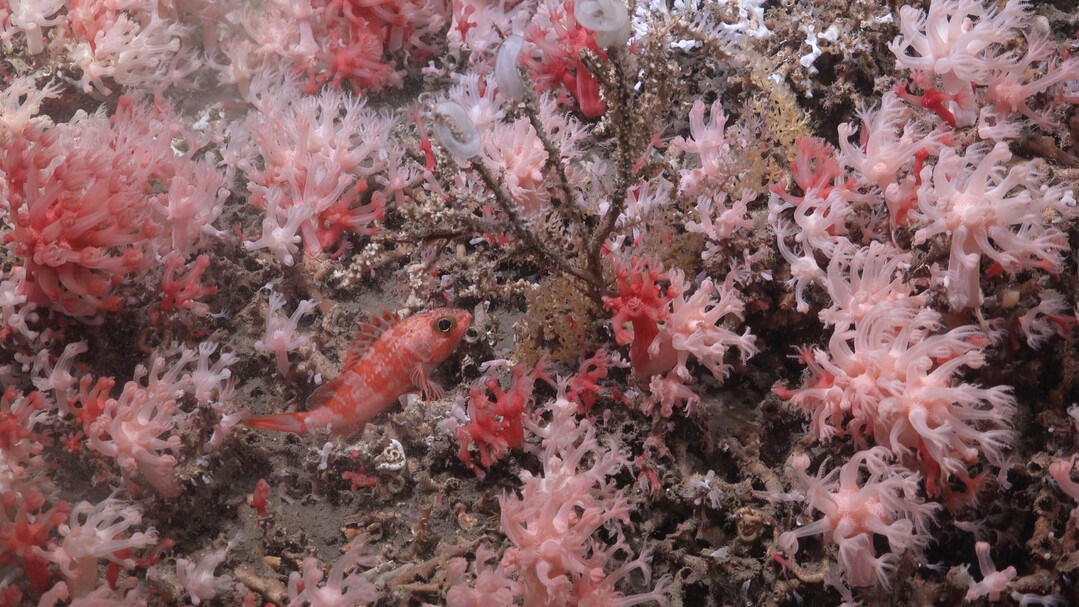
One of the most notable discoveries of the expedition was the confirmation of healthy, extensive, and highly biodiverse deep-sea coral reef colonies off the Uruguayan coast. Specifically, the ROV SuBastian discovered colonies of cold-water stony corals, classified as vulnerable to extinction.

One of the largest coral mounds is located at a depth of 300m, spanning an area of 1.3 square kilometers. These coral peaks reached heights of up to 40m, forming gigantic seafloor structures. This scale and complexity far exceeded the expectations of researcher Carranza, who had first detected signs of coral in underwater maps in 2010. Unlike common corals that require sunlight, deep-sea corals lack symbiotic algae and do not possess bioluminescence, yet they form a critical ecosystem serving as a habitat for countless marine organisms.

A Repository of Over 30 Potential New and Unrecorded Species 

Beyond the coral reefs, the deep waters of Uruguay were confirmed as a repository for over 30 potential new species. These include sponges, snails, crustaceans, as well as iconic deep-sea creatures such as the dumbo octopus and the glass squid. Additionally, hundreds of specimens were recorded for the first time in Uruguayan waters, positioning Uruguay as a new center for deep-sea marine biodiversity.

The exploration process, including 25 dives and 194 hours of footage, was live-streamed on YouTube, garnering significant public interest with the first broadcast alone receiving 400,000 views. Researcher Dr. Leticia Burone emphasized the value of public communication, stating, "Discovering marine life changes our perception of the world."

The expedition underscores the importance of scientific investment in protecting vulnerable deep-sea ecosystems and enhancing regional capacity amid the global crises of climate change and biodiversity loss. Given the high level of governmental interest, including a visit to the exploration vessel by Uruguayan President Yamandú Orsi before its departure, these achievements are expected to provide a crucial scientific foundation for strengthening Uruguay's marine sovereignty and establishing its marine conservation policies.

[Copyright (c) Global Economic Times. All Rights Reserved.]

  • #globaleconomictimes
  • #micorea
  • #mykorea
  • #Lifeplaza
  • #nammidonganews
  • #singaporenewsk
  • #Samsung
  • #Daewoo
  • #Hyosung
  • #A
Global Economic Times Reporter
Reporter Page

Popular articles

  • Protina, Samsung Bioepis, and Seoul National University Forge AI Partnership to Accelerate Antibody Drug Development

  • Kim Jin-myung’s Novel on King Sejong to Feature Citizens' Voices

  • Tech Titans Continue Cuts: IBM Announces Layoffs Amid Software Pivot

I like it
Share
  • Facebook
  • X
  • Kakaotalk
  • LINE
  • BAND
  • NAVER
  • https://globaleconomictimes.kr/article/1065602519429219 Copy URL copied.
Comments >

Comments 0

Weekly Hot Issue

  • China Stages Massive Naval Show of Force Amid Heightened Tensions with Japan
  • EU Launches Antitrust Probe into Meta Over WhatsApp AI Chatbot Restrictions
  • Sports Icons Converge as 2026 FIFA World Cup Draw Approaches
  • Russia Vows 'Strongest Response' as EU Proposes Using Frozen Assets for Ukraine Loan
  • US Layoffs Surge: Over 1.17 Million Job Cuts Announced in First 11 Months of 2025
  • EU Weighs 'Buy European' Rule: Up to 70% Local Content for Key Products

Most Viewed

1
Korean War Ally, Reborn as an 'Economic Alliance' Across 70 Years: Chuncheon's 'Path of Reciprocity,' a Strategic
2
A Garden Where the City's Rhythm Stops: Dongdaemun's 'Cherry Garden', Cooking Consideration and Diversity
3
The Sudden Halt of Ayumi Hamasaki's Shanghai Concert: Unpacking the Rising Sino-Japanese Tensions
4
Farewell to a Legend: South Korea Mourns the Passing of Esteemed Actor Lee Soon-jae
5
China’s Anti-Starlink Strategy: Simulation Suggests 2,000 Drones Needed for Taiwan Disruption
광고문의
임시1
임시3
임시2

Hot Issue

Global Billionaire Count Hits 2,919, Total Wealth Reaches $15.8 Trillion

China Stages Massive Naval Show of Force Amid Heightened Tensions with Japan

Russia Vows 'Strongest Response' as EU Proposes Using Frozen Assets for Ukraine Loan

UK and Norway Form Joint Naval Fleet to Counter Rising Russian Submarine Threat

Let’s recycle the old blankets in Jeju Island’s closet instead of incinerating them.

Global Economic Times
korocamia@naver.com
CEO : LEE YEON-SIL
Publisher : KO YONG-CHUL
Registration number : Seoul, A55681
Registration Date : 2024-10-24
Youth Protection Manager: KO YONG-CHUL
Singapore Headquarters
5A Woodlands Road #11-34 The Tennery. S'677728
Korean Branch
Phone : +82(0)10 4724 5264
#304, 6 Nonhyeon-ro 111-gil, Gangnam-gu, Seoul
Copyright © Global Economic Times All Rights Reserved
  • 에이펙2025
  • APEC2025가이드북TV
  • 세종시
Search
Category
  • All articles
  • Synthesis
  • World
  • Business
  • Industry
  • ICT
  • Distribution Economy
  • Well+Being
  • Travel
  • Eco-News
  • Education
  • Korean Wave News
  • Opinion
  • Arts&Culture
  • Sports
  • People & Life
  • Column 
    • 전체
    • Cho Kijo Column
    • Lee Yeon-sil Column
    • Ko Yong-chul Column
    • Cherry Garden Story
  • Photo News
  • New Book Guide
  • Multicultural News
  • Jobs & Workers