![[등록] 2026-09-01 15:48:31](/support/_updata/banner2/tl181982910_6749.png)


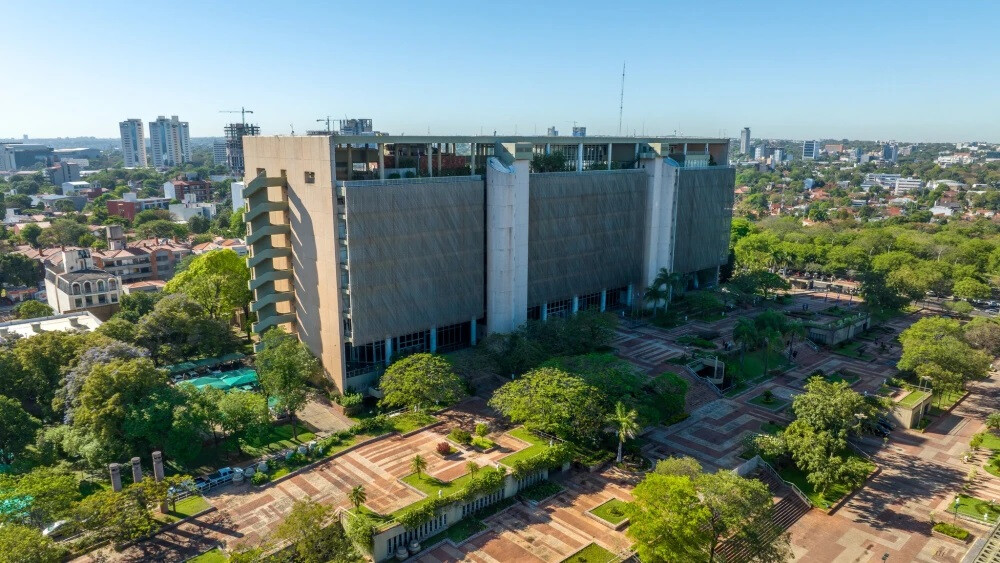
ASUNCION – In April 2025, the credit balance of Paraguay's banking and financial sector showed robust growth, increasing by 16.52% year-on-year. This increase is attributed to the expansion of both domestic currency and foreign currency loans. Notably, domestic currency loans grew by 17.87% and foreign currency loans by 13.68%, driving overall credit growth. This is according to the April 2025 Financial Indicators Report published by the Central Bank of Paraguay (BCP).
Detailed Analysis of Loan and Deposit Trends
Causes of Loan Growth: Increased economic activity in Paraguay was a major factor stimulating loan demand. In particular, significant loan growth was observed in the small and medium-sized enterprise (SME) and personal consumption sectors. The high growth rate of domestic currency loans likely had a positive impact on the revitalization of the domestic economy and the expansion of investments by local companies. Furthermore, the steady increase in foreign currency loans is interpreted as being linked to international trade activities and the attraction of foreign capital.
Deposit Growth Trend: Total deposits in the private sector also maintained a stable trend, increasing by 10.17% year-on-year. Domestic currency deposits grew by 10.55% and foreign currency deposits by 9.54%. This reflects confidence in the stability of the financial system and indicates that the savings propensity of households and businesses remains steady. The increase in deposits strengthens banks' funding base, providing leeway for further loan expansion.
Interest Rate Fluctuation Trends
Domestic Currency Interest Rates: In April 2025, the average active interest rate (lending rate) for domestic currency in banks and financial institutions was 14.37%, an increase of 0.11 percentage points from the previous month and 0.69 percentage points from the same month last year. This was primarily due to interest rate hikes in the consumer loan and credit card sectors. Conversely, interest rates for commercial loans, housing loans, and development loans showed a downward trend. This can be interpreted as part of financial institutions' risk management and portfolio adjustment strategies in response to changes in economic conditions. The average passive interest rate (deposit rate) for domestic currency was 5.15%, a decrease from the previous month but an increase compared to the same month last year. This suggests intensified competition among banks to attract deposits.
Foreign Currency Interest Rates: The average active foreign currency interest rate was 7.89%, a decrease of 0.09 percentage points from the previous month and 0.47 percentage points from the same month last year. On the other hand, the foreign currency passive interest rate was 3.78%, a decrease of 0.26 percentage points from the previous month and unchanged compared to the same month last year. For foreign currency loans, consumer and housing loan rates increased, while commercial and development loan rates decreased. This is analyzed as a result of a complex interplay of international financial market interest rate fluctuations and the supply-demand situation in the domestic foreign exchange market.
Interest Rates by Deposit Product: Interest rates for Certificates of Deposit (CDAs) and time deposits increased, while demand deposit rates decreased. This indicates that investors tended to prioritize returns over liquidity. Overall, all deposit interest rates recorded an upward trend compared to the previous year.
Financial Soundness Indicators
Key soundness indicators for Paraguayan banks and financial institutions generally showed a stable trend.
Liquidity: Monthly liquidity decreased slightly to 29.74% but remained at a stable level. This means financial institutions have sufficient capacity to meet short-term funding needs.
Solvency Ratio: The solvency ratio was 17.16%, indicating that financial institutions hold sufficient capital. This is an important indicator for preparing for unexpected losses and maintaining stable management.
Delinquency Rate: The delinquency rate was 2.57%, suggesting that asset quality is sound. A low delinquency rate implies excellent risk management capabilities of financial institutions and good quality of their loan portfolios.
Return on Equity (ROE): Return on Equity improved to 20.14%. This indicates an improvement in the profitability of financial institutions and shows that they are generating high returns through efficient asset management.
Capital Market Trends
As of April 2025, the cumulative trading volume in the Paraguayan stock market reached PYG 17,898.039 billion, marking a high growth rate of 29.20% year-on-year. This indicates increasing investor interest in the Paraguayan capital market and a continued revitalization of the market alongside economic growth. The growth of the securities market facilitates corporate fundraising and provides diverse investment opportunities for investors, contributing to national economic development.
Conclusion and Outlook
Paraguay's banking and financial sector continued its stable trend in April 2025, with robust growth in loans and deposits. Interest rate fluctuations adjusted to market conditions, and the soundness indicators of financial institutions generally remained at a healthy level. The revitalization of the capital market is also interpreted as a positive sign. If these trends continue, Paraguay's financial system is expected to provide a stable foundation for national economic growth. It will be important to monitor economic indicators and central bank policy changes over the coming months.
[Copyright (c) Global Economic Times. All Rights Reserved.]