• 2026.11.26 (Thu)
  • All articles
  • LOGIN
  • JOIN
Global Economic Times
한인동포뉴스(상단)
  • Synthesis
  • World
  • Business
  • Industry
  • ICT
  • Distribution Economy
  • Well+Being
    • Pet Life
    • Halal Horizon
  • Travel
  • Eco-News
  • Education
  • Korean Wave News
  • Opinion
  • Arts&Culture
  • Sports
  • People & Life
    • International Student Report
    • With Ambassador
  • Column
    • Cho Kijo Column
    • Cherry Garden Story
    • Ko Yong-chul Column
    • Kim Bong-seon's Photo Column
    • Kim Seul-Ong Column
    • Lee Yeon-sil Column
    • Professor Lee Soo-young’s Life Essays
  • Photo News
  • New Book Guide
MENU
 
Home > World

‘Zombie Fish’ Sightings Spark Public Panic in Thailand Amid Upstream Mining Pollution

Ana Fernanda Reporter / Updated : 2026-11-26 17:33:46
  • -
  • +
  • Print


BANGKOK — Growing alarm is sweeping across Thailand following the viral spread of images showing severely deformed fish in the Mekong River basin, a crisis linked to toxic runoff from Chinese-backed rare earth mining operations in neighboring Myanmar.

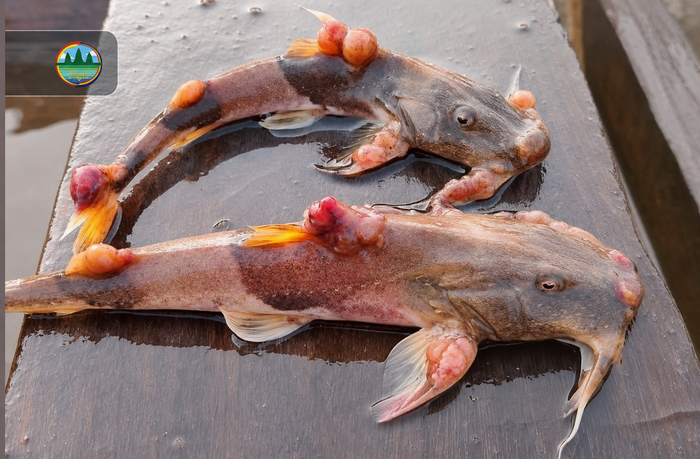
The controversy intensified earlier this month after Thai environmental advocate Ormbun Thipsuna shared photographs on social media depicting Mekong catfish—a staple in the Thai diet that can grow up to 60 kilograms—covered in mysterious blisters and tumors. Dubbed "zombie fish" by locals, the images have triggered widespread anxiety over food safety nationwide.

Toxic Waters and Health Risks

The environmental toll has already begun affecting human health and local infrastructure. According to recent data released by Thailand’s Ministry of Public Health, urine tests conducted on 1,269 residents across seven northern and northeastern provinces revealed that 94 individuals had arsenic levels exceeding safe limits.

In northern Chiang Rai province, tap water supplies were temporarily suspended earlier this month after extreme turbidity in the Sai River overwhelmed local water treatment facilities. Subsequent testing detected arsenic concentrations in the river water at roughly 30 times the permissible safety standard.

Locals first noticed unusual discoloration in the Kok and Sai rivers—both tributaries flowing from Myanmar into the Mekong—in the spring of last year. Water quality assessments later confirmed high levels of arsenic and other hazardous substances.

Economic Fallout in Agriculture and Tourism

Public fear has quickly translated into economic losses for Thailand’s northern regions. Local consumers have begun avoiding freshwater fish and cutting back on locally grown rice, leaving farmers struggling to find buyers for their harvests. Because river water is widely used for irrigation and Thai agricultural products are exported globally, concerns are mounting over broader supply chain contamination.

The tourism sector is also feeling the squeeze. Despite the arrival of the peak dry-season travel period, hotels in parts of northern Thailand have reported a wave of booking cancellations and postponements.

Cross-Border Mining and Government Response

Civic groups and observers attribute the pollution to a surge in unregulated rare earth mining in Myanmar following the 2021 military coup, largely involving Chinese-affiliated enterprises. Trade data indicates that Myanmar accounted for 70 percent of China’s rare earth oxide imports in September alone. Following public protests outside the Chinese Embassy in Bangkok in July, Thailand and Myanmar established a joint task force in August.

In a bid to contain the crisis, Thai authorities announced stricter measures on November 21. Deputy Prime Minister Yotsanan Wongsawat declared a ban on the export and transit of chemicals used for rare earth extraction in Myanmar through Thai territory. Concurrently, the Ministry of Natural Resources and Environment unveiled plans to designate a 150-kilometer stretch of the Kok River on the Thai side as a pollution control zone.

Diplomatic Hurdles

Bangkok is also pursuing diplomatic channels to resolve the cross-border issue. Foreign Minister Sihasak Phuangketkeow noted in a recent press briefing that during Prime Minister Anutin Charnvirakul’s meeting with Chinese President Xi Jinping in Shenzhen this month, Xi acknowledged the involvement of Chinese firms in Myanmar's mining sector and pledged assistance in addressing the environmental fallout.

While Myanmar’s military leader Min Aung Hlaing also expressed willingness to cooperate during a recent visit to Thailand—and trilateral talks among Thailand, China, and Myanmar are underway—analysts warn that a swift resolution remains difficult, as Myanmar’s ruling junta lacks effective administrative control over the remote border regions where the mines operate.

[Copyright (c) Global Economic Times. All Rights Reserved.]

  • #Cherry Garden
  • #HalalFood
  • #Halal
  • #Petlife
  • #Cats
  • #Dogs
  • #Halalhorizone
  • #Hormuz Impasse
  • #Joseon
  • #globaleconomicti
Ana Fernanda Reporter

Popular articles

  • US Army Conducts Rare Temporary Burial Drills to Prepare for Worst-Case Large-Scale War Scenarios

  • "Stay Out, Get Paid, or Have Police Stay With You": Shenzhen Imposes Strict Security Ahead of APEC Summit

  • US Midterm Elections Complicate Trade Calculus... Persistent Uncertainty Over Tariffs and Investment

I like it
Share
  • Facebook
  • X
  • Kakaotalk
  • LINE
  • BAND
  • NAVER
  • https://globaleconomictimes.kr/article/1065601926675788 Copy URL copied.
Comments >

Comments 0

Weekly Hot Issue

  • Daejeon Honors Two Pioneers in Medical Imaging and Agrochemicals with Inaugural Science Award
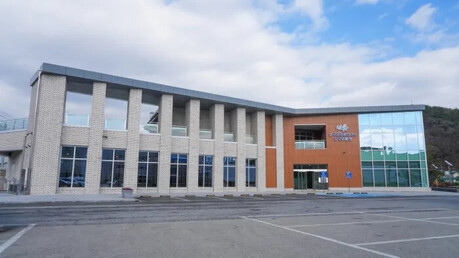
  • “Get Travel Information and Buy Quality Local Specialties” ··· Yanggu County’s ‘Tourist Information Center & Specialty Hall’ to Operate Starting the 27th
  • Teachers' Union Slams Ruling Party Over CSAT Cheating Hotline, Citing Blame-Shifting
  • Beyond the Score Sheet: Why Discarded Test Prep Reveals a Deeper Flaw in Exam-Driven Schooling
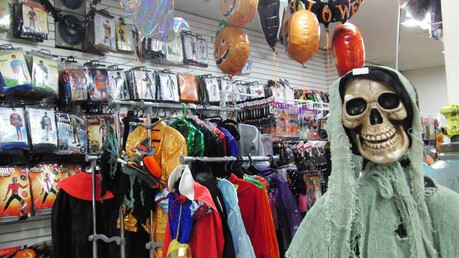
  • Beyond Costumes and Commerce: Rediscovering the Educational Value of Halloween in Korea
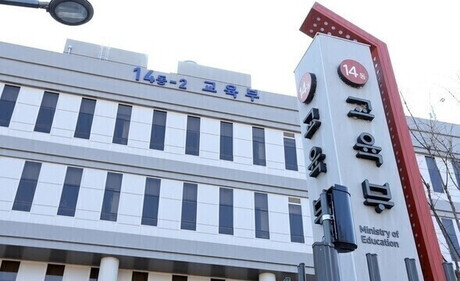
  • Supervision and Management of Middle and High School Internal Assessments Strengthened to CSAT Levels

Most Viewed

1
Exercise Beats Diet in Extending Lifespan, Major Review Finds
2
South Korean Burger Chain Lotteria Expands Singapore Footprint with Halal Certification and New Teriyaki Lineup
3
AI Semiconductor Stocks Plummet: Philadelphia Index Drops 5.28% and Micron Plunges 7.59% Amid Executive Shakeup and Export Restrictions
4
"Stay Out, Get Paid, or Have Police Stay With You": Shenzhen Imposes Strict Security Ahead of APEC Summit
5
Taiwan Bans Short-Selling Below Previous Close Starting Nov. 23, Raises Margin Ratio to 150%
체리가든 스토리
nutri huevos
로타리
동포저널

Hot Issue

Surging Memory Costs Spark Pricing Disputes Across the AI Server Industry

Elon Musk and SpaceX Pledge $17.8 Billion in Stock to 'Trump Accounts' for American Youth

Washington Caps Tariffs on South Korean Goods at 15% Following Overcapacity Probe

Fashion Runway Show 2026

Let’s recycle the old blankets in Jeju Island’s closet instead of incinerating them.

Global Economic Times
korocamia@naver.com
CEO : LEE YEON-SIL
Publisher & Editor : KO YONG-CHUL
Registration number : Seoul, A55681
Registration Date : 2024-10-24
Youth Protection Manager: KO YONG-CHUL
Singapore Headquarters
5A Woodlands Road #11-34 The Tennery. S'677728
Korean Branch
Phone : +82(0)10 4724 5264
#304, 6 Nonhyeon-ro 111-gil, Gangnam-gu, Seoul
Copyright © Global Economic Times All Rights Reserved
  • News K
  • 반달곰 프로젝트
  • 광고문의
Search
Category
  • All articles
  • Synthesis
  • World
  • Business
  • Industry
  • ICT
  • Distribution Economy
  • Well+Being 
    • 전체
    • Pet Life
    • Halal Horizon
  • Travel
  • Eco-News
  • Education
  • Korean Wave News
  • Opinion
  • Arts&Culture
  • Sports
  • People & Life 
    • 전체
    • International Student Report
    • With Ambassador
  • Column 
    • 전체
    • Cho Kijo Column
    • Cherry Garden Story
    • Ko Yong-chul Column
    • Kim Bong-seon's Photo Column
    • Kim Seul-Ong Column
    • Lee Yeon-sil Column
    • Professor Lee Soo-young’s Life Essays
  • Photo News
  • New Book Guide
  • Overseas Koreans
  • Multicultural News