• 2026.11.26 (Thu)
  • All articles
  • LOGIN
  • JOIN
Global Economic Times
한인동포뉴스(상단)
  • Synthesis
  • World
  • Business
  • Industry
  • ICT
  • Distribution Economy
  • Well+Being
    • Pet Life
    • Halal Horizon
  • Travel
  • Eco-News
  • Education
  • Korean Wave News
  • Opinion
  • Arts&Culture
  • Sports
  • People & Life
    • International Student Report
    • With Ambassador
  • Column
    • Cho Kijo Column
    • Cherry Garden Story
    • Ko Yong-chul Column
    • Kim Bong-seon's Photo Column
    • Kim Seul-Ong Column
    • Lee Yeon-sil Column
    • Professor Lee Soo-young’s Life Essays
  • Photo News
  • New Book Guide
MENU
 
Home > Opinion

Beyond Costumes and Commerce: Rediscovering the Educational Value of Halloween in Korea

KO YONG-CHUL Reporter / Updated : 2026-11-26 09:58:52
  • -
  • +
  • Print


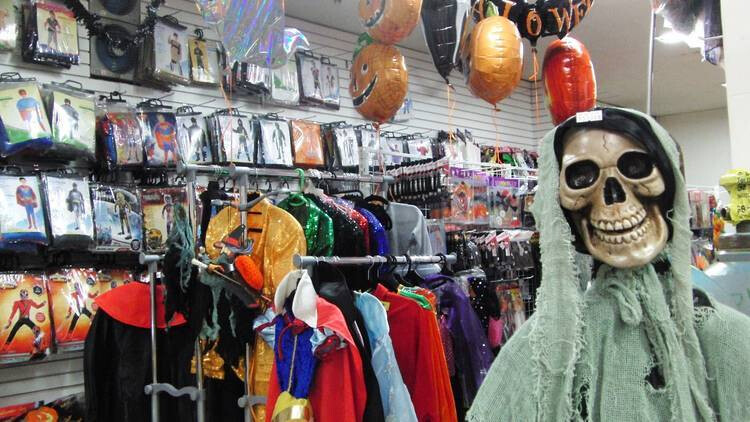
Every October 31, streets across the globe transform into vibrant stages of the macabre and the imaginative. While children go door-to-door collecting sweets, adults step out of their daily routines in elaborate costumes. Yet in South Korea, this global phenomenon remains caught in a cultural tug-of-war—viewed by some as an import of excessive commercialism and disorder, and by others as a harmless outlet for creative freedom.

Following the devastating Itaewon crowd crush on October 29, 2022, which claimed 159 lives, public debate over Halloween in Korea took on a far more somber tone. As the nation marks the fourth anniversary of the tragedy amid ongoing calls for accountability and remembrance, many have questioned whether the celebration has a place in Korean society at all. Rather than swinging between uncritical consumption and outright prohibition, however, educators and cultural observers argue that it is time to examine what the festival truly represents.

Long before it became a retail powerhouse, Halloween originated roughly two millennia ago with Samhain, an ancient Celtic festival marking the end of the harvest and the onset of winter. To the Celts, the threshold between October and November blurred the boundary between the living and the dead. Wearing disguises and leaving food offerings were not mere party games; they were communal rituals designed to ward off wandering spirits. Later, the 8th-century Catholic designation of November 1 as All Saints' Day—preceded by All Hallows' Eve—gave the observance its modern name.

At its core, this history reveals an important psychological function: instead of repressing universal anxieties surrounding darkness and mortality, communities confronted them collectively through performance and play, achieving a shared sense of catharsis.

In the modern era, Halloween has resonated worldwide for two primary reasons. Psychologically, it offers a brief respite from what Carl Jung termed the social persona—the rigid roles individuals maintain in daily life. Culturally, it serves as a borderless arena where global pop culture, from cinema to gaming, unites strangers through shared symbols.

When Halloween took root in South Korea during the 2000s, largely driven by English-language academies and commercial entertainment districts, its historical context and communal spirit were largely left behind. Stripped of its deeper meaning, the event evolved into a spectacle centered on consumption and nightlife—a gap that left public spaces vulnerable when crowd management failed.

In the wake of past trauma, banning cultural festivities may appear to be the simplest safeguard. Yet from an educational standpoint, avoidance rarely fosters resilience. True civic education requires teaching young people to engage with unfamiliar cultural practices critically—understanding their origins while practicing collective responsibility.

Moving forward, reclaiming Halloween in Korea demands a dual commitment: robust institutional accountability to guarantee public safety, and a cultural shift toward inclusivity. When grounded in mutual respect and safety awareness, the occasion can move beyond mere commercial spectacle—becoming a space where people of all generations find relief from everyday pressures and connect as thoughtful global citizens.

[Copyright (c) Global Economic Times. All Rights Reserved.]

  • #Cherry Garden
  • #HalalFood
  • #Halal
  • #Petlife
  • #Cats
  • #Dogs
  • #Halalhorizone
  • #Hormuz Impasse
  • #Joseon
  • #globaleconomicti
KO YONG-CHUL Reporter
Reporter Page

Popular articles

  • Culinary Mashups and Nostalgia with a Twist: South Korea’s F&B Giants Vie for Consumer Attention

  • Japanese Hotel Prices Surge Nearly 9% Amid Booming Korean Tourism

  • NVIDIA Expands Local AI Horizons with RTX Spark Laptops for Offline Creators

I like it
Share
  • Facebook
  • X
  • Kakaotalk
  • LINE
  • BAND
  • NAVER
  • https://globaleconomictimes.kr/article/1065574631750076 Copy URL copied.
Comments >

Comments 0

Weekly Hot Issue

  • Supervision and Management of Middle and High School Internal Assessments Strengthened to CSAT Levels
  • Grassroots Group Screenings Keep Korean Film ‘Still Shining’ in Spotlight
  • LG HelloVision and CJ ENM Avert Channel Blackout Following Regulatory Mediation
  • 'Hope' Wins Best Picture at Blue Dragon Film Awards… Sol Kyung-gu and Jeon Do-yeon Sweep Best Actor and Actress
  • Jeonbuk Pivots to Solo 2036 Olympic Bid After Co-Hosting Talks With Seoul Collapse
  • From Cafe Counter to WKBL Leader: Momona Miyasaka Sparks Samsung Life’s Early Surge

Most Viewed

1
Exercise Beats Diet in Extending Lifespan, Major Review Finds
2
South Korean Burger Chain Lotteria Expands Singapore Footprint with Halal Certification and New Teriyaki Lineup
3
AI Semiconductor Stocks Plummet: Philadelphia Index Drops 5.28% and Micron Plunges 7.59% Amid Executive Shakeup and Export Restrictions
4
"Stay Out, Get Paid, or Have Police Stay With You": Shenzhen Imposes Strict Security Ahead of APEC Summit
5
Taiwan Bans Short-Selling Below Previous Close Starting Nov. 23, Raises Margin Ratio to 150%
체리가든 스토리
nutri huevos
로타리
동포저널

Hot Issue

Surging Memory Costs Spark Pricing Disputes Across the AI Server Industry

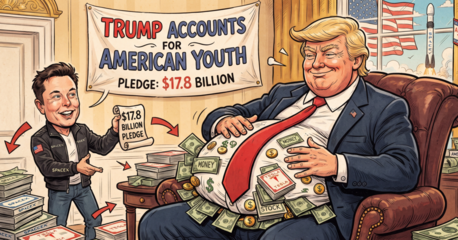
Elon Musk and SpaceX Pledge $17.8 Billion in Stock to 'Trump Accounts' for American Youth

Washington Caps Tariffs on South Korean Goods at 15% Following Overcapacity Probe

Fashion Runway Show 2026

Let’s recycle the old blankets in Jeju Island’s closet instead of incinerating them.

Global Economic Times
korocamia@naver.com
CEO : LEE YEON-SIL
Publisher & Editor : KO YONG-CHUL
Registration number : Seoul, A55681
Registration Date : 2024-10-24
Youth Protection Manager: KO YONG-CHUL
Singapore Headquarters
5A Woodlands Road #11-34 The Tennery. S'677728
Korean Branch
Phone : +82(0)10 4724 5264
#304, 6 Nonhyeon-ro 111-gil, Gangnam-gu, Seoul
Copyright © Global Economic Times All Rights Reserved
  • News K
  • 반달곰 프로젝트
  • 광고문의
Search
Category
  • All articles
  • Synthesis
  • World
  • Business
  • Industry
  • ICT
  • Distribution Economy
  • Well+Being 
    • 전체
    • Pet Life
    • Halal Horizon
  • Travel
  • Eco-News
  • Education
  • Korean Wave News
  • Opinion
  • Arts&Culture
  • Sports
  • People & Life 
    • 전체
    • International Student Report
    • With Ambassador
  • Column 
    • 전체
    • Cho Kijo Column
    • Cherry Garden Story
    • Ko Yong-chul Column
    • Kim Bong-seon's Photo Column
    • Kim Seul-Ong Column
    • Lee Yeon-sil Column
    • Professor Lee Soo-young’s Life Essays
  • Photo News
  • New Book Guide
  • Overseas Koreans
  • Multicultural News