• 2026.03.29 (Sun)
  • All articles
  • LOGIN
  • JOIN
Global Economic Times
fashionrunwayshow2026
  • Synthesis
  • World
  • Business
  • Industry
  • ICT
  • Distribution Economy
  • Well+Being
  • Travel
  • Eco-News
  • Education
  • Korean Wave News
  • Opinion
  • Arts&Culture
  • Sports
  • People & Life
    • International Student Report
    • With Ambassador
  • Column
    • Cho Kijo Column
    • Cherry Garden Story
    • Ko Yong-chul Column
    • Kim Seul-Ong Column
    • Lee Yeon-sil Column
  • Photo News
  • New Book Guide
MENU
 
Home > Column > Cherry Garden Story

Yeonpo-tang: A Korean Culinary Journey

Hwang Sujin Reporter / Updated : 2024-12-22 17:26:41
  • -
  • +
  • Print


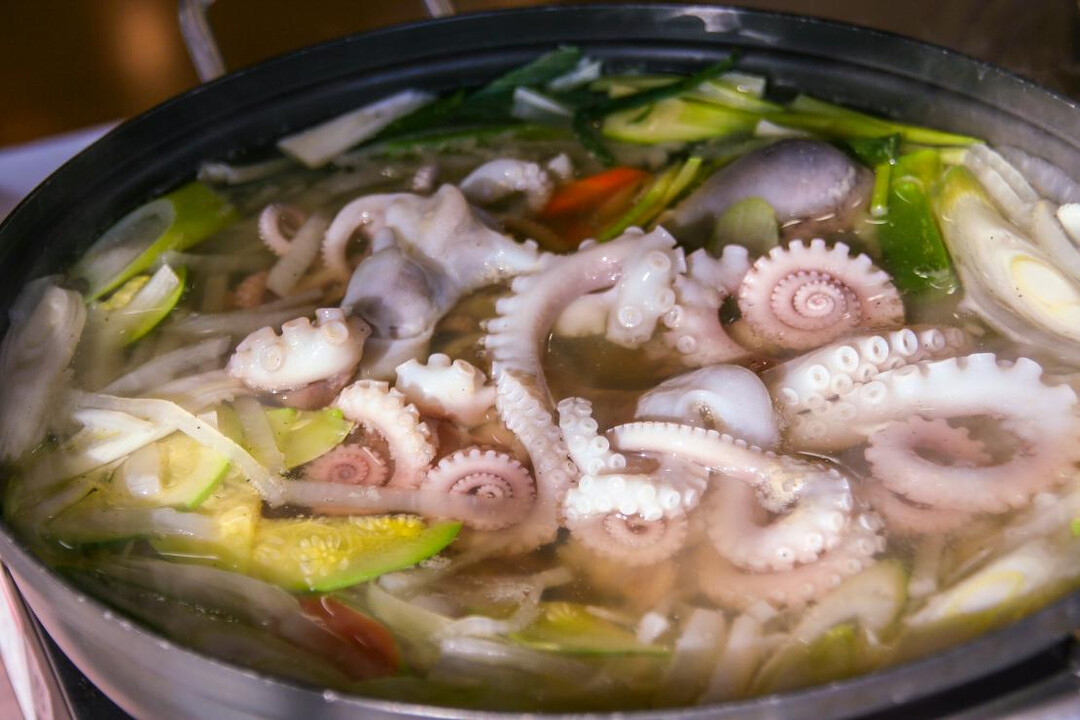
Seoul, South Korea – Yeonpo-tang, a beloved Korean dish, has a fascinating history that reflects the country's culinary evolution. While today it is most commonly associated with a hearty broth filled with tender octopus, its origins lie in a much simpler, and arguably more elegant, dish.

Traditionally, yeonpo-tang was a clear soup made primarily with tofu. The name itself, "yeonpo," translates to "soft foam," referring to the delicate texture of the tofu. Early recipes found in Korean cookbooks, such as "Seongbo Sanrim Gyeongje" and "Dongguk Sesigi," detail the preparation of this tofu-based soup.

So, how did we go from tofu soup to the octopus-centric dish we know today? The answer lies in the changing availability of ingredients and evolving tastes. As the popularity of octopus grew and its price became more accessible, it began to replace tofu as the star ingredient in many households. The result was a new version of yeonpo-tang that offered a more robust and flavorful experience.

How to Make Yeonpo-tang

While the ingredients may have changed over time, the core principles of yeonpo-tang remain the same: a flavorful broth and high-quality, fresh ingredients.

Ingredients:

Live octopus
Tofu (optional)
Various vegetables (such as enoki mushrooms, spinach, and zucchini)
Beef or chicken broth
Soy sauce
Sesame oil
Garlic
Green onions

Instructions:

Prepare the broth: Combine beef or chicken broth with soy sauce, sesame oil, minced garlic, and green onions. Bring to a boil, then reduce heat and simmer.
Blanch the octopus: Quickly blanch the live octopus in boiling water to tenderize.
Assemble the dish: Add the blanched octopus and desired vegetables to the simmering broth. Cook until the vegetables are tender.
Serve: Serve the yeonpo-tang hot, often accompanied by a bowl of steamed rice.

Whether you choose to follow the traditional tofu-based recipe or opt for the more modern octopus version, yeonpo-tang offers a delicious and satisfying meal that showcases the versatility of Korean cuisine.

[Copyright (c) Global Economic Times. All Rights Reserved.]

  • #globaleconomictimes
  • #koyongchul
  • #cherrylee
  • #seoulkorea
  • #periodicoeconomico
  • #글로벌이코노믹타임즈
  • #GET
  • #GETtv
  • #liderdel
Hwang Sujin Reporter

Popular articles

  • Gyeonggi Governor Accelerates Yongin Semiconductor Mega-Cluster; Launches 'All-Care TF' with Samsung and SK

  • S. Korea Ignites 'Physical AI' Race with 170 Billion Won Investment in Core Robotics Tech

  • AI Agents Take Center Stage: Solving 74% of Inquiries as Adoption Sweeps E-Commerce, Aviation, and Law

I like it
Share
  • Facebook
  • X
  • Kakaotalk
  • LINE
  • BAND
  • NAVER
  • https://globaleconomictimes.kr/article/1065601448759672 Copy URL copied.
Comments >

Comments 0

Weekly Hot Issue

  • 70% of Hacked Companies Fail to Report Breaches: Call for Enhanced Cybersecurity Response
  • Card Issuers Caught in the Crossfire of Samsung-Apple Pay Fee War
  • Google Gemini to Import Rival AI Chat Histories: Battle for User Retention Intensifies
  • Hyundai Motor Group Expands Mandatory Vehicle Rotation System to Bolster National Energy Conservation Efforts
  • France Invites South Korea to June G7 Summit; Seoul Evaluating Attendance
  • President Lee Asserts ‘Self-Reliant Defense’ as Crucial, Vows Swift Recovery of Operational Control

Most Viewed

1
The Zenith of ‘K-Strawberries’: A Sweet Innovation Unfolds in Nonsan… The 28th Nonsan Strawberry Festival Opens
2
Netanyahu Declares Decisive Blow to Iran’s Nuclear and Missile Programs, Signals Early End to War
3
K-Beauty SMEs Join Forces with Distributors: A New Paradigm for Global Expansion through Strategic Consortiums
4
Global Food Delivery Giants Hit Record Highs: Subscription and Quick-Commerce Emerge as Key Growth Engines
5
Won Breaches 1,500 Mark for First Time Since Financial Crisis; KOSPI Stabilizes at 5,500 Amid Chip Rally
광고문의
임시1
임시3
임시2

Hot Issue

Generative AI Enters the Classroom: GBSA Appoints 130 Specialized Instructors to Lead Gyeonggi’s Digital Future

Hyundai Motor Group Expands Mandatory Vehicle Rotation System to Bolster National Energy Conservation Efforts

Samsung and LG Clash in Milan Over European HVAC Supremacy at MCE 2026

President Lee Asserts ‘Self-Reliant Defense’ as Crucial, Vows Swift Recovery of Operational Control

Let’s recycle the old blankets in Jeju Island’s closet instead of incinerating them.

Global Economic Times
korocamia@naver.com
CEO : LEE YEON-SIL
Publisher : KO YONG-CHUL
Registration number : Seoul, A55681
Registration Date : 2024-10-24
Youth Protection Manager: KO YONG-CHUL
Singapore Headquarters
5A Woodlands Road #11-34 The Tennery. S'677728
Korean Branch
Phone : +82(0)10 4724 5264
#304, 6 Nonhyeon-ro 111-gil, Gangnam-gu, Seoul
Copyright © Global Economic Times All Rights Reserved
  • 에이펙2025
  • APEC2025가이드북TV
  • 독도는우리땅
Search
Category
  • All articles
  • Synthesis
  • World
  • Business
  • Industry
  • ICT
  • Distribution Economy
  • Well+Being
  • Travel
  • Eco-News
  • Education
  • Korean Wave News
  • Opinion
  • Arts&Culture
  • Sports
  • People & Life 
    • 전체
    • International Student Report
    • With Ambassador
  • Column 
    • 전체
    • Cho Kijo Column
    • Cherry Garden Story
    • Ko Yong-chul Column
    • Kim Seul-Ong Column
    • Lee Yeon-sil Column
  • Photo News
  • New Book Guide
  • Multicultural News
  • Jobs & Workers