![[등록] 2026-09-01 15:48:31](/support/_updata/banner2/tl181982910_6749.png)


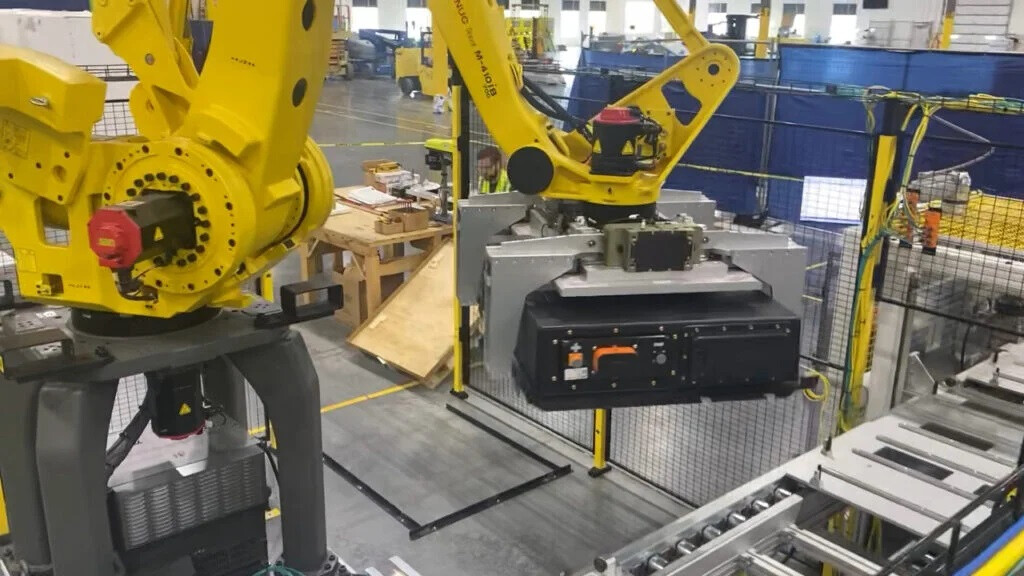
Fluence, a global battery energy storage system (BESS) integration and clean energy software and services company, is accelerating its strategic moves to strengthen its U.S. production capabilities. The recent commissioning of a new production facility in Goodyear, Arizona, brings the company one step closer to its goal of "fully localizing production as quickly as possible."
This new facility will produce enclosures and battery management system (BMS) hardware used in Fluence's BESS solutions. Notably, the enclosures for products, including the recently launched SmartStack AC Block BESS solution, will be manufactured using U.S.-sourced steel. This demonstrates Fluence's strong commitment to bolstering the U.S. manufacturing base and ensuring supply chain stability.
Fluence already opened a battery module factory in Utah last September and has begun sourcing approximately half of the battery cells used in its U.S. projects from the recently opened AESC factory in Tennessee. The remaining half will continue to be imported from Asian suppliers. Through this diversified expansion of domestic production, Fluence aims to meet about half of the U.S. market demand, solidifying its global leadership by supplying or contracting over 20 GW of storage systems in more than 17 markets worldwide.
"Our goal is to fully localize production as quickly as possible to meet all U.S. demand with products and components manufactured in the U.S.," said Peter Williams, Fluence's Chief Product and Supply Chain Officer. Fluence added that it is also sourcing other equipment, such as thermal management systems and inverters, from U.S. factories.
The operation of the Arizona plant is expected to create approximately 250 new jobs, and Fluence has invested about $700 million (approximately 960 billion KRW) in its domestic production plans to date. John Zaharanchuk, President of Fluence Americas, emphasized, "By rapidly expanding our U.S. manufacturing capabilities, we are helping our customers navigate complex global supply chain risks and strengthening our commitment to deliver safe, reliable, and cyber-secure energy storage systems at scale."
Meanwhile, Fluence recently lowered its annual revenue guidance in its quarterly earnings report due to the impact of U.S.-China tariff policies. This was attributed to the high tariff rates on imported Chinese goods affecting customer projects. However, Julian Nebreda, CEO of Fluence, expressed an optimistic outlook, stating that "relations with China will normalize to some extent." He also stated that Fluence has been pursuing a domestic content strategy for two years, aiming to benefit from the Biden administration's domestic content bonus policy, and expressed confidence that "future policy updates will also continue to support regional manufacturing." Nebreda added, "Regardless of various tariff outcomes and levels of policy support, our domestic content strategy is resilient across multiple scenarios."
In a related development, SMA Solar Technology (SMA), a German solar and energy storage inverter manufacturer, also announced that it will assemble its MVPS (Medium Voltage Power Station) products in the United States. MVPS combines solar or battery inverters with transformers and medium-voltage switchgear for utility-scale solar or energy storage projects. Jay Agrestani, Managing Director of SMA America, explained, "Domestic integration can shorten project timelines, reduce transportation complexities, and contribute to customers' Inflation Reduction Act (IRA) domestic content strategy depending on how they configure their solutions."
These moves by Fluence and SMA suggest that the supply chain for the clean energy industry in the United States is rapidly being reorganized. This strategy is interpreted as simultaneously pursuing multiple objectives: securing supply chain stability through expanded domestic production, creating jobs, and utilizing government incentive policies. Particularly at a time when energy transition and security are emerging as crucial topics, such localization strategies are expected to contribute not only to corporate competitiveness but also to strengthening the resilience of the national economy.
[Copyright (c) Global Economic Times. All Rights Reserved.]