![[등록] 2026-09-01 15:48:31](/support/_updata/banner2/tl181982910_6749.png)


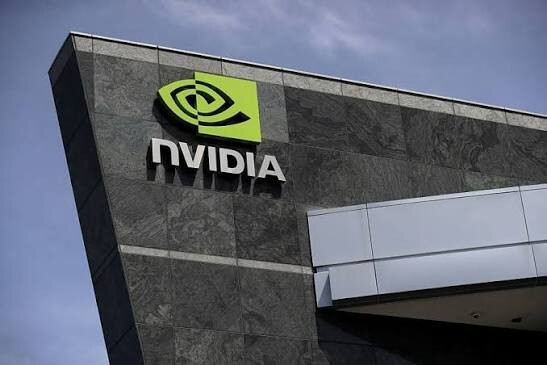
Even as U.S. Treasury yields rose to hit new highs once again, they failed to dampen the investment enthusiasm surrounding artificial intelligence (AI). NVIDIA is now on the verge of reaching a market capitalization of $6 trillion (approx. 8,057 trillion won), while Elon Musk, CEO of SpaceX, has reclaimed his status as a centibillionaire.
According to CNBC on the 5th (local time), the yield on the 10-year U.S. Treasury note climbed as high as 5.347% intraday in the New York bond market, marking its highest level in 24 years since April 3, 2002. The 30-year bond similarly touched an intraday high of 5.702%, reaching its highest point since May 2002.
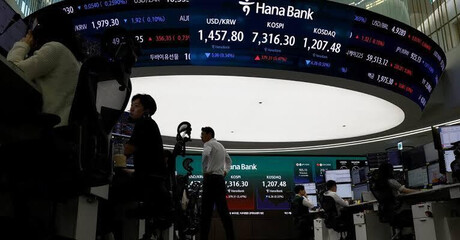
While rising Treasury yields typically weigh down the stock market, this day proved different. The three major New York stock indices all finished higher, with the Nasdaq composite surging to close at 27,477.31, powered by strong technology stocks—a new all-time high.
Leading the charge in tech was NVIDIA, which closed up 2.12% at $238.90, also hitting a record high. The company's market capitalization approached $5.7 trillion. Based on options pricing, there is a strong likelihood that it will break the $6 trillion threshold by the end of this month, CNBC explained.
NVIDIA's stock has rebounded by approximately 25% from its late-July low. The upward momentum was supported by the announcement on the 28th of last month of a record-breaking $150 billion share buyback authorization expansion, followed by U.S. President Donald Trump meeting with AI industry leaders on the 29th. In particular, regarding the share buyback, Ben Emons, managing director at Highline Wealth Management, commented, "It is a capital allocation decision that goes beyond simple shareholder returns, demonstrating confidence in long-term AI demand."
SpaceX shares also jumped 7.63% to $171.09, recording their highest level since June, immediately following its initial public offering (IPO). According to Forbes estimates, CEO Elon Musk's net worth was tallied at $1.03 trillion. Having previously lost his centibillionaire standing due to a decline in SpaceX shares, Musk has successfully recaptured the title.
Morgan Stanley maintained an "overweight" (buy) rating on SpaceX along with a price target of $300, which is roughly 75% higher than that day's closing price. Morgan Stanley highlighted future AI product launches, progress in Starship development, and additional NeoCloud contracts as key growth drivers.
The stock rally spread outward into AI semiconductors, data storage, and space and computing infrastructure. Western Digital and Seagate climbed to the top tier of S&P 500 performance, and the combined market capitalization of the "Magnificent 7" (M7)—the seven major U.S. technology stocks—ballooned to a record $24.8 trillion. Experts evaluated that investments flocked into the sector because large technology companies are deemed capable of withstanding high interest rates. Jay Hatfield, founder of Infrastructure Capital Advisors, analyzed, "The exact cost at which tech firms finance their debt doesn't actually matter much. Because computing demand is so extraordinarily robust, tech stocks are largely insulated from interest rate impacts."
Conversely, concerns regarding inflation and fiscal burdens persisted within the bond market. For instance, just a few weeks ago, short-term yields were rising much faster than long-term yields, reflecting heightened expectations over how much the U.S. Federal Reserve (Fed) would raise interest rates. However, recent conditions have shifted. Since the 23rd of last month, the 10-year yield has risen by about 0.2 percentage points (p), while the 2-year yield has fallen. The market is paying close attention to the fact that recent long-term yield increases can no longer be solely explained by expectations of additional Fed rate hikes.
[Copyright (c) Global Economic Times. All Rights Reserved.]