• 2026.09.16 (Wed)
  • All articles
  • LOGIN
  • JOIN
Global Economic Times
[등록] 2026-09-01 15:48:31
  • Synthesis
  • World
  • Business
  • Industry
  • ICT
  • Distribution Economy
  • Well+Being
  • Travel
  • Eco-News
  • Education
  • Korean Wave News
  • Opinion
  • Arts&Culture
  • Sports
  • People & Life
    • International Student Report
    • With Ambassador
  • Column
    • Cho Kijo Column
    • Cherry Garden Story
    • Ko Yong-chul Column
    • Kim Seul-Ong Column
    • Lee Yeon-sil Column
  • Photo News
  • New Book Guide
MENU
 
Home > World

U.S. Officially Acknowledges Deployment of Orbital Space Weapons: Will an Arms Race in Space Escalate?

Graciela Maria Reporter / Updated : 2026-09-16 05:10:39
  • -
  • +
  • Print


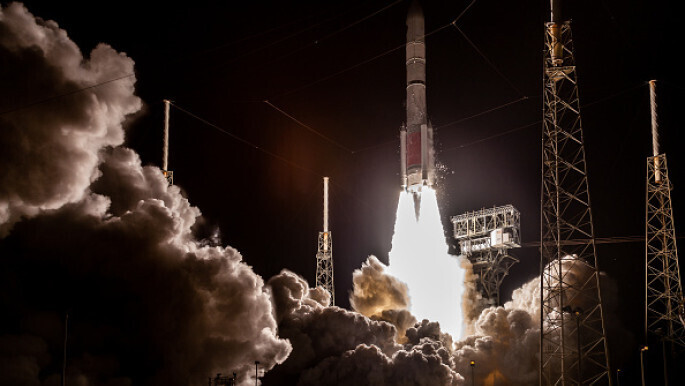
In a landmark announcement, the United States Space Force has officially confirmed for the first time that it has deployed weapons into Earth's orbit. This historic admission breaks decades of strategic ambiguity, marking the first time a major spacefaring nation has formally acknowledged housing active armaments in space since the international community pledged to use outer space for peaceful purposes 59 years ago. 

During the annual Air, Space and Cyber Conference held at National Harbor, Maryland, U.S. Secretary of the Air Force Troy Meink stated in a keynote address that Washington possesses "on-orbit space control weapons" designed to safeguard the joint force against hostile adversary actions. He emphasized that these capabilities can serve both defensive and offensive purposes. While the "space control" mandate encompasses both kinetic (physical) and non-kinetic measures to influence or disrupt enemy assets, Secretary Meink deliberately withheld specific details regarding the exact nature, design, or deployment timeline of these orbital assets to preserve strategic deterrence. 

Industry analysts and security experts suggest that given the U.S. military’s long-standing policy of minimizing hazardous space debris, the newly acknowledged orbital assets are likely non-kinetic systems, such as space-based electronic warfare equipment or communication signal jammers designed to disable rival satellites or ground stations. 

This shift in American military posture is heavily driven by mounting concerns over rapid advancements by strategic competitors. Pentagon leadership has repeatedly warned that China incorporates counter-space capabilities into its broader military modernization strategy, while Russia increasingly views space as a primary warfighting domain where superiority will dictate future conflicts. In response to these escalating orbital threats, the U.S. established the Space Force in 2019, and recent executive actions under the Trump administration have further expanded its mandate to include proactive defense and counter-space missions, alongside the development of advanced multi-layered defense architectures like the "Golden Dome". 

The militarization of space traces its roots back to the Cold War space race initiated by the 1957 launch of Sputnik 1. Although the 1967 Outer Space Treaty successfully banned the placement of weapons of mass destruction in orbit, it left a legal loophole regarding conventional and electronic warfare capabilities. Over the decades, major powers including Russia, China, India, and the U.S. have steadily tested anti-satellite technologies, cyberattacks on commercial communications networks, and proximity maneuvers. 

International experts warn that the U.S. public confirmation could trigger dangerous feedback loops. Analysts from organizations like the Foreign Policy Research Institute and the Secure World Foundation caution that Washington's admission provides rival nations with a pretext to legitimize their own expanding anti-satellite programs. If adversarial powers formally follow suit and acknowledge similar orbital weapons, it could spark an aggressive, high-risk security dilemma and fuel an unprecedented arms race in Earth's orbit.

Meanwhile, international reactions have been swift. Chinese Foreign Ministry spokesperson Guo Jiakun voiced strong opposition during a regular press briefing, reiterating Beijing's consistent stance in favor of the peaceful use of outer space. China urged the United States to immediately halt the expansion of military competition in orbit and take concrete steps to preserve global strategic stability.

[Copyright (c) Global Economic Times. All Rights Reserved.]

  • #\ormuz Impasse
  • #globaleconomictimes
  • #micorea
  • #mykorea
  • #nammidonganews
  • #singaporenewsk
  • #Samsung
  • #Daewoo
  • #Hyos
Graciela Maria Reporter

Popular articles

  • Concerns Over Earnings Illusion: "AI Big Tech Sees $220 Trillion in Equity Valuation Gains from Stakes in Other Companies"

  • Musk’s "Trillion-Dollar Bet": SpaceX Shifts Focus Toward AI Dominance

  • The Autonomous Driving Era Approaches: Automotive Industry Fiercely Competes Over "Running Screens"

I like it
Share
  • Facebook
  • X
  • Kakaotalk
  • LINE
  • BAND
  • NAVER
  • https://globaleconomictimes.kr/article/1065557371113065 Copy URL copied.
Comments >

Comments 0

Weekly Hot Issue

  • Microsoft Unveils "Human-First" AI Code of Conduct: Will It Spark Integration of Industry Safety Standards?
  • US AI Giants Push for "Slowdown" While Consolidating Market Dominance: A Critical Wake-Up Call for South Korea
  • Recent Gold Investment Scam Case Sparks Concerns Over Financial Fraud
  • Over 300 South Koreans Detained in Georgia Raid Launch Legal Action Against the Trump Administration One Year On
  • Um Ji-sung’s Hattrick Leads AG Warriors to a 4-1 Rout of Qatar, Kicking Off Their Bid for a Historic Fourth Consecutive Asian Games Title
  • Seoul City Buses to Run Normally as Labor and Management Reach Dramatic Agreement

Most Viewed

1
Connecting Generations and Cultures through the Sound of Drums: Master Lee Kyung-hwa Holds Successful Jindo Buk-chum Workshop in Berlin
2
Police Agency Implements Major Nighttime Reshuffle, Replacing 14 Out of 18 Regional Police Chiefs
3
Desperate Pursuit of HBM: China’s AI Chip Sector Faces Crippling Bottlenecks as Gray Market Prices Soar
4
South Korea Unveils Record 821 Trillion Won Budget for 2027
5
Samsung Display Invests 67 Trillion Won… Giving Wings to Chungnam’s High-Tech Industry
광고문의
임시1
임시3
임시2

Hot Issue

Google DeepMind and Anthropic Insider Warnings: The Escalating Global Debate Over AI Safety and Superintelligence

U.S. Officially Acknowledges Deployment of Orbital Space Weapons: Will an Arms Race in Space Escalate?

Saudi Arabia Faces a Dilemma Amid Houthi Offensives and Ineffective Regional Pacts

Surging LNG Prices Forebode a Freezing Winter amid Middle East Conflict

Fashion Runway Show 2026

Global Economic Times
korocamia@naver.com
CEO : LEE YEON-SIL
Publisher : KO YONG-CHUL
Registration number : Seoul, A55681
Registration Date : 2024-10-24
Youth Protection Manager: KO YONG-CHUL
Singapore Headquarters
5A Woodlands Road #11-34 The Tennery. S'677728
Korean Branch
Phone : +82(0)10 4724 5264
#304, 6 Nonhyeon-ro 111-gil, Gangnam-gu, Seoul
Copyright © Global Economic Times All Rights Reserved
  • 향기네무료급식
  • BCB부천방송
  • 반달곰 프로젝트
Search
Category
  • All articles
  • Synthesis
  • World
  • Business
  • Industry
  • ICT
  • Distribution Economy
  • Well+Being
  • Travel
  • Eco-News
  • Education
  • Korean Wave News
  • Opinion
  • Arts&Culture
  • Sports
  • People & Life 
    • 전체
    • International Student Report
    • With Ambassador
  • Column 
    • 전체
    • Cho Kijo Column
    • Cherry Garden Story
    • Ko Yong-chul Column
    • Kim Seul-Ong Column
    • Lee Yeon-sil Column
  • Photo News
  • New Book Guide
  • Overseas Koreans
  • Multicultural News