![[등록] 2026-09-01 15:48:31](/support/_updata/banner2/tl181982910_6749.png)


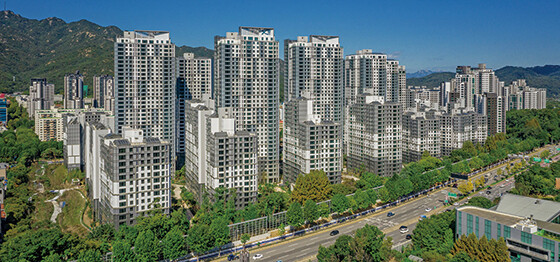
While Seoul's apartment market shows signs of calming down following the expansion of land transaction permit zones, Gwacheon city in Gyeonggi Province recorded the highest apartment price increase nationwide last week.
According to the weekly apartment price trend data released by the Korea Real Estate Board on April 3rd, based on figures from the fifth week of March (as of March 31st), Seoul's apartment sales prices rose by 0.11% compared to the previous week. Apartment prices in the Seoul Metropolitan Area also saw a 0.03% increase, maintaining the same growth rate as the week before. In contrast, non-metropolitan areas experienced a larger decline (-0.04% to -0.05%).
The four districts in Seoul – Gangnam, Seocho, Songpa, and Yongsan – designated as land transaction permit zones starting from March 24th, have shown a slowdown in their growth rates compared to the third week of March (as of March 17th), before the announcement of the designation.
Gangnam-gu saw its growth rate decrease from 0.36% to 0.21%, and Seocho-gu's growth also fell from 0.28% to 0.16% week-over-week. Notably, Songpa-gu, which had experienced a price drop (-0.03%) in the fourth week of March due to an increase in urgent sales after the permit zone designation took effect, rebounded with a 0.28% increase in the last week of March. Yongsan-gu also saw a slight increase in its growth rate, from 0.18% to 0.20%.
The Korea Real Estate Board commented, "While localized demand persists for redevelopment projects, the overall market is experiencing relatively low transaction volume due to increased buyer hesitancy."
Leading the price surge in the Seoul Metropolitan Area during the last week of March was Gwacheon city in Gyeonggi Province, with a significant increase from 0.55% to 0.39%. Other areas with relatively high growth rates included Seongdong-gu in Seoul (0.35% to 0.30%), Sujeong-gu in Seongnam city, Gyeonggi Province (0.04% to 0.27%), Bundang-gu in Seongnam city (0.16% to 0.24%), and Yangcheon-gu in Seoul (0.29% to 0.20%).
Nationwide, the weekly apartment Jeonse (lump-sum deposit rental) prices rose by 0.02%, maintaining the same growth rate as the previous week. The Seoul Metropolitan Area also maintained its 0.04% increase, while Seoul saw a slight decrease in its growth rate (0.06% to 0.05%). Non-metropolitan areas transitioned to a stable state (0.00%) from a previous decline (-0.01%).
Further Analysis and Potential Factors:
Several factors could be contributing to the trends observed in the South Korean apartment market:
Impact of Land Transaction Permit Zones: The implementation of stricter regulations in key Seoul districts appears to be having the intended effect of cooling down speculative investment and price inflation in those areas. The initial drop in Songpa-gu followed by a rebound suggests a dynamic market adjusting to the new regulations.
Redevelopment Expectations: The Korea Real Estate Board's mention of "localized demand for redevelopment projects" indicates that anticipation and progress in urban renewal initiatives continue to drive price movements in specific areas. Gwacheon, for example, might have ongoing or anticipated redevelopment projects fueling demand.
Broader Economic Conditions: Interest rates, inflation, and overall economic sentiment can significantly influence housing market trends. While the article doesn't explicitly detail these factors, they are crucial context for understanding price fluctuations.
Seasonal Factors: Spring is typically considered a moving season in South Korea, which can sometimes lead to increased demand and price adjustments in the housing market.
Regional Demand Shifts: The data suggests a potential shift in buyer interest towards areas outside the newly regulated zones in Seoul, as evidenced by the significant increase in Gwacheon and notable rises in other Gyeonggi and Seoul districts. This could be due to affordability concerns or the perception of better investment opportunities.
Looking Ahead:
It will be important to monitor the long-term effects of the land transaction permit zones on the Seoul market and whether the price increases in areas like Gwacheon are sustainable. Further analysis of transaction volumes and buyer sentiment will provide a clearer picture of the underlying dynamics shaping the South Korean apartment market.
[Copyright (c) Global Economic Times. All Rights Reserved.]