![[등록] 2026-09-01 15:48:31](/support/_updata/banner2/tl181982910_6749.png)


(C) OPB
WASHINGTON D.C. — Just two weeks into the military campaign against Iran, the United States finds itself grappling with a dual crisis: a staggering financial burden and a dangerously thinning inventory of precision-guided munitions. As the Pentagon burns through years of stockpiles in mere days, questions are mounting over the sustainability of a protracted conflict in the Middle East.
The Tomahawk Dilemma
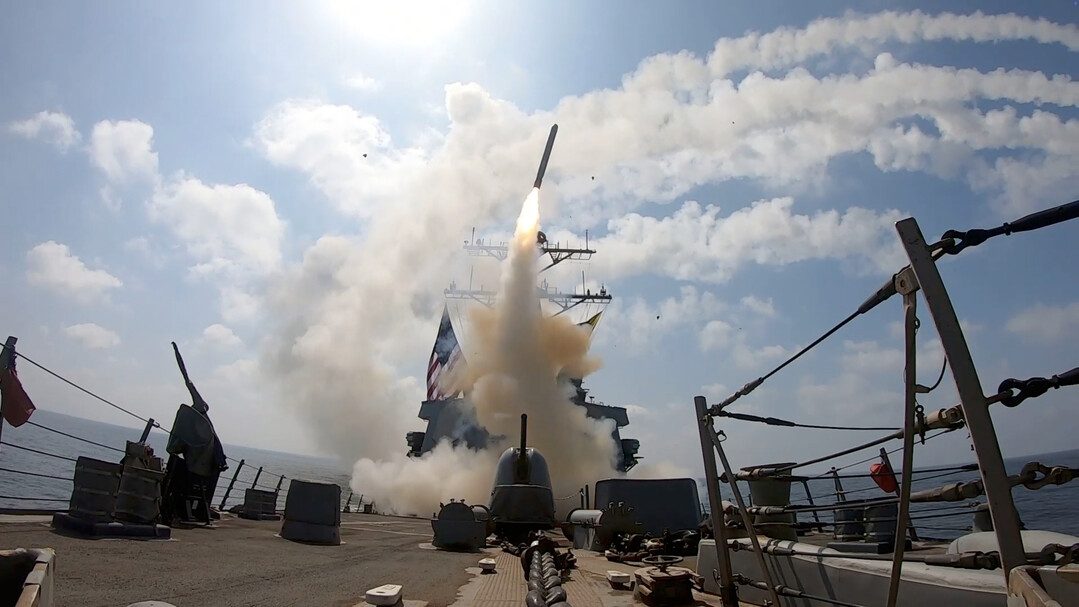
At the center of the controversy is the Tomahawk Land Attack Missile (TLAM), the Navy’s premier long-range precision weapon. Manufactured by RTX (formerly Raytheon), each unit carries a price tag of approximately $3.6 million.
According to reports from the Financial Times and analysis by the Center for Strategic and International Studies (CSIS), the rate of consumption has been "unprecedented." While the U.S. Navy purchased only 370 Tomahawks over the past five years, an estimated 168 missiles were launched within the first 100 hours of the conflict alone.
"The ripple effects of this ammunition expenditure will be felt by the U.S. Navy for years to come," warned a senior military official, noting that production lines cannot simply "flip a switch" to replace sophisticated hardware that takes months to assemble.
The Economic Toll of 'Operation Epic Fury'
The financial scale of the engagement, dubbed "Operation Epic Fury," is equally jarring. The Department of Defense informed Senators that the first six days of strikes incurred costs of $11.3 billion, the vast majority of which accounts for expended ordnance.
The White House is expected to request an emergency supplemental funding package of up to $50 billion in the coming days. However, the request faces a steep climb on Capitol Hill:
Fiscal Conservatives: Expressing concerns over ballooning national debt and the lack of a clear exit strategy.
Congressional Democrats: Questioning the legality of the strikes, arguing that the administration initiated hostilities without explicit Congressional authorization.
"The Pentagon must justify every cent," said Senator Lisa Murkowski. "They cannot expect a 'blank check' for an open-ended engagement."
Asymmetric Warfare and the Cost Gap
Perhaps the most troubling aspect for military planners is the "cost-efficiency gap." Senator Mark Kelly, a retired Navy captain and combat veteran, pointed out the stark asymmetry in the value of assets destroyed versus the cost of destruction.
"We are using interceptors like the Patriot and THAAD, costing millions per shot, to take down Iranian Shahed drones that cost $30,000 to manufacture," Kelly noted. "Mathematically, this is a losing proposition."
Domestic and Global Consequences
The conflict’s reach extends far beyond the battlefield. With the Strait of Hormuz effectively blockaded by Iranian forces, global oil prices have surged past $100 per barrel, sending U.S. gasoline prices to record highs.
With the November mid-term elections approaching, voter anxiety is peaking. The specter of another "forever war" in the Middle East looms large over the electorate, even as the administration maintains a defiant stance.
The Administration’s Stance
Despite the alarming data, Defense Secretary Pete Hegseth has dismissed concerns regarding a "munitions famine."
"The United States is not out of ammunition," Hegseth stated during a press briefing. "We possess the depth of inventory necessary to sustain this operation for as long as it takes to achieve our objectives." White House Press Secretary Karoline Leavitt echoed this sentiment, adding that the administration is currently pressuring defense contractors to accelerate production cycles to meet the surge in demand.
Whether American industrial capacity can outpace the consumption of a high-intensity 21st-century war remains the defining question of the hour.
[Copyright (c) Global Economic Times. All Rights Reserved.]