• 2026.07.21 (Tue)
  • All articles
  • LOGIN
  • JOIN
Global Economic Times
fashionrunwayshow2026
  • Synthesis
  • World
  • Business
  • Industry
  • ICT
  • Distribution Economy
  • Well+Being
  • Travel
  • Eco-News
  • Education
  • Korean Wave News
  • Opinion
  • Arts&Culture
  • Sports
  • People & Life
    • International Student Report
    • With Ambassador
  • Column
    • Cho Kijo Column
    • Cherry Garden Story
    • Ko Yong-chul Column
    • Kim Seul-Ong Column
    • Lee Yeon-sil Column
  • Photo News
  • New Book Guide
MENU
 
Home > Industry

The Era of "Bigger is Better": K-Shipbuilders Gear Up for Qatar’s Massive LNG Expansion

Yim Kwangsoo Correspondent / Updated : 2026-02-15 16:31:55
  • -
  • +
  • Print

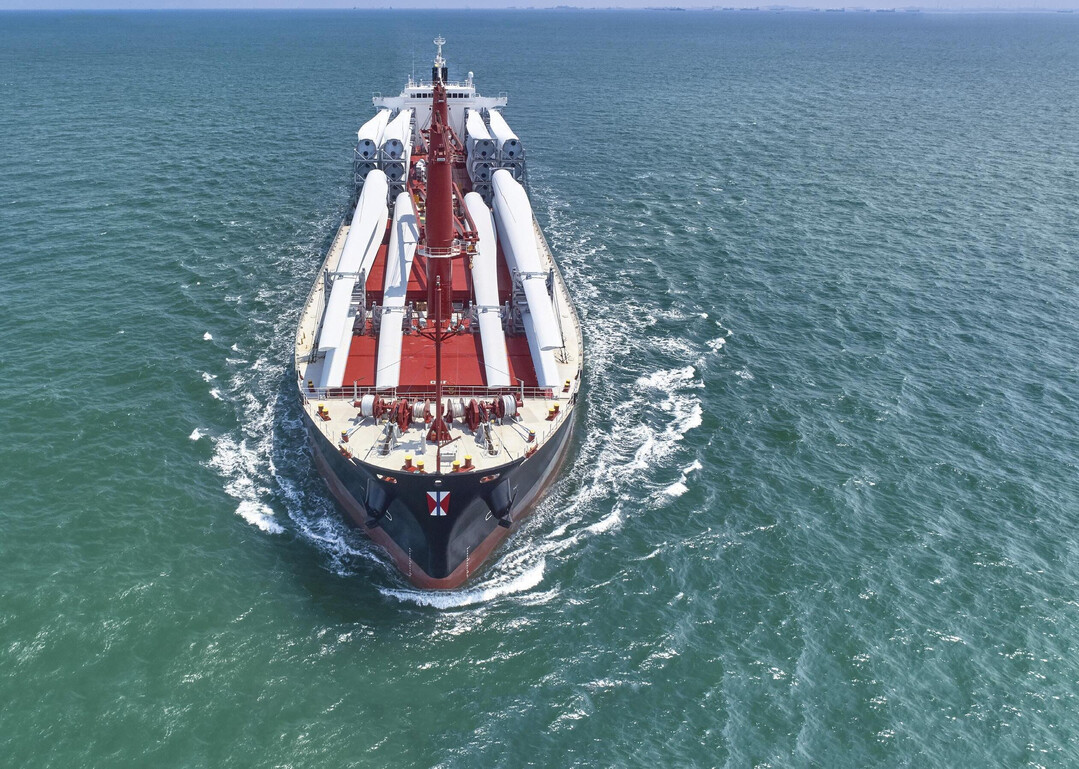
(C) ISSUU


SEOUL — The global shipbuilding industry is bracing for a seismic shift as QatarEnergy, the state-owned energy giant of Qatar, prepares to launch the third phase of its massive Liquefied Natural Gas (LNG) carrier acquisition program. This upcoming "mega-deal," estimated at approximately 70 vessels, is expected to center on "Q-Max" class ships—ultra-large carriers that represent the pinnacle of maritime engineering.

For South Korea’s "Big Three" shipbuilders—HD Korea Shipbuilding & Offshore Engineering (HD KSOE), Hanwha Ocean, and Samsung Heavy Industries—this presents both a high-stakes challenge and a golden opportunity to reclaim dominance in the premium vessel market.

The Shift to Q-Max: A New Industry Standard?
Traditionally, the "workhorse" of the LNG industry has been the 174,000 cubic meter ($m^3$) conventional carrier. However, Qatar’s third phase is reportedly shifting focus toward the Q-Max class, which boasts a capacity of roughly 260,000 $m^3$.

Size Comparison: A Q-Max vessel is nearly 1.5 times larger than the current industry standard.
Dimensions: These giants typically measure 345 meters in length and 53.8 meters in width, specifically designed to the maximum dimensions allowed by Qatari LNG terminals.
Efficiency: By transporting significantly more gas in a single voyage, Q-Max ships offer superior economies of scale, drastically reducing per-unit transportation costs despite their limited port compatibility.

Learning from the Past: The China Factor
The Korean shipbuilding industry is approaching this round with a sense of "now or never." During the second phase of Qatar’s project in 2024, China’s Hudong-Zhonghua Shipbuilding stunned the market by sweeping all 24 Q-Max vessel orders.

At the time, Korean shipbuilders were hesitant. Focused on "selective winning" to maximize profitability, they preferred the repetitive construction of 174,000 $m^3$ ships to maintain dock efficiency. China capitalized on this gap, positioning itself as a leader in the ultra-large segment.

Industry analysts warn that if Korea cedes the Q-Max market to China again, it could signal a permanent shift in the leadership of the high-end LNG carrier market.

Strategic Pivots: HD Hyundai, Hanwha, and Samsung
South Korean firms are no longer sitting on the sidelines. They are actively recalibrating their strategies to meet Qatar's demands:

HD KSOE: The company has partnered with DNV (a leading Norwegian classification society) to develop a next-generation ultra-large LNG carrier. While HD KSOE has previously built Q-Flex (210,000 $m^3$) models, they are now aiming for the Q-Max crown.
Samsung Heavy Industries & Hanwha Ocean: These two firms hold a historical advantage, having built approximately 40 Q-Max vessels during the late 2000s. They are expected to leverage this technical pedigree to secure new contracts.

Profitability vs. Risk
While the technical challenge is significant, the financial landscape has changed. LNG carrier prices have surged in recent years, reaching record highs. This price appreciation suggests that the "dock space risk"—the opportunity cost of building one giant ship instead of two smaller ones—might finally be offset by the high premiums Qatar is willing to pay.

"The Q-Max market is a high-stakes game where delivery slots, equipment procurement, and dock management determine the winner," said an industry official. "Korean shipbuilders are now viewing these ultra-large vessels not just as a technical feat, but as a strategic necessity to maintain their competitive edge over rising Chinese rivals."

[Copyright (c) Global Economic Times. All Rights Reserved.]
  • #Globaleconomictimes
  • #Korea
  • #Seoul
  • #Samsung
  • #LG
  • #Bitcoin
  • #Meta
  • #Business
  • #Economic
  • #The Woori Bank
  • #Elon Musk
  • #C
Yim Kwangsoo Correspondent

Popular articles

  • Masayoshi Son: AI-Driven Cyber Threats Pose "Worst Crisis for Japan Since the Black Ships"

  • South Korea to Ban Unapproved Biocidal Products Starting July 1

  • Government Slashes Petroleum Price Caps by 150 Won per Liter amid Easing Middle East Tensions

I like it
Share
  • Facebook
  • X
  • Kakaotalk
  • LINE
  • BAND
  • NAVER
  • https://globaleconomictimes.kr/article/1065598222778886 Copy URL copied.
Comments >

Comments 0

Weekly Hot Issue

  • KCCI Jeju Forum Opens: Chairman Chey Tae-won Urges Businesses to Catch the AI Wave Before It Becomes an Insurmountable Wall
  • AI Drones Take to the Skies in Revolutionary Hunt for Mosquitoes
  • The Gopher Miracle: How a 24-Hour Experiment Transformed a Volcanic Wasteland into a Lush Forest
  • Hyundai Motor Group to Acquire 100% Stake in Boston Dynamics, Accelerating Humanoid and Physical AI Commercialization
  • South Korea to Tighten Rules on Single-Stock Leveraged Products; Minimum Deposit Raised to 30 Million Won
  • TSMC Hits Record $40 Billion in Q2 Revenue Amid AI Boom, Pledges Additional $100 Billion for US Expansion

Most Viewed

1
Foreign Investors Return But Sell Off 'Samsung & Hynix' as Price Target Cuts Fuel KOSPI Peak Concerns
2
[Special Feature] Laying the Foundation for Korea's Informatization: Looking Back at the 1st Administrative Computer Network Project - Part 1
3
Baek Geum-ja Wooriot to Host 'Musical Costume Fashion Gala Show' at DDP
4
South Korea-Mexico High-Level Policy Consultation Held... Discussing Expanded Cooperation in AI, Space, and FTA
5
Hanwha Aerospace Forges Alliance with 49 Partners to Boost South Korea's Aviation Engine Ecosystem
광고문의
임시1
임시3
임시2

Hot Issue

OpenAI Rebounds in Secondary Market as Valuation Surges 20% in Three Months

South Korea to Tighten Rules on Single-Stock Leveraged Products; Minimum Deposit Raised to 30 Million Won

KCCI Jeju Forum Opens: Chairman Chey Tae-won Urges Businesses to Catch the AI Wave Before It Becomes an Insurmountable Wall

Hyundai Motor Group to Acquire 100% Stake in Boston Dynamics, Accelerating Humanoid and Physical AI Commercialization

Fashion Runway Show 2026

Global Economic Times
korocamia@naver.com
CEO : LEE YEON-SIL
Publisher : KO YONG-CHUL
Registration number : Seoul, A55681
Registration Date : 2024-10-24
Youth Protection Manager: KO YONG-CHUL
Singapore Headquarters
5A Woodlands Road #11-34 The Tennery. S'677728
Korean Branch
Phone : +82(0)10 4724 5264
#304, 6 Nonhyeon-ro 111-gil, Gangnam-gu, Seoul
Copyright © Global Economic Times All Rights Reserved
  • 향기네무료급식
  • BCB부천방송
  • 반달곰 프로젝트
Search
Category
  • All articles
  • Synthesis
  • World
  • Business
  • Industry
  • ICT
  • Distribution Economy
  • Well+Being
  • Travel
  • Eco-News
  • Education
  • Korean Wave News
  • Opinion
  • Arts&Culture
  • Sports
  • People & Life 
    • 전체
    • International Student Report
    • With Ambassador
  • Column 
    • 전체
    • Cho Kijo Column
    • Cherry Garden Story
    • Ko Yong-chul Column
    • Kim Seul-Ong Column
    • Lee Yeon-sil Column
  • Photo News
  • New Book Guide
  • Multicultural News
  • Jobs & Workers