![[등록] 2026-09-01 15:48:31](/support/_updata/banner2/tl181982910_6749.png)


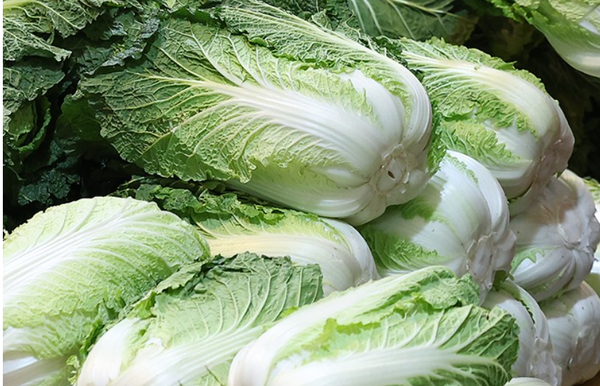
With weather conditions rapidly stabilizing and shipments from across the country starting in earnest, the kimchi vegetable market is experiencing significant fluctuations. Some experts have raised concerns about a sharp price drop. This four-part series will delve into the supply and demand trends, as well as the price outlook, for major kimchi vegetables such as cabbage, radish, chili pepper, garlic, and ginger.
On October 30, at a cabbage farm in Buan, North Jeolla Province, farmers were seen putting the finishing touches on the cultivation of autumn cabbage for kimchi. Hwang Ho-jun, who cultivates cabbage on a 9,917-square-meter plot, said, "While we were initially concerned about poor crop conditions in the early stages of growth, thanks to the application of nutrients and diligent pest control, we expect the decrease in production to be around 10% compared to the previous year." Kim Kwang-yun, a manager at the Buan Cheonnyeon Eumsi Joint Cooperative, explained, "Due to the delayed growth caused by abnormal high temperatures, the current head formation is only 70% complete. Although the heads are slightly smaller, we plan to start harvesting around November 7, which is 3-4 days later than usual."
Similar situations were observed in South Jeolla Province. Yoon Seung-hyun, a team leader at Haenam Hwawon Agricultural Cooperative in South Jeolla Province, said, "We plan to start harvesting on the 15th, which is seven days later than usual, and the number of leaves per head is expected to decrease by about three compared to last year, resulting in a 5-10% decrease in production."
In Gangwon Province, some experts predicted that kimchi demand would be concentrated after mid-November. Yang Beom-seok, the head of the vegetable business division at Daegwanryeong Horticultural Cooperative in Pyeongchang, said, "In the Gangwon region, kimchi is usually made in late October, but there is a prevailing sentiment to postpone kimchi making this year."
Cabbage prices plummeted throughout October. The wholesale price of cabbage at the Garak Market in Seoul, based on a 10kg unit, dropped from the mid-20,000 won range to 8,000 won. The average transaction price from October 1 to 17 was 24,281 won, but it fell below 10,000 won on the 18th (18,809 won) and averaged 15,962 won until the 23rd. From the 25th, it recorded in the low 10,000 won range, falling to 9,706 won on the 28th and 8,753 won on the 30th. The price on the 30th was 19.3% lower than the average for October of the previous year (11,841 won) and 16.6% lower than the average for October (14,901 won).
Market insiders attributed the decline to expected trends but differed in their outlook for future prices. Lee Kwang-hyung, secretary-general of the Korea Agricultural Distribution Corporation Federation, said, "Until mid-November, cabbage will be shipped from various regions across the country, including Chuncheon and Jeongseon in Gangwon, Yeoncheon in Gyeonggi, Yeongyang and Mungyeong in Gyeongbuk, and Seosan and Asan in Chungnam, and is expected to be traded at around 9,000 won." He added, "After mid-November, as the shipping area narrows to the south, prices may rise to around 10,000 won."
Kim Myeong-bae, a team leader at Deaa Chunghwa, said, "Considering the poor crop conditions due to the abnormal high temperatures this summer, prices are expected to remain in the 10,000 won range until mid-November." Some experts from forecasting agencies are reportedly predicting a significant drop to 8,000 won throughout November.
A variable is the shipping and storage volume of regions like Haenam. Lee said, "In Haenam, they have planted a lot of varieties with high storage capacity ('Gyeowolwangguk'). Depending on how they manage the shipping and storage volume from Haenam after mid-November, the price may vary."
Meanwhile, the Ministry of Agriculture, Food and Rural Affairs announced on October 30 that "there will be no problem with the supply of kimchi cabbage this year as kimchi demand is expected to decrease by 3.2% compared to last year and the temperature is suitable for cabbage growth."
[Copyright (c) Global Economic Times. All Rights Reserved.]