• 2026.03.03 (Tue)
  • All articles
  • LOGIN
  • JOIN
Global Economic Times
fashionrunwayshow2026
  • Synthesis
  • World
  • Business
  • Industry
  • ICT
  • Distribution Economy
  • Well+Being
  • Travel
  • Eco-News
  • Education
  • Korean Wave News
  • Opinion
  • Arts&Culture
  • Sports
  • People & Life
    • International Student Report
    • With Ambassador
  • Column
    • Cho Kijo Column
    • Cherry Garden Story
    • Ko Yong-chul Column
    • Kim Seul-Ong Column
    • Lee Yeon-sil Column
  • Photo News
  • New Book Guide
MENU
 
Home > Arts&Culture

‘Culture Day’ Expanded to Every Wednesday; New Policy Set to Begin Next Month

Min Gyu Mi Reporter / Updated : 2026-03-03 13:58:21
  • -
  • +
  • Print
Ministry of Culture, Sports and Tourism aims to integrate cultural activities into daily "life rhythms" starting April 1st.


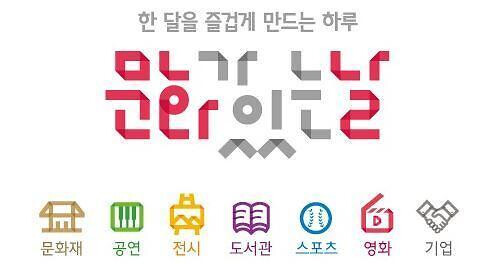
SEOUL — The South Korean government has officially moved to expand its flagship "Culture Day" program from once a month to every Wednesday, aiming to make cultural participation a staple of everyday life.

The Ministry of Culture, Sports and Tourism (MCST) announced on March 3 that an amendment to the Enforcement Decree of the Framework Act on Culture was approved during a cabinet meeting. The revised policy is scheduled to take effect on April 1, 2026.

From Monthly Events to Weekly Rhythms
Since its inception in 2014, "Culture Day" was observed only on the last Wednesday of each month. While the program started with a participation rate of 28.4%, it surged to 66.3% by 2024. The Ministry views this expansion as a strategic shift to transform cultural enjoyment from a "special event" into a consistent "lifestyle rhythm."

"This expansion is a turning point for the normalization of culture, where citizens can easily enjoy the arts whenever and wherever they want," said Kim Yong-seop, Director General of the Regional Culture Policy Bureau at the MCST.

Key Changes and Implementation
The expansion will be spearheaded by the public sector while encouraging voluntary participation from the private sector:

Public Institutions: State-run museums, art galleries, and cultural centers will strengthen "Wednesday-special" programming and expand existing benefits.
Regional Initiatives: Local governments plan to link the expansion with regional assets, such as traditional Hanok villages, folk music (Nongak), and craft workshops.
Private Sector Autonomy: Unlike the mandatory participation seen in some public sectors, private companies and venues will maintain the autonomy to decide their own discounts and special programs based on their business conditions.

Economic and Social Impact
The MCST expects that increasing the frequency of cultural opportunities will lead to a practical boost in cultural consumption. By lowering the barriers to entry, the government hopes to breathe new life into the arts and content industries, ultimately enhancing the overall quality of life for the public.

[Copyright (c) Global Economic Times. All Rights Reserved.]

  • #Korea
  • #Seoul
  • #Hallyu
  • #USA
  • #Economy
  • #Busoness
  • #Global
  • #World
  • #Consumer
  • #Export
  • #Import
  • #Hanguel
  • #Travel
  • #Tour
  • #Food
Min Gyu Mi Reporter
Min Gyu Mi Reporter

Popular articles

  • Seollal Holiday Rush Begins: Afternoon Traffic Congestion Expected Today

  • Former Announcer Lee Hye-sung Showcases 5-Year Baking Expertise on 'World of Baking'

  • Incheon Songdo Emerging as World’s Largest Bio-Manufacturing Hub

I like it
Share
  • Facebook
  • X
  • Kakaotalk
  • LINE
  • BAND
  • NAVER
  • https://globaleconomictimes.kr/article/1065588970441277 Copy URL copied.
Comments >

Comments 0

Weekly Hot Issue

  • OpenAI Secures Record-Breaking $120B Funding: A New Era of AWS Partnership and Infrastructure Dominance
  • Buffett’s Final Report Card: Berkshire Hathaway Operating Profits Plunge Amid Asset Write-downs
  • Oil Hits $130 Amid Prolonged Hormuz Blockade: How Will Global Markets React?
  • Chinese Zoo Caught Using Dead Tiger Cub’s Footage in Live Stream to Solicit Donations
  • Instagram to Alert Parents When Teens Search for 'Self-Harm' or 'Suicide'
  • Samsung’s 5-Year Obsession with Clarity: The Dawn of the ‘Privacy Display’

Most Viewed

1
2026, The Grand Year of Hangeul Celebration — The River of History Where Five Streams Converge
2
A New Milestone for Ukraine’s Post-War Reconstruction: The Birth of ISVP
3
Mexican currency and the powerful history behind its designs
4
Revised and Expanded Edition of ‘Failure of Negotiations with North Korea: Truth and Solutions’ Published
5
Commentary That Douses the Joy of Victory: A Twisted Perspective
광고문의
임시1
임시3
임시2

Hot Issue

iPhone Defies ‘Chipflation’ with New Budget-Friendly Model

Bottega Veneta Proposes Winter Style: The Intersection of Brutalism and Sensuality

President Lee Embarks on State Visit to Singapore and Philippines, Aiming to Expand AI Cooperation

Buffett’s Final Report Card: Berkshire Hathaway Operating Profits Plunge Amid Asset Write-downs

Let’s recycle the old blankets in Jeju Island’s closet instead of incinerating them.

Global Economic Times
korocamia@naver.com
CEO : LEE YEON-SIL
Publisher : KO YONG-CHUL
Registration number : Seoul, A55681
Registration Date : 2024-10-24
Youth Protection Manager: KO YONG-CHUL
Singapore Headquarters
5A Woodlands Road #11-34 The Tennery. S'677728
Korean Branch
Phone : +82(0)10 4724 5264
#304, 6 Nonhyeon-ro 111-gil, Gangnam-gu, Seoul
Copyright © Global Economic Times All Rights Reserved
  • 에이펙2025
  • APEC2025가이드북TV
  • 독도는우리땅
Search
Category
  • All articles
  • Synthesis
  • World
  • Business
  • Industry
  • ICT
  • Distribution Economy
  • Well+Being
  • Travel
  • Eco-News
  • Education
  • Korean Wave News
  • Opinion
  • Arts&Culture
  • Sports
  • People & Life 
    • 전체
    • International Student Report
    • With Ambassador
  • Column 
    • 전체
    • Cho Kijo Column
    • Cherry Garden Story
    • Ko Yong-chul Column
    • Kim Seul-Ong Column
    • Lee Yeon-sil Column
  • Photo News
  • New Book Guide
  • Multicultural News
  • Jobs & Workers