![[등록] 2026-09-01 15:48:31](/support/_updata/banner2/tl181982910_6749.png)


(C) China Daily
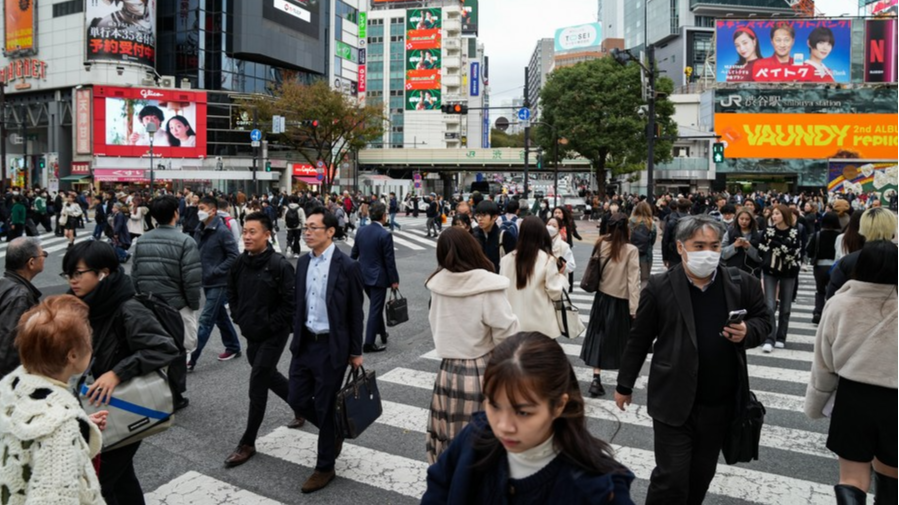
TOKYO — Japan is witnessing a profound demographic transformation as the proportion of foreigners among its young residents approaches a historic 10% threshold. According to recent data released on January 3, 2026, the ratio of foreign nationals in their 20s has more than doubled over the last decade, reflecting the nation's increasing reliance on overseas labor to stabilize its shrinking workforce.
A Rapid Demographic Shift
Statistics provided by Kyodo News reveal that foreign nationals now account for 9.5% of Japan’s total population in their 20s, a significant jump from 4.1% recorded in 2015. While the native Japanese population in this age bracket plummeted by 1.03 million to 11.64 million over the past ten years, the number of foreign residents in the same demographic rose by 680,000, reaching 1.22 million.
This trend is particularly pronounced among males in their 20s, where the ratio has already surpassed the double-digit mark at 10.1%. Regionally, Gunma Prefecture, located north of Tokyo, reported the highest density, with foreign nationals comprising 14.1% of its young population.
From Urban Hubs to Regional Realities
The geographical and national distribution of foreign residents is also undergoing a notable shift. While the overall foreign population remains highest in major metropolitan areas, there is a clear distinction in nationality by region.
According to the Immigration Services Agency, Vietnamese nationals have become the dominant foreign group in 33 out of Japan's 47 prefectures, particularly in regional areas. This marks a reversal from 2015, when Chinese nationals held the top spot in the majority of prefectures.
However, in terms of absolute numbers, Chinese nationals remain the largest group nationwide, totaling approximately 900,000 as of mid-2025. They are heavily concentrated in urban centers such as Tokyo (295,000), Osaka, and Saitama. Vietnam follows with 660,000 residents, while South Koreans rank third at 410,000.
Evolution of Residency Status
The nature of foreign residency is also evolving from temporary labor to long-term settlement. The Sankei Shimbun noted that while many Chinese nationals previously entered Japan as technical interns in agriculture and manufacturing, there is a growing trend toward obtaining permanent residency or specialized visas in fields such as "Technology, Humanities, and International Services." The number of Chinese permanent residents has increased by 130,000 over the past decade, now totaling approximately 350,000.
Challenges and Future Outlook
As the Japanese government introduces the new "Ikusei Shuro" (Training and Employment) system to replace the controversial technical internship program, the influx of foreign talent is expected to accelerate.
Experts suggest that the primary challenge for Japan moving forward will be social integration. To ensure that foreign residents can successfully settle into local communities, the government and private sectors must prioritize support for Japanese language proficiency and the acquisition of specialized professional skills. With two-thirds of the foreign population currently aged 30 or younger, the success of these integration efforts will likely determine the future vitality of Japan’s regional economies.
[Copyright (c) Global Economic Times. All Rights Reserved.]