![[등록] 2026-09-01 15:48:31](/support/_updata/banner2/tl181982910_6749.png)


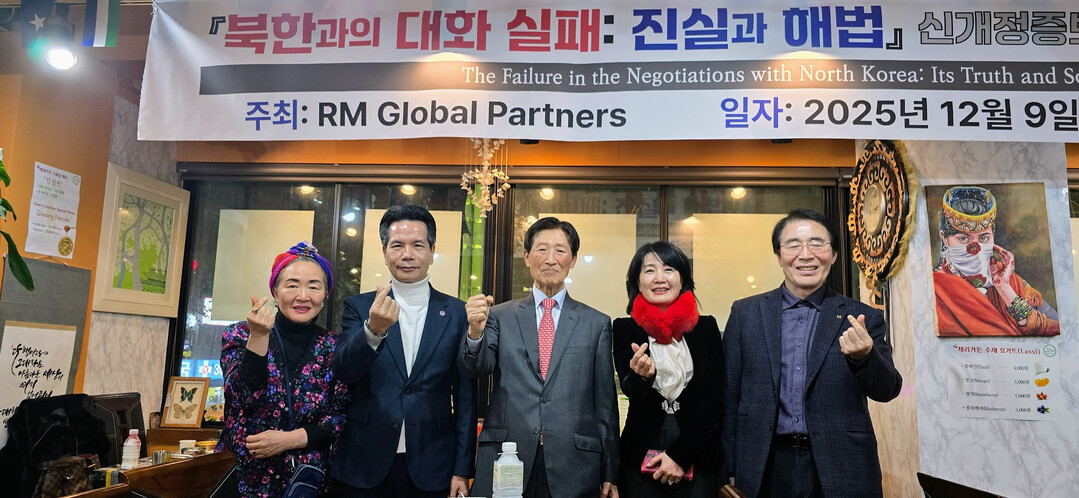
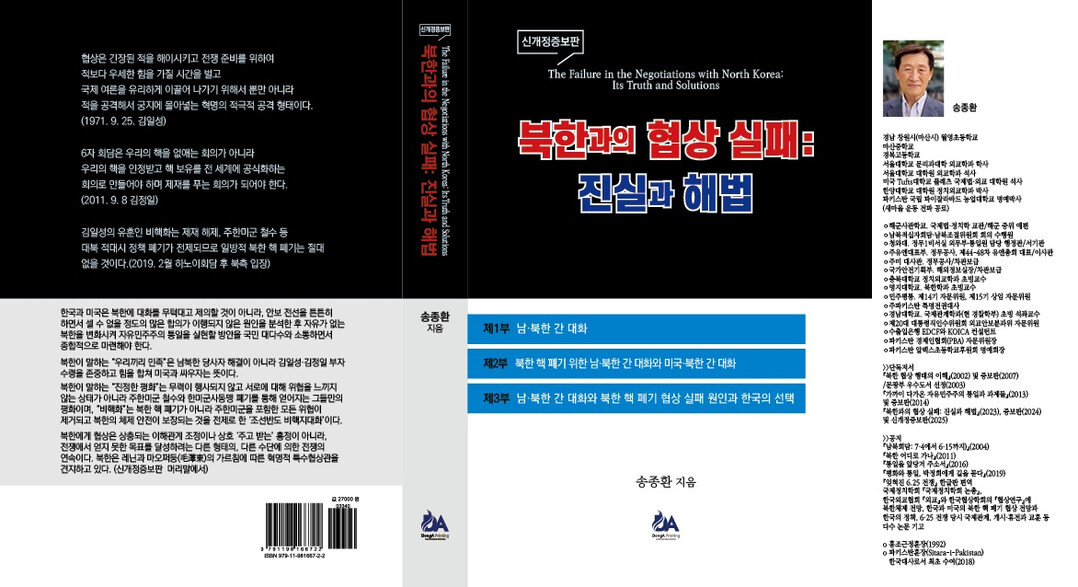
On December 7, the government announced that it would resume dialogue with North Korea next year. Timely, on December 8, the revised and enlarged edition of 'Failure of Negotiations with North Korea: Truth and Solution', which was written in 2023 by Professor Song Jong-hwan, Visiting Chair Professor at Kyungnam University (former Ambassador to Pakistan) and a first-generation participant in the inter-Korean dialogue in the early 1970s, was published.
On the evening of December 9, a small commemorative book launch event was held at Cherry Garden. At this gathering, the author emphasized that now is the time to inspect and strengthen the national security system, given the realization of the threat posed by North Korea's nuclear weapons and other weapons of mass destruction, and the disappearance of North Korean nuclear dismantlement from the national security strategy documents of the United States and China.
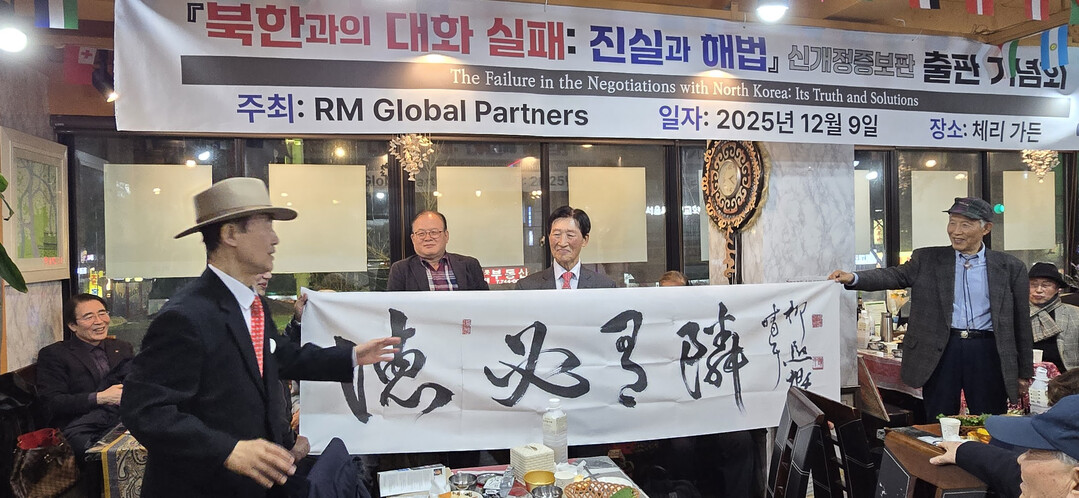
The author argued that for the past 50 years, North Korea has returned to dialogue when facing internal or external threats to its system. Therefore, President Lee Jae-myung and President Trump should not offer dialogue recklessly to North Korea. Instead, they must first analyze the causes behind the non-implementation of countless agreements, especially those between heads of state. Following this analysis, they must comprehensively devise a plan to transform the unfree North Korea and realize unification based on liberal democracy, while communicating this plan with the majority of the public.
By analyzing various North Korean documents and assertions made in several talks, the author emphasized that North Korea's phrase "Our People, Together" is not about the two parties of the same ethnic group, North and South Korea, resolving the unification issue. Instead, it means respecting the father and son leaders, Kim Il-sung and Kim Jong-il, joining forces, fighting the United States, and achieving communist unification.

The author pointed out that the 'Genuine Peace' North Korea speaks of is not a state where force is not exercised and mutual threats are not felt. Instead, it is their peace achieved through the withdrawal of U.S. forces in Korea and the termination of the ROK-U.S. military alliance. He also clarified that 'Denuclearization' is not the dismantlement of North Korea's nuclear weapons, but rather the 'Denuclearization of the Korean Peninsula', premised on the removal of all threats, including U.S. forces in Korea, and the guarantee of the North Korean regime's safety. He stressed that for North Korea, negotiation is not an adjustment of conflicting interests or a reciprocal 'give-and-take' bargain; it is a continuation of war by other means and in another form, aimed at achieving goals not attained through warfare. North Korea adheres to a revolutionary, special negotiation perspective based on the teachings of Lenin and Mao Zedong.
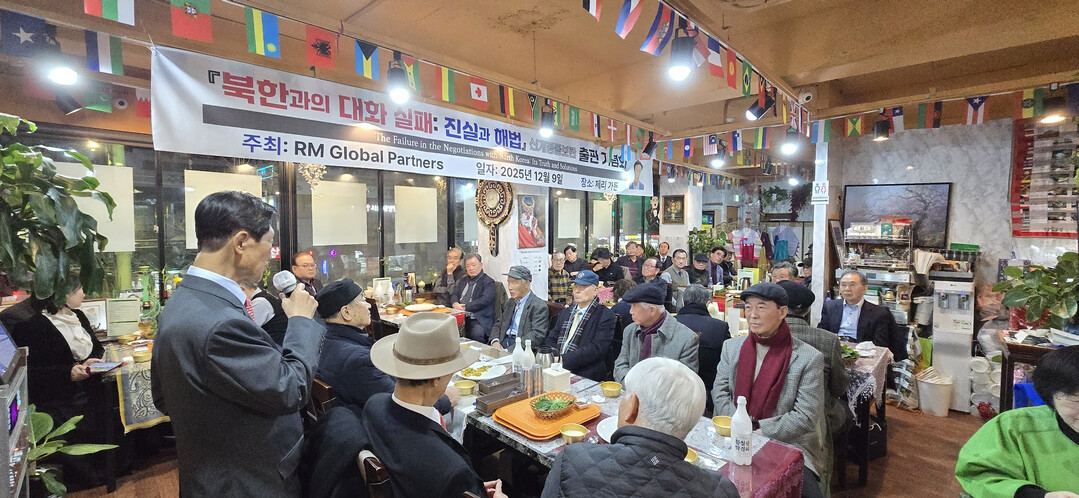
The author recounted an event from the fall of 1983. While taking his oral examination for a Master's degree in International Law and Diplomacy at the Fletcher School of Law and Diplomacy at Tufts University, Professor Yuri Ra’nan, an authority on Soviet foreign policy, asked how Lenin's anti-imperialist united front tactic was being applied to North Korea's strategy toward the South, and how South Korea should respond. The author, then in his late 30s, answered that the core of North Korea's strategy toward the South was the withdrawal of U.S. forces in Korea and then orally presented countermeasures.
While the ROK-U.S. summit on November 14 announced an agreement to construct a nuclear-powered submarine, which would take at least five years, the author expressed concern that the joint statement from the 57th ROK-U.S. Security Consultative Meeting (SCM) between the ROK and U.S. Defense Ministers, which was announced on the same day and concerns the transfer of wartime operational control (OPCON) within President Lee's term, could potentially lead to a chain reaction resulting in the withdrawal of U.S. forces in Korea. He argued that serious countermeasures must be taken, regardless of partisan interests.
At the current stage, containing China is the top priority for the United States, making the stationing of U.S. forces in strategically located South Korea essential. However, he expressed concern that future conflicts over the command structure of the future Combined Forces Command, coupled with the current ROK government's pro-North and pro-China stance, could raise the possibility of the withdrawal of U.S. forces in Korea being discussed within the U.S.
In light of the fact that constructing a nuclear-powered submarine takes over five years, and the U.S. Congress's approval for nuclear fuel transfer took over three years, he worried that if the OPCON transfer were completed during President Lee's term—a time when a strategic asset like a nuclear-powered submarine to deter North Korea's WMDs is not yet secured—and this event sparked discussions about the withdrawal of U.S. forces in Korea, South Korea would lose one of its two security pillars. In that event, North Korea would achieve the 'National Liberation' advocated by Lenin, a goal it has coveted day and night, marking a golden opportunity to realize communist unification.
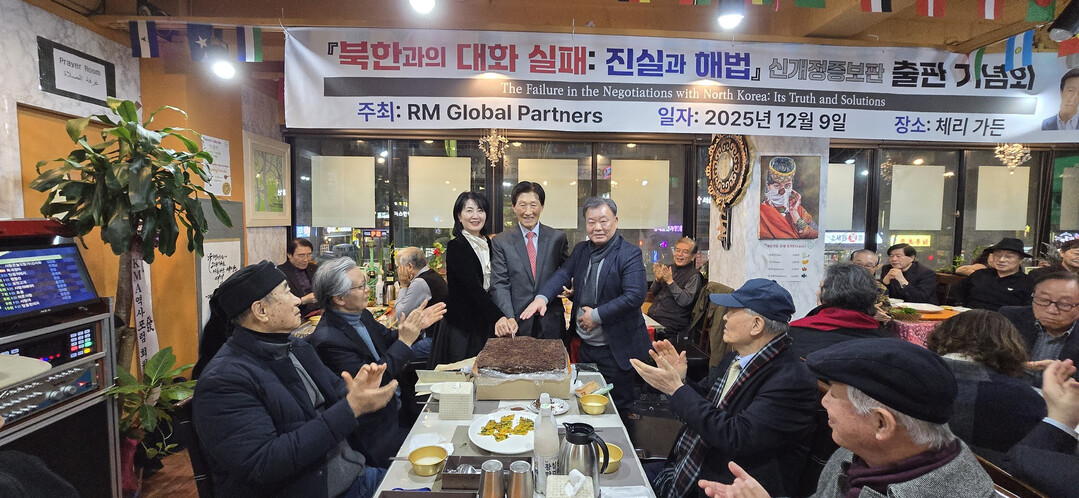
He repeatedly emphasized that South Korea must strengthen its security alliance with the U.S. to substantially deter North Korea's nuclear weapons and WMD threats, further solidify the extended deterrence policy, strengthen its independent military capability, and actively consult with President Trump's administration to realize the early construction of nuclear-powered submarines as well as consider other nuclear options.
About 50 people attended the meeting, including the author's classmates from the College of Liberal Arts and Sciences at Seoul National University, who are over 80, and former colleagues. At the end of the meeting, Choi Jeong-yoon, Vice President of the Alex Primary School in Pakistan Sponsorship Committee, which the author spearheaded as Honorary Chairman and was launched on November 4, provided an update and requested membership support.
[Copyright (c) Global Economic Times. All Rights Reserved.]