• 2025.12.07 (Sun)
  • All articles
  • LOGIN
  • JOIN
Global Economic Times
APEC2025KOREA가이드북
  • Synthesis
  • World
  • Business
  • Industry
  • ICT
  • Distribution Economy
  • Well+Being
  • Travel
  • Eco-News
  • Education
  • Korean Wave News
  • Opinion
  • Arts&Culture
  • Sports
  • People & Life
  • Column
    • Cho Kijo Column
    • Lee Yeon-sil Column
    • Ko Yong-chul Column
    • Cherry Garden Story
  • Photo News
  • New Book Guide
MENU
 
Home > Business

Bank Branches on the Decline as Digital Banking Gains Ground

Global Economic Times Reporter / Updated : 2025-01-11 13:27:50
  • -
  • +
  • Print


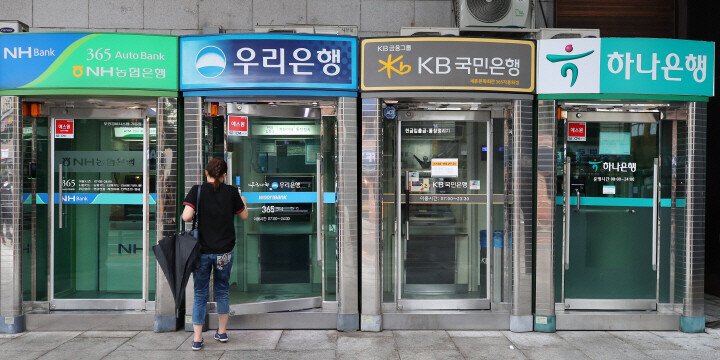
Seoul, South Korea – The number of bank branches in South Korea has continued to shrink, with over 50 branches closing in the past year alone, according to recent data from the Bank of Korea.

As of the third quarter of last year, the total number of domestic bank branches stood at 5,849, marking a decrease of 53 from the previous year. This downward trend has been persistent since 2012, when the number of branches peaked at 7,835. While the pace of closures has slowed somewhat in recent years, the number of branches has consistently declined on a quarterly basis.

The primary driver behind this decline is the growing popularity of digital banking. With more and more customers opting for online and mobile banking services, the need for physical branches has diminished. To improve efficiency and reduce costs, banks have been consolidating their branch networks.

For instance, Woori Bank recently closed 21 branches nationwide, including its flagship branch in Seoul's Jongno district. A representative from a major commercial bank attributed the closures to the increasing reliance on digital channels, stating that 70-80% of deposits and loans are now originated online.

However, the rapid closure of bank branches has raised concerns about potential financial exclusion, particularly among the elderly who may not be as comfortable with digital banking. A study by the Korea Financial Research Institute found that older adults in rural areas are disproportionately affected by the decline in branch accessibility. While residents in major cities like Seoul, Busan, and Daejeon generally have a branch within a kilometer, those in more remote regions like Gangwon, Jeonnam, and Gyeongbuk may have to travel as far as 27 kilometers to reach the nearest branch.

As banks continue to adapt to the evolving digital landscape, it remains to be seen how they will balance the need for cost efficiency with their social responsibility to serve all customers.

[Copyright (c) Global Economic Times. All Rights Reserved.]

  • #globaleconomictimes
  • #seoulkorea
  • #periodicoeconomico
  • #글로벌이코노믹타임즈
  • #GET
  • #GETtv
  • #대한민국
  • #중기청
  • #재외동포청
  • #외교부
  • #micorea
  • #my
Global Economic Times Reporter
Reporter Page

Popular articles

  • Kim Jin-myung’s Novel on King Sejong to Feature Citizens' Voices

  • Hydrofluoric Acid Detected at POSCO Pohang Steelworks Chemical Leak Site, Four Casualties 

  • EU Halts Multi-Entry Visas for Russians Amid Escalating Security Concerns

I like it
Share
  • Facebook
  • X
  • Kakaotalk
  • LINE
  • BAND
  • NAVER
  • https://globaleconomictimes.kr/article/1065587215101263 Copy URL copied.
Comments >

Comments 0

Weekly Hot Issue

  • JAPAN’S RISING PREDICAMENT: RECORD BEAR ATTACKS STRIKE FEAR ACROSS NATION
  • Trump NSS Declares Europe Faces 'Civilizational Erasure,' Vows to Aid Anti-Immigration Right-Wing Parties
  • Meta's Strategic U-Turn: The AI Race Re-Elevates Real-Time News
  • Gapyeong's Petit France and Italian Village Illuminate Winter with 'Starlight Festival'
  • Grand Opening: Gwangju Museum's Ceramics Culture Center Offers Comprehensive Look at Ceramic History
  • Choi Bun-do, Chairman of PTV Group, Assumes Presidency of the Korean Chamber of Commerce and Industry in South Central Vietnam

Most Viewed

1
Korean War Ally, Reborn as an 'Economic Alliance' Across 70 Years: Chuncheon's 'Path of Reciprocity,' a Strategic
2
A Garden Where the City's Rhythm Stops: Dongdaemun's 'Cherry Garden', Cooking Consideration and Diversity
3
The Sudden Halt of Ayumi Hamasaki's Shanghai Concert: Unpacking the Rising Sino-Japanese Tensions
4
Farewell to a Legend: South Korea Mourns the Passing of Esteemed Actor Lee Soon-jae
5
China’s Anti-Starlink Strategy: Simulation Suggests 2,000 Drones Needed for Taiwan Disruption
광고문의
임시1
임시3
임시2

Hot Issue

EU Unveils €90 Billion Ukraine Aid Plan Backed by Frozen Russian Assets

Seoul's 'Insane Rent' Warning: Why $30,000 Monthly Rent is a Looming Threat Residential Crisis Deepens as Tourist Housing Conversion Hits Supply

Seo Min-kyu Wins Gold at Junior Grand Prix Final... First Korean Since Kim Yuna 20 Years Ago

2026 Overseas Koreans Agency Budget Confirmed at 112.7 Billion Won... 5.3% Increase Year-on-Year

Let’s recycle the old blankets in Jeju Island’s closet instead of incinerating them.

Global Economic Times
korocamia@naver.com
CEO : LEE YEON-SIL
Publisher : KO YONG-CHUL
Registration number : Seoul, A55681
Registration Date : 2024-10-24
Youth Protection Manager: KO YONG-CHUL
Singapore Headquarters
5A Woodlands Road #11-34 The Tennery. S'677728
Korean Branch
Phone : +82(0)10 4724 5264
#304, 6 Nonhyeon-ro 111-gil, Gangnam-gu, Seoul
Copyright © Global Economic Times All Rights Reserved
  • 에이펙2025
  • APEC2025가이드북TV
  • 세종시
Search
Category
  • All articles
  • Synthesis
  • World
  • Business
  • Industry
  • ICT
  • Distribution Economy
  • Well+Being
  • Travel
  • Eco-News
  • Education
  • Korean Wave News
  • Opinion
  • Arts&Culture
  • Sports
  • People & Life
  • Column 
    • 전체
    • Cho Kijo Column
    • Lee Yeon-sil Column
    • Ko Yong-chul Column
    • Cherry Garden Story
  • Photo News
  • New Book Guide
  • Multicultural News
  • Jobs & Workers