• 2026.04.22 (Wed)
  • All articles
  • LOGIN
  • JOIN
Global Economic Times
fashionrunwayshow2026
  • Synthesis
  • World
  • Business
  • Industry
  • ICT
  • Distribution Economy
  • Well+Being
  • Travel
  • Eco-News
  • Education
  • Korean Wave News
  • Opinion
  • Arts&Culture
  • Sports
  • People & Life
    • International Student Report
    • With Ambassador
  • Column
    • Cho Kijo Column
    • Cherry Garden Story
    • Ko Yong-chul Column
    • Kim Seul-Ong Column
    • Lee Yeon-sil Column
  • Photo News
  • New Book Guide
MENU
 
Home > Synthesis

NATO Eyes Significant Defense Spending Increase

Desk / Updated : 2024-12-14 12:55:45
  • -
  • +
  • Print


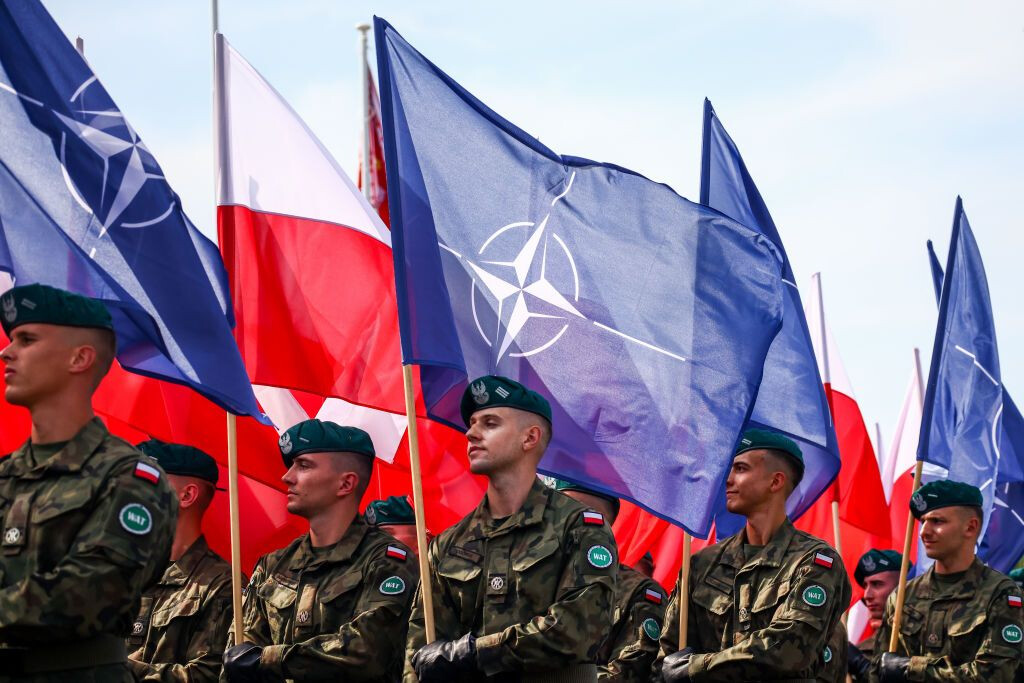
Brussels, Belgium – NATO member states are considering a substantial increase in defense spending, aiming to reach 3% of their Gross Domestic Product (GDP) by 2030. This ambitious target, if implemented, would significantly bolster the alliance's military capabilities and collective security posture.

A New Era of Defense Spending

The proposed increase comes as a response to evolving geopolitical challenges and the changing security landscape in Europe. The ongoing conflict in Ukraine has highlighted the need for a stronger and more united NATO. Additionally, the potential implications of a more assertive Russia and the growing threat of terrorism have prompted member states to reevaluate their defense commitments.

While the current target of 2% GDP, agreed upon in 2014, has been a significant step forward, it is increasingly seen as insufficient to address the complex security challenges of the 21st century. The new 3% target, if adopted, would represent a major shift in defense spending priorities for many NATO members.

Challenges and Implications

However, such a significant increase in defense spending poses significant challenges. It would require substantial budgetary reallocations, potentially impacting other vital public services like healthcare and education. Moreover, it could exacerbate existing economic disparities within the alliance.

Despite these challenges, many NATO members recognize the imperative of strengthening their defense capabilities. The proposal to increase spending to 3% of GDP reflects a growing consensus among member states on the need for a more robust and resilient alliance.

The Road Ahead

The decision on the new defense spending target is expected to be made at the next NATO summit, scheduled for June 2025 in The Hague. In the meantime, NATO members will continue to engage in discussions and negotiations to finalize the details of the proposed increase.

As the alliance prepares for a new era of defense spending, it is crucial to balance the need for enhanced security with the broader economic and social implications of such a significant investment.

[Copyright (c) Global Economic Times. All Rights Reserved.]

  • #globaleconomictimes
  • #koyongchul
  • #cherrylee
  • #seoulkorea
  • #periodicoeconomico
  • #글로벌이코노믹타임즈
  • #GET
  • #GETtv
  • #liderdel
Desk
Desk

Popular articles

  • Samsung Completes Transition to 236-Layer 8th Gen V-NAND in Xi’an; 9th Gen Mass Production Slated for Late 2026

  • France Invites South Korea to June G7 Summit; Seoul Evaluating Attendance

  • S. Korea to Launch Government-Backed 'K-Brand' Certification to Combat Global Counterfeiting

I like it
Share
  • Facebook
  • X
  • Kakaotalk
  • LINE
  • BAND
  • NAVER
  • https://globaleconomictimes.kr/article/1065585235257412 Copy URL copied.
Comments >

Comments 0

Weekly Hot Issue

  • Theori Supplies ‘Xint,’ an AI-Powered Hacker Solution, to Samsung Electronics
  • Inzent Partners with Canada’s Solace to Accelerate Expansion in the Financial IT Market
  • FORCS to Unveil 'eformsign AI Assistant' at WIS 2026: A Revolution in AI-Powered Electronic Documents
  • [Interview] Chairman David Cha of ‘Ethiopia Bet’: "Building a House (Bet) of Self-Reliance Beyond Simple Relief"
  • Taiwanese Tourism Industry Experiences the Charm of Chungnam
  • A University Professor's Lament

Most Viewed

1
From the Alps to Seoul: Life in the Heart of Europe
2
BYD Hits 10,000-Unit Milestone in South Korea Within One Year, Eyes Exclusive "10,000 Club" Entry
3
$2 Million Per Ship: Iran’s "Hormuz Toll" Emerges as Chokepoint in Peace Talks
4
BOK Holds Rate Steady for Seventh Consecutive Meeting, Signaling End of Easing Cycle
5
Republican Party Faces "Total Crisis" as War and Inflation Cloud Midterm Outlook
광고문의
임시1
임시3
임시2

Hot Issue

Generative AI Use Triples Among Seoul Citizens, but Digital Divide Persists for Seniors

MAFRA Unveils Success in Integrated Rural Care: Synergizing Social Farming and Medical Services

Gov't Launches 'One-Team' Initiative to Transform Regional Airports into Tourism Hubs

Inzent Partners with Canada’s Solace to Accelerate Expansion in the Financial IT Market

Fashion Runway Show 2026

Global Economic Times
korocamia@naver.com
CEO : LEE YEON-SIL
Publisher : KO YONG-CHUL
Registration number : Seoul, A55681
Registration Date : 2024-10-24
Youth Protection Manager: KO YONG-CHUL
Singapore Headquarters
5A Woodlands Road #11-34 The Tennery. S'677728
Korean Branch
Phone : +82(0)10 4724 5264
#304, 6 Nonhyeon-ro 111-gil, Gangnam-gu, Seoul
Copyright © Global Economic Times All Rights Reserved
  • 에이펙2025
  • APEC2025가이드북TV
  • 반달곰 프로젝트
Search
Category
  • All articles
  • Synthesis
  • World
  • Business
  • Industry
  • ICT
  • Distribution Economy
  • Well+Being
  • Travel
  • Eco-News
  • Education
  • Korean Wave News
  • Opinion
  • Arts&Culture
  • Sports
  • People & Life 
    • 전체
    • International Student Report
    • With Ambassador
  • Column 
    • 전체
    • Cho Kijo Column
    • Cherry Garden Story
    • Ko Yong-chul Column
    • Kim Seul-Ong Column
    • Lee Yeon-sil Column
  • Photo News
  • New Book Guide
  • Multicultural News
  • Jobs & Workers