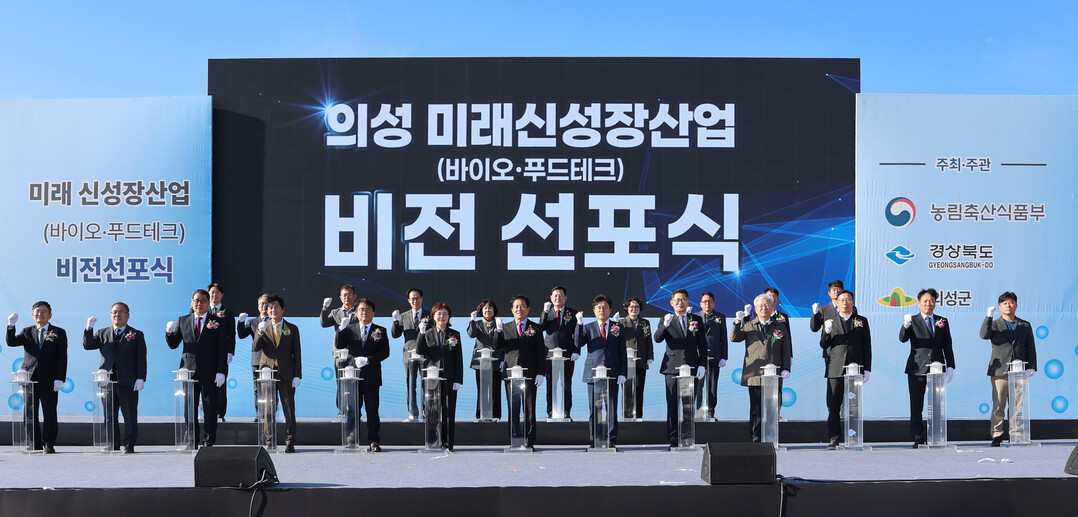
Breaks ground on Korea Food Research Institute Gyeongbuk Headquarters; completes Pohang Food Robot Research Support Center
Attracts KRW 45.5 billion in investment and boosts Gyeongbuk grape exports by 109.2%, leaping forward as a global K-food platform
Gyeongbuk’s agriculture, once confined to raw produce cultivation, has embarked on a structural transformation into a comprehensive food industry encompassing advanced technology, enterprises, and global markets.
Marking 100 days since Gyeongsangbuk-do launched the "K-Food Industry Bureau" on August 10—the first dedicated food industry organization among Korea’s metropolitan governments—a series of achievements have laid a new growth foundation for the region's food sector.
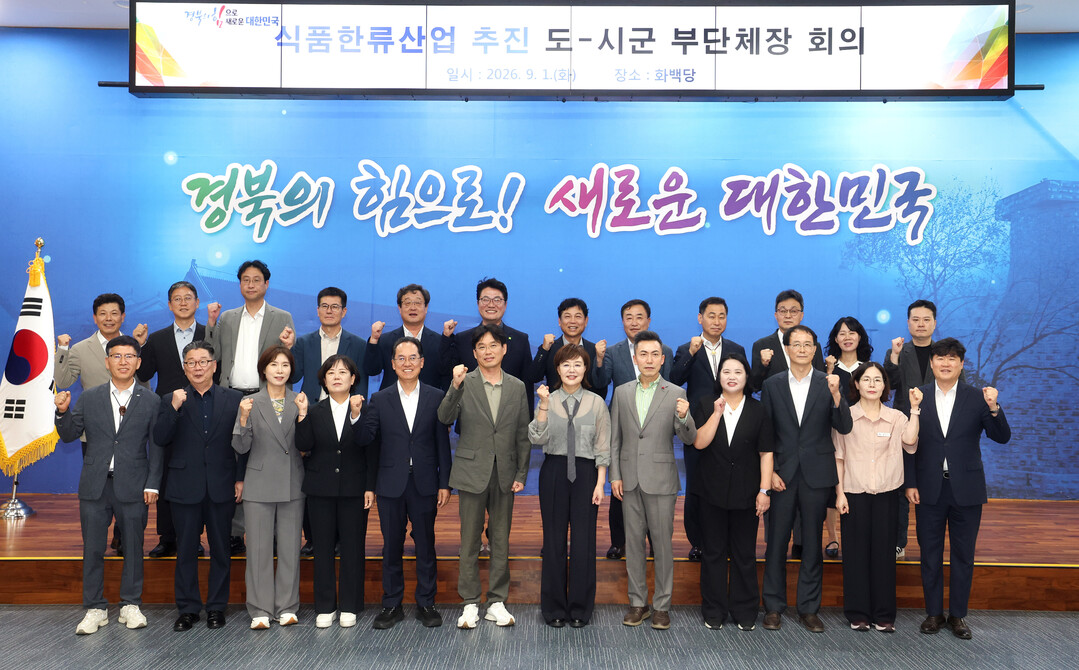
Key milestones include the groundbreaking of the Korea Food Research Institute (KFRI) Gyeongbuk Headquarters in Gumi, the completion of the Food Robot Food-Tech Research Support Center in Pohang, food convergence cluster agreements across four regional zones, the launch of the K-Food Industry Alliance, and expanded agri-food exports.
Building on these results, the province is establishing a full-cycle support system that seamlessly connects R&D and technology demonstration to corporate growth and overseas market entry. The vision is to move beyond primary agricultural production and processing to transform the sector into a future strategic industry combining cutting-edge tech, business, and global markets.
The blueprint centers on three main pillars: ▲ A Testbed for South Korea's Food Industry, ▲ A Growth Base for K-Food Enterprises, and ▲ A Global K-Food Platform.
Building a Testbed for South Korea’s Food Industry… Testing Future Food Tech in Gyeongbuk
Gyeongsangbuk-do is accelerating the creation of a national testbed to develop and verify food technologies.
The starting point is the KFRI Gyeongbuk Headquarters. Having broken ground on September 16 in Seonsan-eup, Gumi, the headquarters will feature research facilities and a pilot plant to carry out high-value commercialization of local agri-foods, new material and product development, and smart food manufacturing research. Completion is targeted for April 2028.
The province plans to combine Gumi’s advanced manufacturing technologies—such as robotics, sensors, and ICT—with the food industry to support automation and intelligence in food manufacturing, fostering it as a core research hub that resolves technical bottlenecks and backs product development for local food companies.
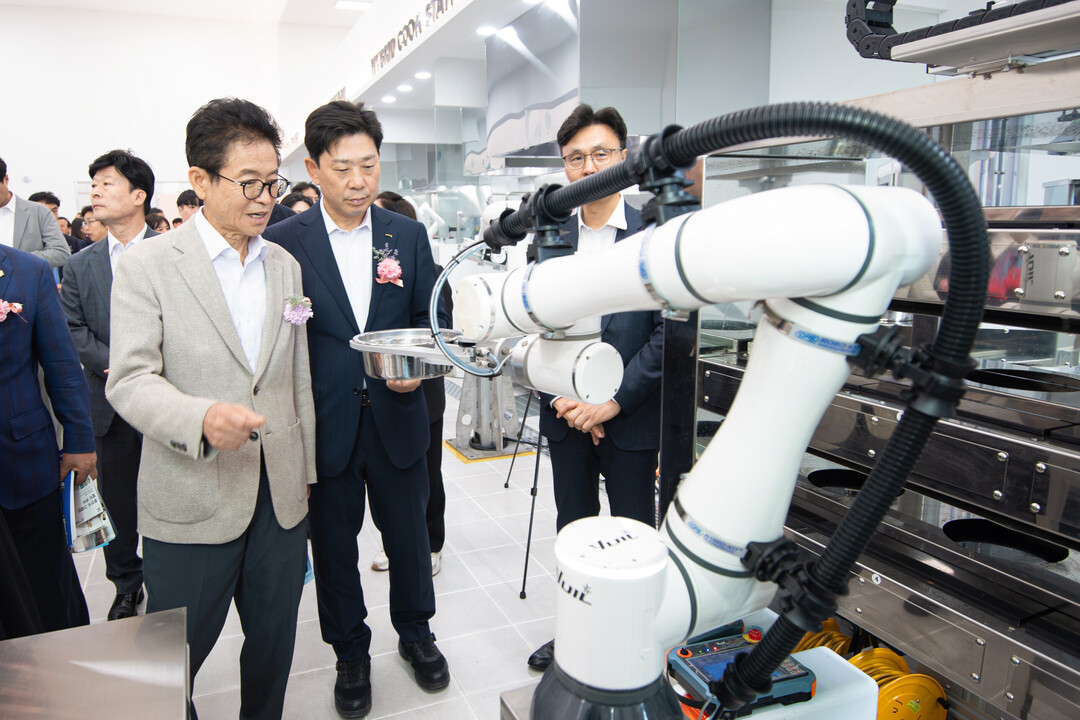
In the food-tech sector, Gyeongbuk achieved a "national first." On September 17, the Food-Tech Research Support Center for Food Robotics was completed in Pohang, becoming the very first facility to open among the 10 key food-tech sector centers promoted by the Ministry of Agriculture, Food and Rural Affairs (MAFRA).
The center integrates robotics and AI into food manufacturing and the dining industry, handling R&D for cooking and serving robots, prototyping, performance verification, and corporate technical support. It also houses an international testing and certification body from NSF International—the first of its kind attracted to Asia. Domestic food robot and equipment makers can now undergo hygiene and safety testing and obtain overseas certifications right in Pohang without shipping products to the U.S. This is expected to cut certification times from six months to under one month and reduce costs to roughly one-third.
On November 6, the "Uiseong Bio-Food Valley," the province’s first specialized food industrial complex, was completed, alongside the groundbreaking of a KRW 14.5 billion "Cell-Cultured Food-Tech Research Support Center." Combined with Gumi's "Smart Food Manufacturing" hub selected in 2026, Gyeongbuk is shaping the nation's only triangular food-tech hub system linking Pohang (food robotics), Uiseong (cell-cultured food), and Gumi (smart manufacturing).
The province plans to link these research institutes and demonstration facilities so food companies can develop new technologies and products, verify manufacturing processes and safety, and move smoothly into commercialization.
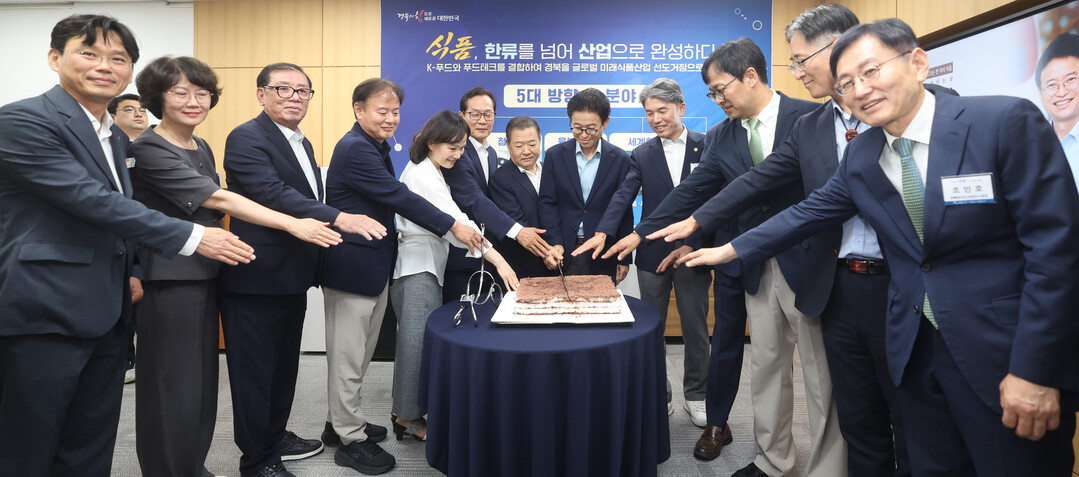
Fostering a K-Food Enterprise Growth Base… Turning Research into Corporate Competitiveness
R&D and technology verification become a true industry only when they lead to corporate growth, investment, and sales. This is why Gyeongsangbuk-do is focusing on building a growth base for K-food companies.
For local food companies that possess high-quality agricultural produce but struggle with high-value industrialization due to a lack of processing tech, production facilities, and product development capabilities, the province is building a full-cycle support system covering R&D, prototyping, pilot production, and commercialization.
At the core is MAFRA’s Food Convergence Cluster pilot project, selected via a 2026 public contest. Through this project, the province will foster high-value food industries—such as senior-friendly foods and health functional foods utilizing specialized local crops like yam, ginger, and hemp seed—while promoting functional research and product development.
By establishing shared factories, SMEs will gain access to production facilities and research equipment that are difficult to afford individually, lowering entry barriers and boosting competitiveness.
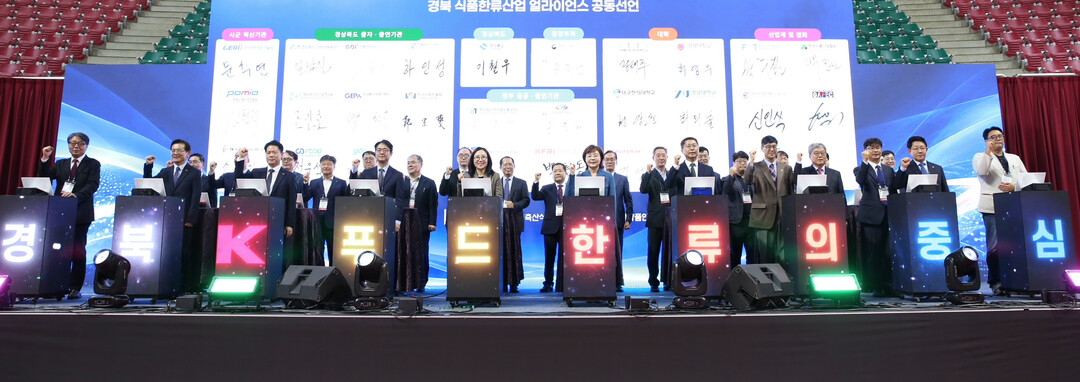
An industry-academia-research cooperation system pooling regional capabilities is also in full swing.
At the 18th Gyeongsangbuk-do Food Expo on October 16, the "K-Food Industry Alliance" was officially launched with around 30 participating institutions, including MAFRA, public agencies, provincial affiliated organizations, universities, and businesses. The alliance will identify collaborative tasks in joint R&D, tech verification, talent cultivation, and corporate support, forming project-specific working groups to drive tangible industrial outcomes.
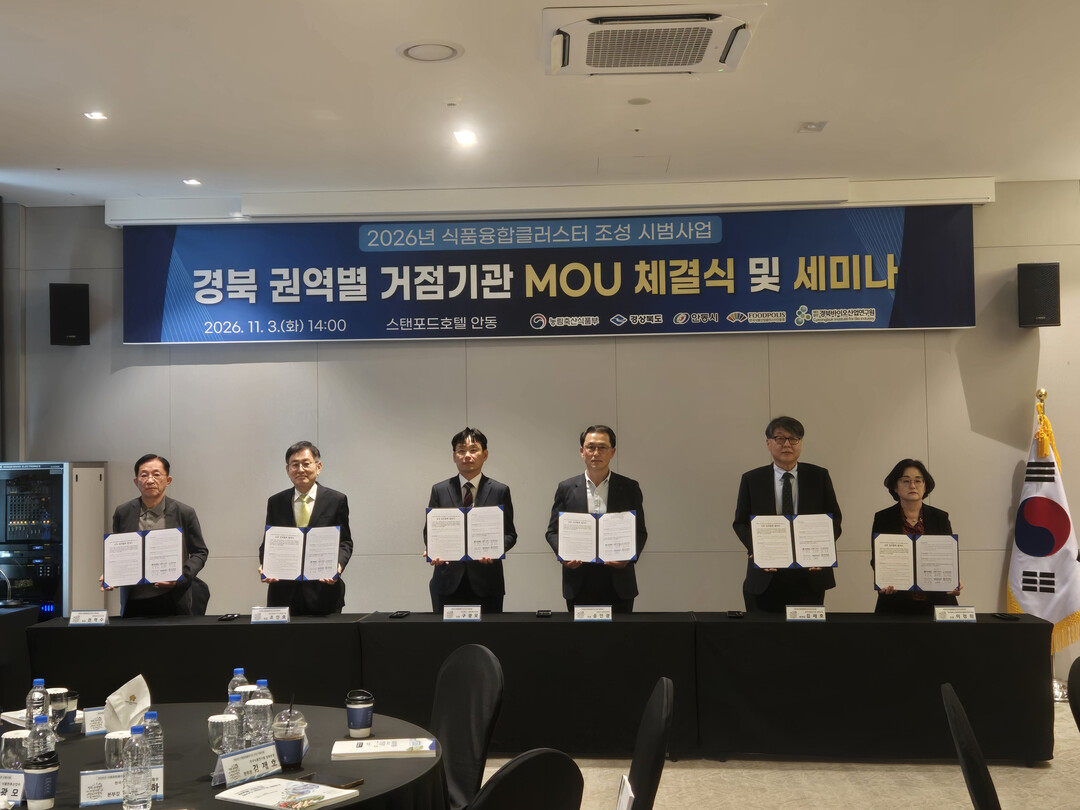
On November 3, the province and Andong City signed a Food Convergence Cluster MOU with four regional hub institutions: Gyeongbuk Institute for Bio Industry (Northern), KFRI Gyeongbuk Headquarters (Western), Daegu University (Southern), and East Sea Rim Industrial Research Institute (Eastern). This structure links each institution's technology, research infrastructure, and networks to support local food firms by region.
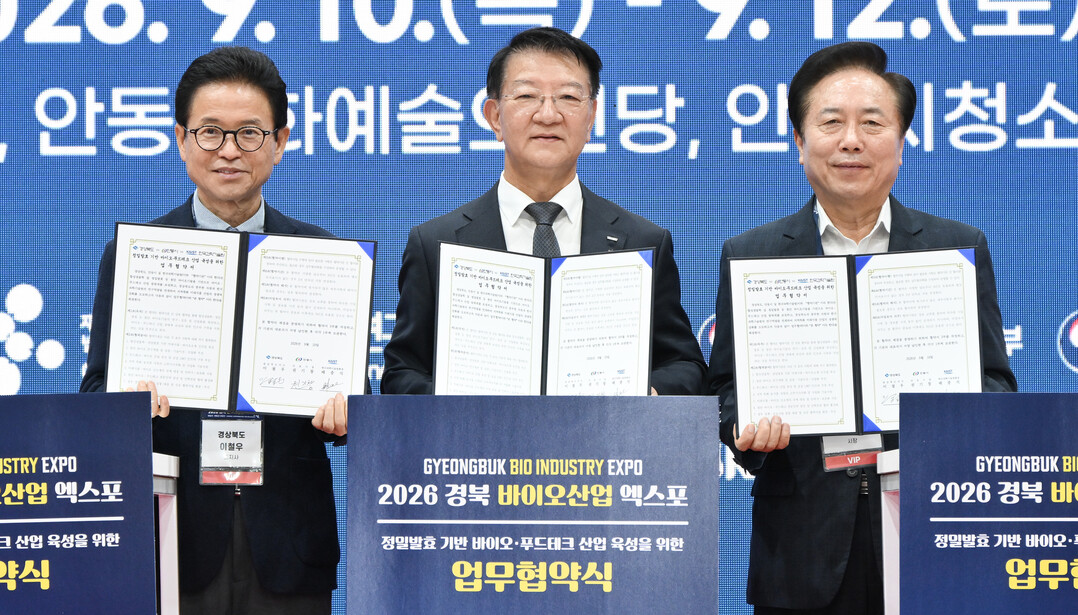
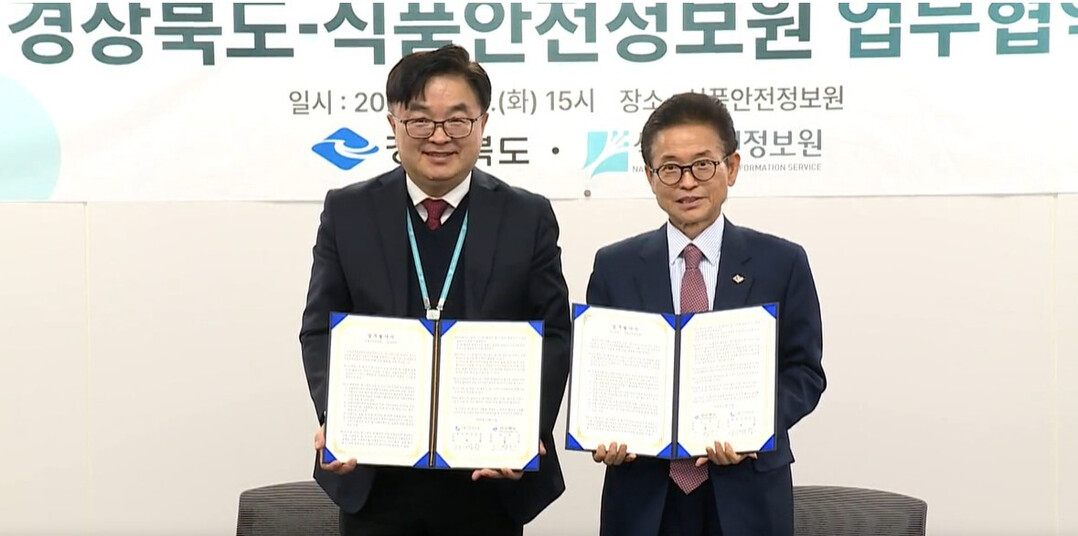
Earlier in September, an MOU was signed with Andong City and KAIST to foster a precision fermentation-based bio and food-tech industry, laying the groundwork to localize advanced microbial fermentation ingredients. On November 17, an MOU with the National Food Safety Information Service strengthened food safety management and overseas regulatory response capabilities.
This solid industrial foundation is translating into corporate investment. Following a KRW 200 billion agreement in July with Ottogi Ramen Co., Ltd. to build an export-dedicated ramen plant in Gumi, the province secured KRW 45.5 billion in investments in Uiseong in November—KRW 20 billion from cell-cultured food firm SeaWith Inc. and KRW 25.5 billion from protein food company Ograe Co., Ltd.
Moving forward, the province aims to further solidify cooperation among research institutes, business support agencies, universities, and industries, supporting corporate investment and manufacturing expansion so local agricultural resources translate into products, revenue, and jobs.
Establishing a Global K-Food Platform… Connecting Gyeongbuk’s Flavors and Tech to the World
Gyeongsangbuk-do is simultaneously rolling out a global industrialization strategy connecting local agri-food and culinary heritage to international markets.
Results appeared first on the export front. According to MAFRA, South Korea’s K-Food+ exports reached USD 11.88 billion as of late October 2026, up 4.9% year-on-year, maintaining momentum with provisional exports hitting USD 12.29 billion in November. Gyeongbuk is expanding overseas markets with premium produce and processed foods, led by grapes.
As of late October this year, Gyeongbuk’s grape exports surged 109.2% year-on-year to USD 72.94 million, accounting for 80.5% of South Korea's total grape exports. Export volume also jumped 167.0% to 9,617 tons.
The province is channeling this momentum into expanding K-grapes globally. On October 15, a win-win event to propel K-grape exports toward USD 100 million was held at Doyoung Farm in Sangju with MAFRA, growers, and exporters. On October 27 in Taipei, Taiwan, Hallyu marketing in collaboration with local influencers led to the first-ever listing of Gyeongbuk Shine Muscat grapes in Carrefour Taiwan.
In November, building on the Korea-Philippines grape export quarantine agreement concluded on November 25, 2025, an ASEAN-linked promotional event was held in Manila. Exports are expanding beyond fresh grapes like Shine Muscat and Glory Star to processed goods such as bread, jam, wine, and sparkling juice, with plans to target mainstream North American retailers like Costco in the U.S.
Gyeongsangbuk-do plans to broaden its export success from fresh produce to processed foods, traditional liquors, fermented foods, and health functional foods, supporting the entire export process from market-tailored product development and overseas certification to nurturing specialized exporters and securing global distribution networks.
Efforts are also underway to develop Gyeongbuk’s unique food culture into global content by modernizing traditional clan cuisine (Jongga food), traditional liquors, and fermented foods, and integrating them with tourism and cultural content to create a differentiated Gyeongbuk K-Food wave.
A New Growth Formula for the Food Industry Begins in Gyeongbuk
One hundred days into the launch of the K-Food Industry Bureau, Gyeongbuk’s food industry has secured a springboard for a new leap forward. Full-cycle changes—from R&D infrastructure expansion and food-tech demonstration hubs to industry-academia-research networks, corporate investment, and export growth—are becoming visible.
This goes beyond creating new organizations and projects; it is a process of transforming Gyeongbuk’s agriculture and food sectors into a future strategic industry by linking them with advanced technology, enterprises, and global markets.
If the first 100 days were a time to confirm potential and lay the foundation for change, now is the time to prove that potential through industrial competitiveness and global market results. Gyeongbuk aims to go beyond being a producer of agricultural goods to become the heart of South Korea’s K-Food industry—creating food technology, nurturing businesses, and leading the world's dining tables.
Governor Lee Cheol-woo of Gyeongsangbuk-do emphasized, "When the Fifth Industrial Revolution arrives and machines replace human labor, regions that prepare food, culture, arts, and tourism industries—which are directly tied to human life—will ultimately lead the world." He added, "By uniting Gyeongbuk’s rich culinary culture, food-tech capabilities, and tourism infrastructure, we will open a new future for South Korea’s food industry."
The challenge of Gyeongbuk’s food industry has only just begun.
[Copyright (c) Global Economic Times. All Rights Reserved.]