![[등록] 2026-09-01 15:48:31](/support/_updata/banner2/tl181982910_6749.png)


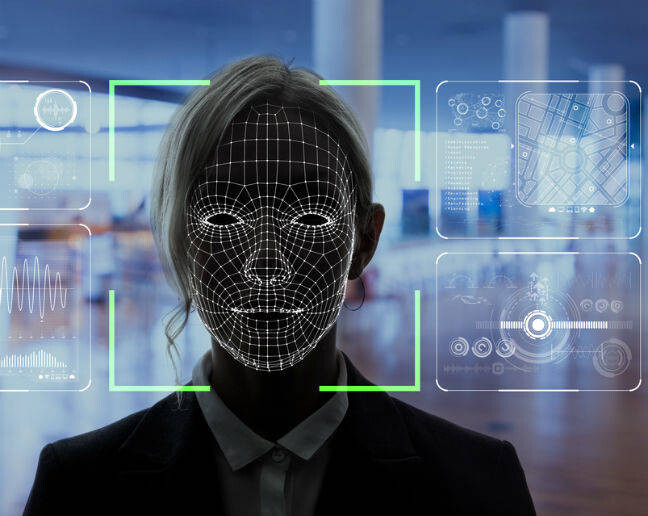
(C) The Register
SEOUL – In a decisive move to curb the rising tide of voice phishing and the illegal distribution of "daepo-phones" (phones opened under stolen identities), the South Korean government has officially introduced a facial authentication system for mobile phone subscriptions. Amidst growing public concern regarding the security of biometric data, officials clarified on Wednesday that all facial images are deleted immediately after the identity verification process.
"Instant Deletion" to Quell Privacy Fears
During a briefing held at the Seoul Government Complex on December 24, Choi Woo-hyuk, Director General of the Network Policy Bureau at the Ministry of Science and ICT (MSIT), addressed the primary concern of many citizens: the risk of biometric hacking.
"The telecommunications companies collect facial images from the user's ID card and real-time video of the person to compare them in real-time," Choi explained. "Once the identity is confirmed, only the result—a simple 'Yes' or 'No' value—is stored. The actual biometric data is deleted instantly."
The government’s proactive stance comes after a series of high-profile data breaches in the telecommunications sector earlier this year, which fueled public distrust. To ensure the system's integrity, the MSIT plans to collaborate with information security agencies to conduct regular audits of the authentication infrastructure.
The Role of "PASS" and System Logistics
The new system, which began its pilot phase on December 23, utilizes the "PASS" app, an identity verification platform operated by South Korea’s three major carriers (SK Telecom, KT, and LG Uplus). By using PASS, the government aims to minimize external data leakage since the verification occurs within a closed telecommunications loop rather than being transferred to third-party platforms.
While some critics questioned the exclusivity of the PASS app, Kim Jun-mo, head of the MSIT's Telecommunications Policy Division, noted that MVNOs (budget phone carriers) also supported this move as it eliminates additional linkage costs and enhances security.
To address concerns regarding Deepfakes and AI-driven forgery, officials stated that the system employs engines that pass Telecommunications Technology Association (TTA) standards, specifically designed to detect 3D printing, non-reflective monitors, and other sophisticated spoofing attempts.
Addressing the "Daepo-phone" Loophole
A significant portion of voice phishing crimes involves phones opened through MVNOs, where identity verification has historically been less stringent. While the pilot program is currently limited to South Korean nationals using resident registration or driver's licenses, the government plans to expand the service to foreigners by the second half of 2026.
"We recognize the severity of the illegal phone issue among foreigners," Choi said. "However, domestic identity theft is an equally pressing matter. This introduction is a critical response to the surge in financial fraud."
To further tighten regulations, the government is pushing for an amendment to the Telecommunications Business Act. The proposed "One-Strike Out" system would allow regulators to suspend the business operations of carriers that fail to manage their distribution networks, leading to the clear issuance of illegal phones.
Future Outlook and Digital Inclusion
The pilot program will run for three months, with the official full-scale launch scheduled for March 23, 2026. During this stabilization period, failed facial matches will not automatically block a subscription, allowing for manual verification and system adjustments.
For the elderly and users of "feature phones" who cannot use the PASS app, the government plans to strengthen on-site assistance at physical retail stores.
"We are focusing on the rapid implementation of this policy because the number of voice phishing victims is increasing daily," Choi concluded. "While we are moving quickly, we will continuously refine the system's accuracy and stability to protect our citizens' assets and privacy."
[Copyright (c) Global Economic Times. All Rights Reserved.]