• 2026.03.09 (Mon)
  • All articles
  • LOGIN
  • JOIN
Global Economic Times
fashionrunwayshow2026
  • Synthesis
  • World
  • Business
  • Industry
  • ICT
  • Distribution Economy
  • Well+Being
  • Travel
  • Eco-News
  • Education
  • Korean Wave News
  • Opinion
  • Arts&Culture
  • Sports
  • People & Life
    • International Student Report
    • With Ambassador
  • Column
    • Cho Kijo Column
    • Cherry Garden Story
    • Ko Yong-chul Column
    • Kim Seul-Ong Column
    • Lee Yeon-sil Column
  • Photo News
  • New Book Guide
MENU
 
Home > Distribution Economy

Korean Stock Market Plunges: Circuit Breaker and Sidecar Triggered Amid Geopolitical Crisis

Global Economic Times Reporter / Updated : 2026-03-09 12:27:13
  • -
  • +
  • Print


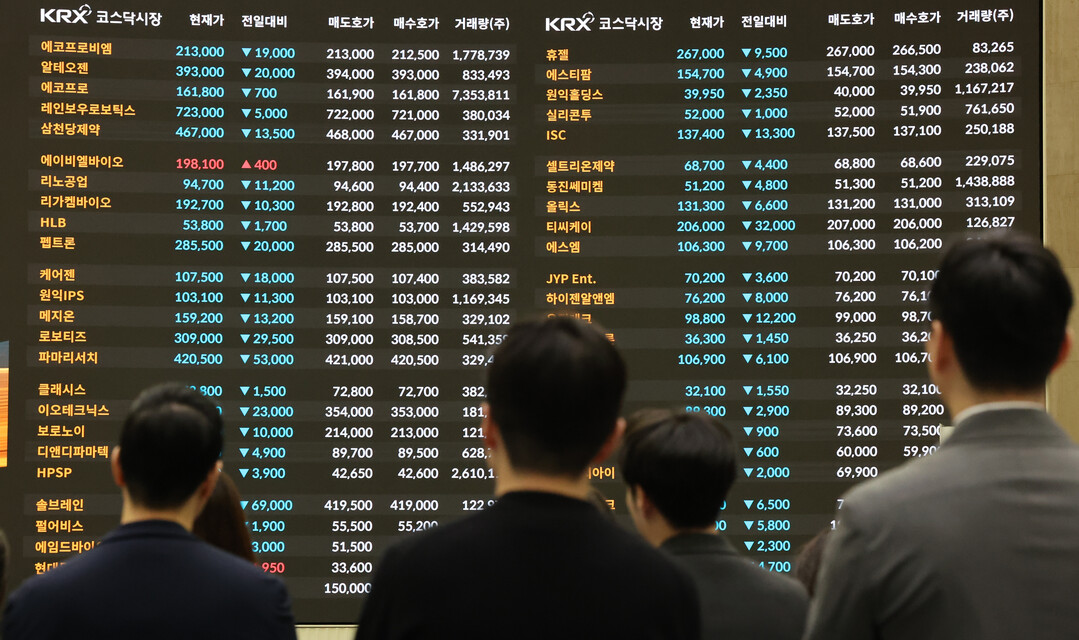
SEOUL – The South Korean stock market experienced a massive sell-off on March 9, as the KOSPI and KOSDAQ markets were both forced to trigger emergency safety measures to curb extreme volatility. The sharp decline was primarily driven by the deepening geopolitical tensions in the Middle East and the resulting surge in global oil prices, which have severely dampened investor confidence.

At approximately 10:31 a.m., the Korea Exchange (KRX) issued a Level 1 circuit breaker for the main KOSPI bourse. This measure was activated after the benchmark index plummeted by over 8 percent from the previous trading day, reaching 5,132.07. Under the circuit breaker rule, all trading activities in the KOSPI market were suspended for 20 minutes, followed by a 10-minute period for single-price order collection before trading resumed.

Simultaneously, the KOSDAQ market triggered a "sell-side" sidecar, a cooling-off mechanism designed to manage program trading volatility. This action occurred as the KOSDAQ 150 futures and the index both recorded significant drops exceeding the required threshold. The sidecar effectively suspended the validity of program sell orders for five minutes, aiming to mitigate the impact of heavy institutional and program-led selling.

Market analysts point to the "Middle East shock"—characterized by prolonged conflicts involving the U.S., Israel, and Iran—as the primary catalyst for the day's market instability. As global energy prices surge, foreign and institutional investors have been aggressively offloading shares, leading to widespread pressure across domestic indices.

The financial community remains on high alert as investors assess the duration of these geopolitical risks. While the temporary trading halts are intended to provide a window for market stabilization, the prevailing uncertainty surrounding global oil supply and security suggests that the market may remain susceptible to high levels of volatility in the coming days. Authorities continue to monitor the situation closely to prevent further panic selling and to restore order to the financial markets.

[Copyright (c) Global Economic Times. All Rights Reserved.]

  • #globaleconomictimes
  • #micorea
  • #mykorea
  • #nammidonganews
  • #singaporenewsk
  • #Samsung
  • #Daewoo
  • #Hyosung
  • #Apple
  • #korea
Global Economic Times Reporter
Reporter Page

Popular articles

  • A New Milestone for Ukraine’s Post-War Reconstruction: The Birth of ISVP

  • About mexican food 

  • War Memorial Association Launches Youth Education Program Idea Contest

I like it
Share
  • Facebook
  • X
  • Kakaotalk
  • LINE
  • BAND
  • NAVER
  • https://globaleconomictimes.kr/article/1065583512285504 Copy URL copied.
Comments >

Comments 0

Weekly Hot Issue

  • South Korean Steelmakers on the Brink: Scrambling for Survival Amid Rising Nighttime Electricity Rates
  • Doosan Robotics to Supply 100+ Robot Solutions to Kwangjin Group, Accelerating Global Manufacturing Innovation
  • KOSPI Plummets Over 8%, Triggering Circuit Breaker for the 8th Time in History
  • "AI Era Security: Data Lifecycle Management Over Perimeter Defense"
  • KASA Selects 9 Partners Including LG and SK Hynix for Space Verification Satellite No. 3
  • MOTIE Vows to Stabilize Oil Prices, Urges Refiners to Limit Consumer Burden Amid Middle East Tensions

Most Viewed

1
Adwa’s Echo in Korea: A Shared Story of Dignity and Freedom
2
2026, The Grand Year of Hangeul Celebration — The River of History Where Five Streams Converge
3
A New Milestone for Ukraine’s Post-War Reconstruction: The Birth of ISVP
4
Mexican currency and the powerful history behind its designs
5
Revised and Expanded Edition of ‘Failure of Negotiations with North Korea: Truth and Solutions’ Published
광고문의
임시1
임시3
임시2

Hot Issue

KASA Selects 9 Partners Including LG and SK Hynix for Space Verification Satellite No. 3

Apple's Next Leap: Will the 'MacBook Ultra' with OLED and Touch Support Redefine the Premium Laptop Market?

KEXIM Ignites 'K-Finance' with 450 Billion Won Support for Taihan Cable’s Submarine Plant

Doosan Robotics to Supply 100+ Robot Solutions to Kwangjin Group, Accelerating Global Manufacturing Innovation

Let’s recycle the old blankets in Jeju Island’s closet instead of incinerating them.

Global Economic Times
korocamia@naver.com
CEO : LEE YEON-SIL
Publisher : KO YONG-CHUL
Registration number : Seoul, A55681
Registration Date : 2024-10-24
Youth Protection Manager: KO YONG-CHUL
Singapore Headquarters
5A Woodlands Road #11-34 The Tennery. S'677728
Korean Branch
Phone : +82(0)10 4724 5264
#304, 6 Nonhyeon-ro 111-gil, Gangnam-gu, Seoul
Copyright © Global Economic Times All Rights Reserved
  • 에이펙2025
  • APEC2025가이드북TV
  • 독도는우리땅
Search
Category
  • All articles
  • Synthesis
  • World
  • Business
  • Industry
  • ICT
  • Distribution Economy
  • Well+Being
  • Travel
  • Eco-News
  • Education
  • Korean Wave News
  • Opinion
  • Arts&Culture
  • Sports
  • People & Life 
    • 전체
    • International Student Report
    • With Ambassador
  • Column 
    • 전체
    • Cho Kijo Column
    • Cherry Garden Story
    • Ko Yong-chul Column
    • Kim Seul-Ong Column
    • Lee Yeon-sil Column
  • Photo News
  • New Book Guide
  • Multicultural News
  • Jobs & Workers