![[등록] 2026-09-01 15:48:31](/support/_updata/banner2/tl181982910_6749.png)


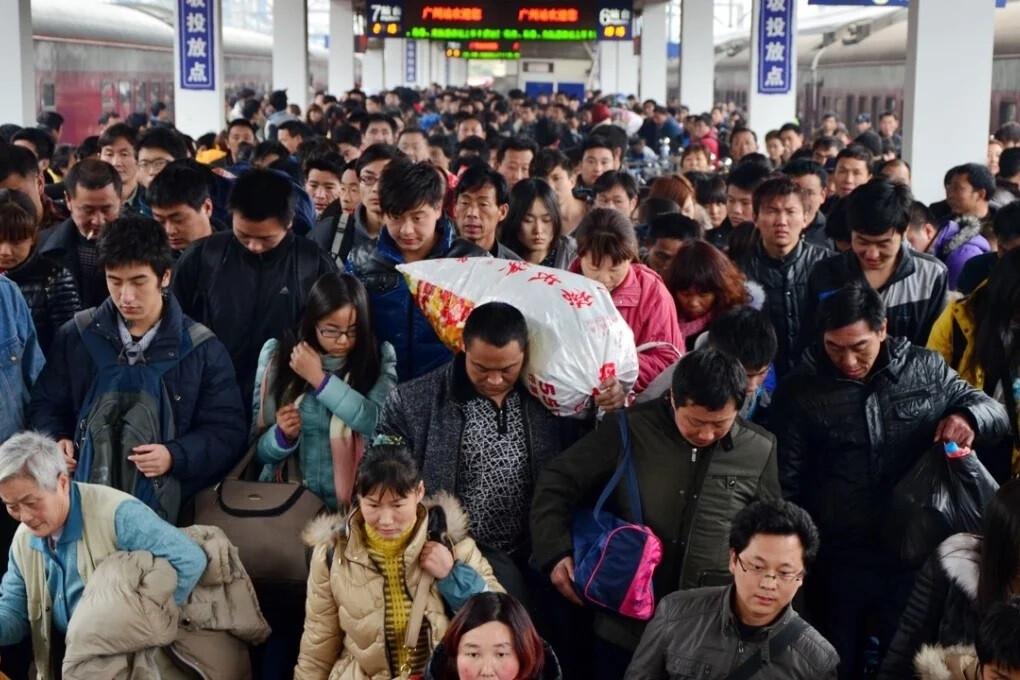
Research findings indicate that China's population has been inflated, placing its actual total in the 1.2 billion range rather than the official statistic of 1.4 billion. Consequently, analysts suggest that the foundation of China's domestic economy will rapidly weaken.
On the 13th (local time), the Wall Street Journal (WSJ) reported this, citing a recent paper by Yi Fuxian, a demographer at the University of Wisconsin-Madison.
Yi stated that he cross-referenced school enrollments, hospital births, vaccine doses administered, and household registrations (hukou), revealing that "figure inflation" was present across multiple data sources.
Taking vaccination as an example, China requires all newborns to receive the BCG vaccine for tuberculosis prevention within 24 hours of birth. While this vaccine can be administered to multiple people, it must be discarded within 30 minutes of opening, meaning that realistically only about 1.2 to 1.6 doses can be used per vial.
The annual volume of vaccines approved by the Chinese government from 2018 to 2020 was approximately 5.8 million vials. However, the annual number of births during this period mostly exceeded 14 million. Yi pointed out, "This would mean an average of 2.4 babies could be vaccinated with a single vial, which is medically and realistically impossible."
Discrepancies across periods also appeared in the size of birth cohorts (groups of people born in the same period). National Bureau of Statistics data for China shows that 17.7 million people were born in the year 2000.
However, in the 2010 census when this cohort turned 10 years old, the size shrank to about 14.4 million, and by 2015 when they graduated from middle school, it dropped further to about 14.2 million. In the end, it amounts to 3.5 million people having mysteriously vanished.
Observations suggest there are structural reasons behind this population inflation. Birth rates are tied to the performance evaluations of local officials, and local governments can secure more subsidies by inflating these numbers.
At hospitals, related records were also inflated as rural medical insurance began covering childbirth expenses. Schools similarly padded their student numbers by 20% to 50% to receive more government financial support.
Yi remarked, "While raising the birth rate is difficult, revising statistics is easy."
The WSJ noted that the impact of China's population decline on its economy could be far greater than previously thought. This is because efforts to boost domestic consumption and balance an export-dependent Chinese economy may not prove easy.
The newspaper emphasized that while "China's massive population served as the basis for the conviction that it would generate a larger workforce and consumer base to eventually surpass the U.S. economy," doubts have now arisen regarding the demographic statistics themselves.
It further pointed out, "Beijing's ruling philosophy holds that the economic base determines everything above it. The problem is that this base is crumbling."
China has developed excessive self-confidence based on a population figure that acts like a "mirage," while the United States, conversely, has been stirring up more anxiety than necessary.
[Copyright (c) Global Economic Times. All Rights Reserved.]