ATLANTA — U.S. Secretary of State Marco Rubio stated that the delay in issuing U.S. visas to South Korean lawmakers, including National Defense Committee Chairman Jin Sung-joon, will be resolved through bilateral consultations. He also noted that while President Donald Trump remains willing to meet with North Korean leader Kim Jong Un, no official summit schedule has been set.
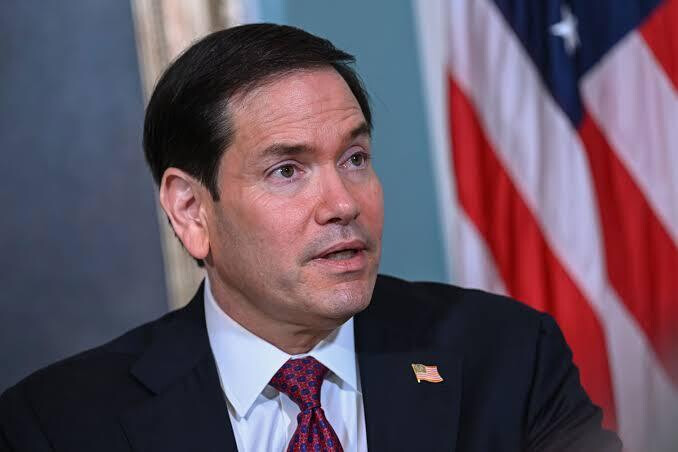
Speaking at a press conference on the 31st (local time) on the sidelines of the G20 Foreign Ministers' Meeting in Atlanta, Georgia, regarding concerns over South Korea-U.S. relations—including the South Korean lawmakers' visa issues—Rubio said, "It appears there was a specific individual visa case where issues were raised regarding activities from about 20 years ago." He added, "Visa matters are something we will resolve through bilateral consultations, not via a press conference."
Rubio's remarks are believed to refer to the case of Democratic Party lawmaker Jin Sung-joon, Chairman of the National Assembly's National Defense Committee, whose application for a U.S. diplomatic/official visa (A-2) to visit the U.S. Indo-Pacific Command in Hawaii was initially delayed before eventually being issued. Rep. Jin was previously convicted under the National Security Act in 1991, receiving a three-year prison sentence and three years of suspension of qualifications. However, Rep. Jin previously visited the U.S. Pacific Command during his tenure as a defense committee member in the 19th National Assembly back in 2014.
Earlier this month, another controversy arose when Rep. Chung Chung-rae, a former leader of the Democratic Party, experienced delays in his U.S. visa application ahead of a parliamentary audit by the National Assembly's Foreign Affairs and Unification Committee targeting the South Korean Embassy in the U.S. and other missions. Rep. Chung also has a record of imprisonment under the National Security Act for leading a 1989 sit-in protest occupying the residence of the U.S. Ambassador.
Meanwhile, addressing potential North Korea-U.S. talks, Rubio stated, "President Trump, just as he did in his first term, is willing to talk to anyone." He continued, "The President's perspective is that if Chairman Kim is prepared to discuss issues of concern to our allies, such as the United States and South Korea, he is open to that." However, he emphasized, "There are currently no scheduled meetings, and we have nothing to announce regarding this today. The core point, as we have publicly stated several times, is that President Trump is prepared to talk."
Rubio further noted, "In traditional diplomatic practice, meeting someone or inviting them to a specific event is often viewed as a concession that grants legitimacy to the other side. The President does not view it that way."
The G20 Foreign Ministers' Meeting also sparked controversy over the host country United States' decision to invite Russia. European foreign ministers announced they would boycott the group photo shoot in protest of the invitation extended to Russian Foreign Minister Sergey Lavrov. When asked at the press conference whether Russian President Vladimir Putin would be invited to the G20 Summit in Miami this coming December, Rubio responded, "It has not been finalized yet." He added, "However, President Trump believes that engaging in dialogue with both sides is important to achieve peace negotiations to end the war in Ukraine."
Reiterating the administration's stance, Rubio stressed, "As I said before, President Trump does not believe that meeting or talking with someone serves as a justification for all of that person's actions."
[Copyright (c) Global Economic Times. All Rights Reserved.]