• 2026.04.22 (Wed)
  • All articles
  • LOGIN
  • JOIN
Global Economic Times
fashionrunwayshow2026
  • Synthesis
  • World
  • Business
  • Industry
  • ICT
  • Distribution Economy
  • Well+Being
  • Travel
  • Eco-News
  • Education
  • Korean Wave News
  • Opinion
  • Arts&Culture
  • Sports
  • People & Life
    • International Student Report
    • With Ambassador
  • Column
    • Cho Kijo Column
    • Cherry Garden Story
    • Ko Yong-chul Column
    • Kim Seul-Ong Column
    • Lee Yeon-sil Column
  • Photo News
  • New Book Guide
MENU
 
Home > Synthesis

Foreign Land Transactions Restricted in 17 Key South Korean Border Regions

Desk / Updated : 2025-02-28 10:42:04
  • -
  • +
  • Print

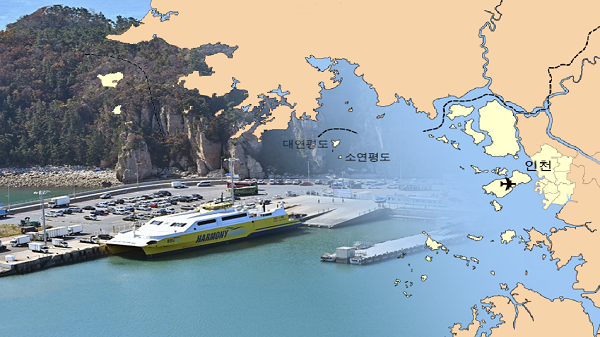
The South Korean government has designated 17 of its outermost territories, including the strategically important islands of the West Sea (Yellow Sea), as Foreign Land Transaction Permit Zones. This measure, implemented at the request of the National Intelligence Service (NIS), requires foreign nationals to obtain prior permission from local authorities before purchasing land in these areas.

Key Points:

Designated Areas:The five islands of the West Sea: Baekryeongdo, Daecheongdo, Socheongdo, Yeonpyeongdo, and Udo.
12 additional islands located on the country's territorial sea baselines.
Purpose:To strengthen territorial sovereignty in border island regions.
To address national security concerns related to foreign land ownership in sensitive areas.
Permit Requirement:Foreigners must obtain permission from the relevant city, county, or district office before entering into any land purchase contract.
Permit approvals will be determined in consultation with relevant agencies, including the Ministry of National Defense and the NIS.
Penalties:Land purchase contracts made without the required permit will be invalidated.
Violators may face up to two years of imprisonment or a fine of up to 20 million won.
Context:This action comes approximately 10 years after the designation of eight uninhabited islands as permit zones in December 2014.
This action was requested by the NIS, and then finalized by the Ministry of Land, Infrastructure and Transport after deliberation by the Central Urban Planning Committee.

Implications:

This new regulation reflects South Korea's heightened focus on national security and territorial integrity. By implementing stricter controls on foreign land ownership in these strategically important regions, the government aims to safeguard its borders and protect its national interests.

This measure highlights the South Korean government's proactive approach to managing foreign investment in sensitive areas, balancing economic openness with national security concerns.

[Copyright (c) Global Economic Times. All Rights Reserved.]

  • #globaleconomictimes
  • #글로벌이코노믹타임즈
  • #한국
  • #중기청
  • #재외동포청
  • #외교부
  • #micorea
  • #mykorea
  • #newsk
  • #nammidonganews
  • #singaporenewsk
Desk
Desk

Popular articles

  • Samsung Completes Transition to 236-Layer 8th Gen V-NAND in Xi’an; 9th Gen Mass Production Slated for Late 2026

  • France Invites South Korea to June G7 Summit; Seoul Evaluating Attendance

  • S. Korea to Launch Government-Backed 'K-Brand' Certification to Combat Global Counterfeiting

I like it
Share
  • Facebook
  • X
  • Kakaotalk
  • LINE
  • BAND
  • NAVER
  • https://globaleconomictimes.kr/article/1065577236771769 Copy URL copied.
Comments >

Comments 0

Weekly Hot Issue

  • Theori Supplies ‘Xint,’ an AI-Powered Hacker Solution, to Samsung Electronics
  • Inzent Partners with Canada’s Solace to Accelerate Expansion in the Financial IT Market
  • FORCS to Unveil 'eformsign AI Assistant' at WIS 2026: A Revolution in AI-Powered Electronic Documents
  • [Interview] Chairman David Cha of ‘Ethiopia Bet’: "Building a House (Bet) of Self-Reliance Beyond Simple Relief"
  • Taiwanese Tourism Industry Experiences the Charm of Chungnam
  • A University Professor's Lament

Most Viewed

1
From the Alps to Seoul: Life in the Heart of Europe
2
BYD Hits 10,000-Unit Milestone in South Korea Within One Year, Eyes Exclusive "10,000 Club" Entry
3
$2 Million Per Ship: Iran’s "Hormuz Toll" Emerges as Chokepoint in Peace Talks
4
BOK Holds Rate Steady for Seventh Consecutive Meeting, Signaling End of Easing Cycle
5
Republican Party Faces "Total Crisis" as War and Inflation Cloud Midterm Outlook
광고문의
임시1
임시3
임시2

Hot Issue

Generative AI Use Triples Among Seoul Citizens, but Digital Divide Persists for Seniors

MAFRA Unveils Success in Integrated Rural Care: Synergizing Social Farming and Medical Services

Gov't Launches 'One-Team' Initiative to Transform Regional Airports into Tourism Hubs

Inzent Partners with Canada’s Solace to Accelerate Expansion in the Financial IT Market

Fashion Runway Show 2026

Global Economic Times
korocamia@naver.com
CEO : LEE YEON-SIL
Publisher : KO YONG-CHUL
Registration number : Seoul, A55681
Registration Date : 2024-10-24
Youth Protection Manager: KO YONG-CHUL
Singapore Headquarters
5A Woodlands Road #11-34 The Tennery. S'677728
Korean Branch
Phone : +82(0)10 4724 5264
#304, 6 Nonhyeon-ro 111-gil, Gangnam-gu, Seoul
Copyright © Global Economic Times All Rights Reserved
  • 에이펙2025
  • APEC2025가이드북TV
  • 반달곰 프로젝트
Search
Category
  • All articles
  • Synthesis
  • World
  • Business
  • Industry
  • ICT
  • Distribution Economy
  • Well+Being
  • Travel
  • Eco-News
  • Education
  • Korean Wave News
  • Opinion
  • Arts&Culture
  • Sports
  • People & Life 
    • 전체
    • International Student Report
    • With Ambassador
  • Column 
    • 전체
    • Cho Kijo Column
    • Cherry Garden Story
    • Ko Yong-chul Column
    • Kim Seul-Ong Column
    • Lee Yeon-sil Column
  • Photo News
  • New Book Guide
  • Multicultural News
  • Jobs & Workers