![[등록] 2026-09-01 15:48:31](/support/_updata/banner2/tl181982910_6749.png)


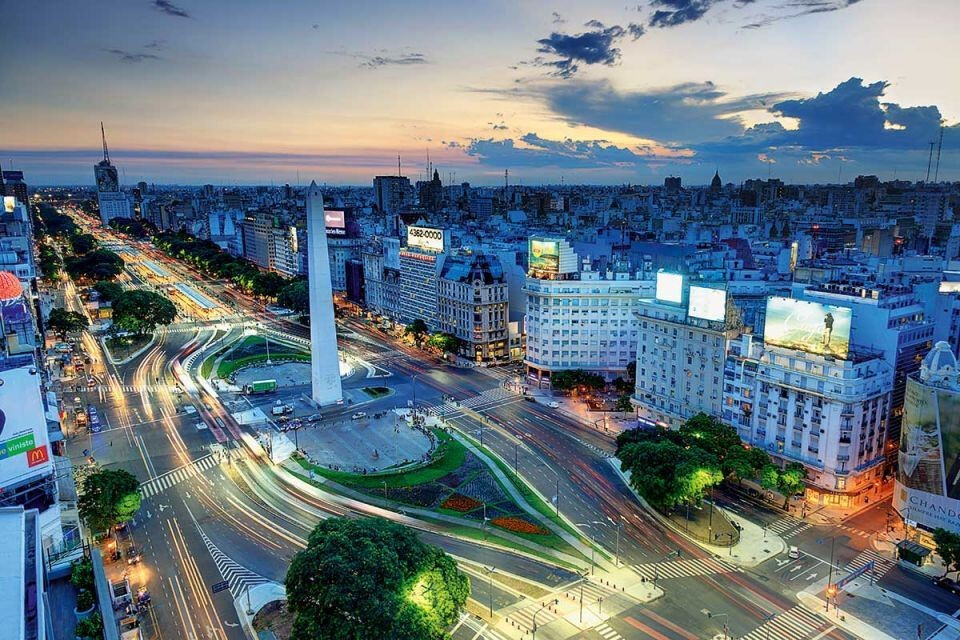
This quote, attributed to Nobel laureate in Economics Simon Kuznets, is often cited as the best illustration of Argentina's paradoxical situation. Despite its abundant potential, Argentina has been plagued by perpetual economic crises. In the early 20th century, Argentina prospered to rival Anglo-American nations, but today it is saddled with the label of a "perennial emerging economy," having endured hyperinflation, financial crises, and no less than nine sovereign defaults. The world is keenly watching Argentina's political trajectory, oscillating between populism and liberalism, especially with the advent of President Javier Milei.
At the core of Argentina's chronic economic woes lies excessive state intervention in the economy. The country has spent 57 out of the last 65 years with fiscal deficits, and in 2022, more than half of its population received direct government assistance. Chronic overspending, coupled with a fragile domestic capital market, forced Argentina to rely on short-term, floating-rate, or foreign-currency denominated debt. This phenomenon, known as the "original sin of emerging economies," results in any negative economic shock causing a sharp currency depreciation and weakening the government's ability to service its debts. Furthermore, widespread intervention, regulation, and taxation have consistently stifled business activity and investment.
Why has the government's "big government" model persisted for so long?
The answer to this question is complex and remains a subject of debate. Various analyses point to factors ranging from cultural influences to the legacy of Peronism, which has dominated Argentina since 1947. Peronism gained popular support by emphasizing social justice, economic independence, and political sovereignty, but it also led to an expansion of state-led economic policies and welfare programs, which are now cited as a cause of Argentina's current economic crisis.
What is the future of Argentina's economy?
President Milei's election reflects the strong desire of the Argentine people to break the vicious cycle of the state-led economy. Faced with stagnant growth, triple-digit inflation, and widespread economic distortions, voters opted for radical change. However, Argentina remains deeply polarized, and President Milei's disapproval rating consistently hovers above 40%.
Surprisingly, within a year of taking office, President Milei has succeeded in eliminating a fiscal deficit exceeding 4% of GDP through expenditure cuts. This is an achievement that most democratically elected leaders would find difficult to replicate, and this success has lowered the country's risk, curbed inflation, and laid the groundwork for a resumption of growth after a painful period of adjustment. International recognition is also following suit. The International Monetary Fund (IMF) recently approved a new $20 billion program, and the U.S. government has expressed strong support, with U.S. Treasury Secretary Scott Bessent visiting Buenos Aires and pledging financial assistance if needed.
Historically, when a country demonstrates a credible commitment to structural economic transformation, private capital tends to flow in distinct waves. Typically, domestic investors react first, increasing their exposure to local financial assets (e.g., listed equities and government bonds) as confidence builds. This flow then attracts foreign investors, whose interest in liquid assets grows as macroeconomic stability improves. As reforms take root and the outlook becomes more robust, local investors begin to shift their focus to illiquid real economy opportunities, such as expanding manufacturing capacity, infrastructure investment, and real estate development. The final and most transformative phase is the return of meaningful foreign direct investment (FDI) into the real economy, which drives long-term growth.
What role will Foreign Direct Investment play?
In Argentina, this sequence of capital inflows is already clearly evident. In recent quarters, both domestic and international investors have increased their exposure to Argentine financial assets, and domestic investors are actively seeking real asset investment opportunities. The key question now is whether FDI, the true measure of international confidence in Argentina's economic recovery, will return on a large scale.
Several sectors are considered particularly promising for FDI. Argentina's energy sector, especially oil and gas (notably the Vaca Muerta shale formation), has long attracted international interest, and investment could resume if regulatory and contractual stability are maintained. Furthermore, Argentina possesses vast reserves of lithium and other critical minerals, potentially making it a leader in the global energy transition. Beyond this, Argentina's innovative technology and knowledge sector, encompassing software, fintech, and agricultural technology, has long been a notable strength in the region.
However, for Argentina to achieve sustained economic growth and attract steady private investment, deeper structural reforms in labor, taxation, and social security are essential. Given that President Milei does not hold a majority in Congress, such reforms may only be possible after the midterm elections in October.
Argentina's future remains a polarized prospect. If President Milei can maintain popular support and push through at least some reforms, Argentina may finally begin to permanently heal its macroeconomic problems. If not, there is a risk that entrenched interests will derail reforms, leading to a new political and economic crisis. Half measures will not be enough.
For the first time in decades, Argentina has a genuine opportunity to forge a more promising path. Its ability to attract and retain FDI in key sectors will be a definitive measure of Argentina's progress and its potential for sustained economic reconstruction. The world is watching to see if Argentina can finally shed the shackles of its 'lost century' and once again emerge as an economic powerhouse in South America.
[Copyright (c) Global Economic Times. All Rights Reserved.]