• 2025.12.06 (Sat)
  • All articles
  • LOGIN
  • JOIN
Global Economic Times
APEC2025KOREA가이드북
  • Synthesis
  • World
  • Business
  • Industry
  • ICT
  • Distribution Economy
  • Well+Being
  • Travel
  • Eco-News
  • Education
  • Korean Wave News
  • Opinion
  • Arts&Culture
  • Sports
  • People & Life
  • Column
    • Cho Kijo Column
    • Lee Yeon-sil Column
    • Ko Yong-chul Column
    • Cherry Garden Story
  • Photo News
  • New Book Guide
MENU
 
Home > World

EU Unveils €90 Billion Ukraine Aid Plan Backed by Frozen Russian Assets

Eugenio Rodolfo Sanabria Reporter / Updated : 2025-12-06 09:51:57
  • -
  • +
  • Print


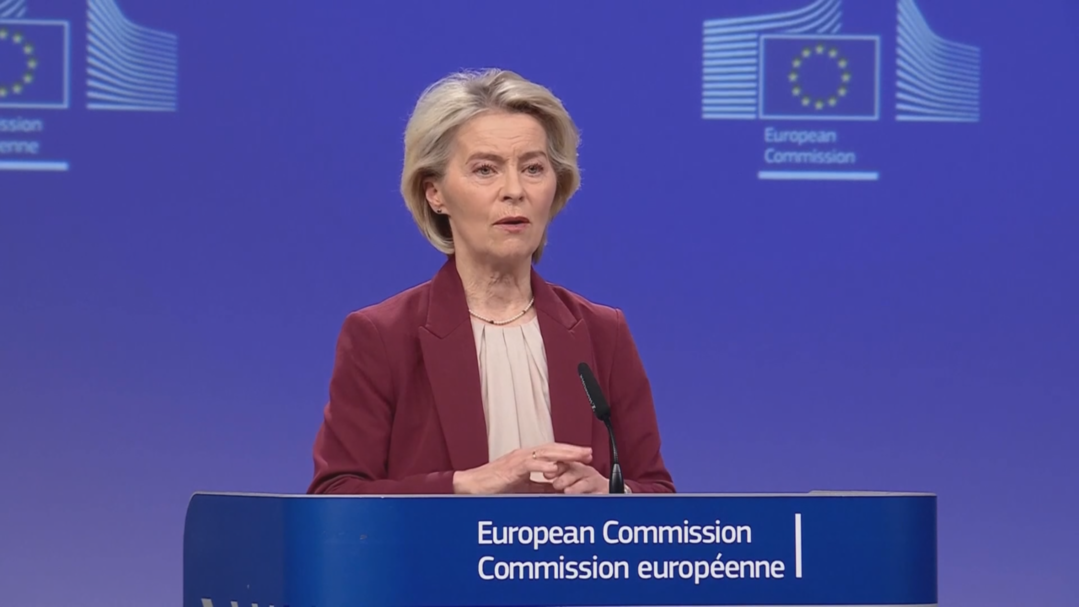
(C) France 24


BRUSSELS — The European Union (EU) has formally put forward a highly contentious proposal to utilize immobilized Russian state assets within the bloc to finance a massive aid package for Ukraine. European Commission President Ursula von der Leyen announced the plan on December 3rd in Brussels, detailing a €90 billion support scheme intended to cover two-thirds of Ukraine's financial needs over the next two years, with the remainder expected to be sourced through international contributions.

The core of the initiative is its funding mechanism: securing the capital through either joint EU borrowing or a system of "reparation loans" collateralized by the frozen assets of the Russian Central Bank. The Commission framed the move as a strategic necessity, aimed at bolstering Ukraine’s negotiating position amidst increasing pressure from allies, particularly the United States, to engage in peace talks. "Pressure is the only language the Kremlin understands," Von der Leyen asserted, describing the measure as one that will significantly raise the cost of Putin's war.

However, the proposal faces formidable resistance from one of its key member states, Belgium. Belgium is home to Euroclear, the central securities depository that holds the vast majority of the frozen Russian assets. The Belgian government has expressed deep concerns regarding the potential legal ramifications of leveraging private institutional assets and the risk of retaliatory measures from Russia. Belgian Prime Minister Bart De Wever deemed the Commission’s move to utilize a private entity’s assets without member state consensus as "unimaginable." Foreign Minister Maxime Prévot reiterated that their concerns remain unaddressed, pushing for alternative funding through market bond issuance rather than the loan-backed strategy.

In an effort to mitigate Belgium’s exposure, the Commission has included a "Member State Guarantee" within the draft. Valdis Dombrovskis, the EU’s Executive Vice-President for an Economy that Works for People, stressed that the plan was meticulously crafted to prevent the legal risk from being concentrated in any single nation, insisting on its full compliance with both international and EU law. Crucially, the Commission is arguing that by structuring the aid as a "loan" rather than outright "confiscation," they are not directly seizing the Russian state's assets.

The plan extends beyond the assets in Belgium, intending to incorporate approximately €25 billion in funds immobilized across France, Germany, Sweden, and other jurisdictions. While the proposed €90 billion is a reduction from the initial figure of €140 billion under discussion, the Commission clarified that the full €210 billion of frozen assets could be tapped for additional withdrawals if necessary.

Despite Belgium’s staunch opposition, the Commission's proposal is widely expected to secure passage at the EU Summit scheduled for December 18-19, given that a majority of member states are reportedly in favor. Von der Leyen has indicated the possibility of approving the measure through qualified majority voting, side-stepping the requirement for unanimous consent. This internal EU debate is unfolding against Russia's explicit warning that any utilization of its assets would be treated as an "act of theft," portending a complex and potentially protracted international legal dispute in the years ahead.

[Copyright (c) Global Economic Times. All Rights Reserved.]

  • #Globaleconomictimes
  • #Korea
  • #Seoul
  • #Samsung
  • #LG
  • #Bitcoin
  • #Meta
  • #Business
  • #Economic
  • #The Woori Bank
Eugenio Rodolfo Sanabria Reporter

Popular articles

  • The $30 Mug That Brewed Chaos: Starbucks’ Bearista Cold Cup Sparks Fights and Resale Frenzy

  • U.S. Government Rejects AI Bailout Amidst Bubble Debate 

  • Poll Reveals Mixed Japanese Reaction to PM Takaichi’s Taiwan Intervention Remarks

I like it
Share
  • Facebook
  • X
  • Kakaotalk
  • LINE
  • BAND
  • NAVER
  • https://globaleconomictimes.kr/article/1065574243394057 Copy URL copied.
Comments >

Comments 0

Weekly Hot Issue

  • Prominent Comedian Park Na-rae Booked on Charges of Assault and Abuse, Faces Manager Lawsuit
  • Lee Dismisses Vice Minister Amid Allegations of Misconduct and Vetting Gaps
  • Coupang's 'Self-Regulation' Stance Sparks Fears of Light Penalties Amid Data Leak Scandal
  • AI Salary Premium in Korea Just 6%, Lagging Far Behind the US's 25%
  • Netflix Acquires Warner Bros. in $72 Billion Deal, Reshaping Global Content Landscape
  • A Generation Adrift: US Youth Reject System Amid Economic and Democratic Fears

Most Viewed

1
Korean War Ally, Reborn as an 'Economic Alliance' Across 70 Years: Chuncheon's 'Path of Reciprocity,' a Strategic
2
A Garden Where the City's Rhythm Stops: Dongdaemun's 'Cherry Garden', Cooking Consideration and Diversity
3
The Sudden Halt of Ayumi Hamasaki's Shanghai Concert: Unpacking the Rising Sino-Japanese Tensions
4
Farewell to a Legend: South Korea Mourns the Passing of Esteemed Actor Lee Soon-jae
5
China’s Anti-Starlink Strategy: Simulation Suggests 2,000 Drones Needed for Taiwan Disruption
광고문의
임시1
임시3
임시2

Hot Issue

EU Unveils €90 Billion Ukraine Aid Plan Backed by Frozen Russian Assets

Seoul's 'Insane Rent' Warning: Why $30,000 Monthly Rent is a Looming Threat Residential Crisis Deepens as Tourist Housing Conversion Hits Supply

Seo Min-kyu Wins Gold at Junior Grand Prix Final... First Korean Since Kim Yuna 20 Years Ago

2026 Overseas Koreans Agency Budget Confirmed at 112.7 Billion Won... 5.3% Increase Year-on-Year

Let’s recycle the old blankets in Jeju Island’s closet instead of incinerating them.

Global Economic Times
korocamia@naver.com
CEO : LEE YEON-SIL
Publisher : KO YONG-CHUL
Registration number : Seoul, A55681
Registration Date : 2024-10-24
Youth Protection Manager: KO YONG-CHUL
Singapore Headquarters
5A Woodlands Road #11-34 The Tennery. S'677728
Korean Branch
Phone : +82(0)10 4724 5264
#304, 6 Nonhyeon-ro 111-gil, Gangnam-gu, Seoul
Copyright © Global Economic Times All Rights Reserved
  • 에이펙2025
  • APEC2025가이드북TV
  • 세종시
Search
Category
  • All articles
  • Synthesis
  • World
  • Business
  • Industry
  • ICT
  • Distribution Economy
  • Well+Being
  • Travel
  • Eco-News
  • Education
  • Korean Wave News
  • Opinion
  • Arts&Culture
  • Sports
  • People & Life
  • Column 
    • 전체
    • Cho Kijo Column
    • Lee Yeon-sil Column
    • Ko Yong-chul Column
    • Cherry Garden Story
  • Photo News
  • New Book Guide
  • Multicultural News
  • Jobs & Workers