![[등록] 2026-09-01 15:48:31](/support/_updata/banner2/tl181982910_6749.png)


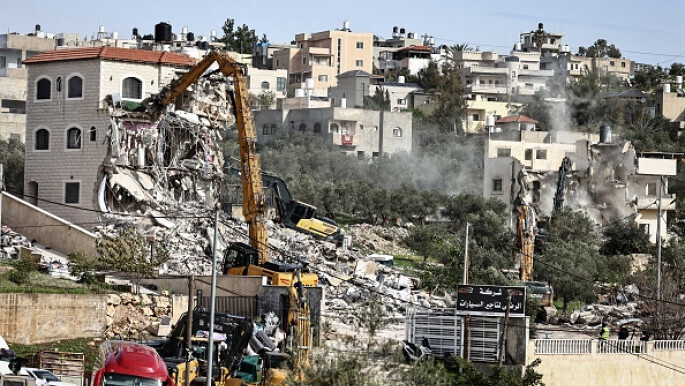
As Israel approaches its upcoming general election scheduled for October 2026, the far-right government and extremist settler factions have significantly accelerated aggressive actions across the occupied territories. Driven by uncertainty over the potential replacement of Prime Minister Benjamin Netanyahu’s administration and the possible loss of absolute far-right political leverage, these groups are hastily altering facts on the ground to permanently preempt any future political settlement.
1. Dismantling UN Facilities and Escalating Institutional Crackdowns
In a blatant defiance of international law, Israeli authorities recently moved into the Qalandia Vocational Training Center—a key facility operated by the United Nations Relief and Works Agency for Palestine Refugees (UNRWA) in Kafr Aqab, East Jerusalem. Backed by armed security forces and armored vehicles, authorities evacuated and detained staff members, raised the Israeli flag over the compound, and began demolishing parts of the site.
Prime Minister Benjamin Netanyahu defended the move, stating that the state would not tolerate an organization allegedly compromised by militant ties. This follows a broader legislative and operational crackdown targeting UNRWA, including previous demolitions at its East Jerusalem headquarters. United Nations Secretary-General António Guterres strongly condemned the actions, denouncing them as a direct violation of the UN Charter and international legal obligations.
2. Settler Violence and the Destruction of Palestinian Symbols
Parallel to state-level administrative erasures, violence and intimidation by extremist settlers have surged across the West Bank. In southern West Bank areas, settlers launched physical assaults against anti-occupation human rights defenders and journalists, utilizing clubs, stones, and tear gas, which resulted in injuries to international and local media personnel alongside severe property damage.
Concurrently, extreme-right political figures have taken direct part in acts of provocation. Lawmaker Zvi Sukkot entered the West Bank village of Madama and used a sledgehammer to destroy a Palestinian monument, with accompanying Israeli soldiers refusing to intervene. Such actions underscore how political actors are directly emboldening fringe elements on the ground.
3. Record Settlement Expansion Ahead of the Ballot Box
The primary strategic goal behind these escalating measures is territorial acquisition. According to data compiled by regional monitoring bodies, military and settler-related aggression in the West Bank has surged by over 60% compared to previous years. Furthermore, violence has begun to spill over from strictly Israeli-controlled zones (Area C) into administrative sectors traditionally managed under Palestinian civil authority (Area B).
The Israeli cabinet has advanced plans for dozens of new settlements and approved multiple outposts, fueled by substantial state funding. Far-right ministers have openly framed these aggressive expansion policies as an effort to absorb vast tracts of land before the October ballot box changes the political landscape, effectively slamming the door on any viable "two-state solution" and cementing permanent annexation. Observers note that the incumbent leadership frequently leverages regional and domestic security anxieties as a political instrument to consolidate the nationalist base and secure electoral survival.
[Copyright (c) Global Economic Times. All Rights Reserved.]