![[등록] 2026-09-01 15:48:31](/support/_updata/banner2/tl181982910_6749.png)


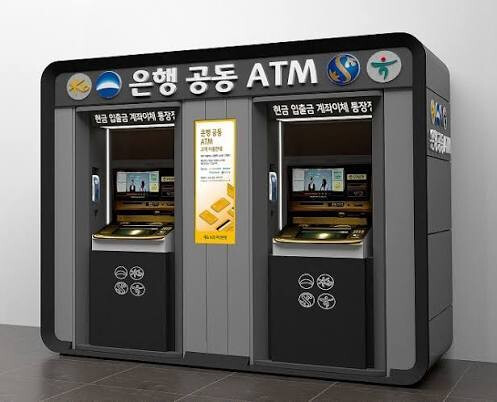
The physical cash infrastructure in South Korea is shrinking at an unprecedented pace. As mobile banking adoption accelerates and commercial banks continuously streamline their offline networks, automated teller machines (ATMs) are rapidly disappearing from streets, bank branches, and local convenience stores. This widespread reduction has sparked growing concerns that the public's access to physical cash is being severely compromised, disproportionately affecting vulnerable demographics such as the elderly and residents in remote areas.
According to data compiled by the financial sector, the total number of ATMs operated by major commercial lenders—including KB Kookmin, Shinhan, Hana, and Woori—alongside regional banks stood at 17,647 units at the end of the first half of the year. This represents a net decrease of 319 units compared to the end of the previous year. Looking back over a two-year span from the end of 2024, when the count was 18,954, a staggering 1,307 machines have vanished.
The contraction has hit both national and regional institutions, though regional banks experienced a steeper proportional decline. While major commercial lenders saw their ATM counts drop by roughly 1.4%, regional banks registered a contraction of about 3% over the same timeframe. Financial analysts point out that the primary catalyst behind this trend is the aggressive consolidation and closure of physical bank branches. Driven by soaring operational costs and a strategic shift toward digital-first banking, major commercial banks reduced their aggregate branch count to 2,201 in the first half of the year, down from 2,252 a year prior. When banks shut down or merge traditional branches, the indoor and outdoor ATMs attached to those facilities are invariably dismantled.
Compounding the issue, convenience store ATMs—long considered the primary fallback option compensating for shrinking bank infrastructure—are also following a downward trajectory. Data from major convenience store operators, including GS25, CU, and E-Mart 24 (or Seven-Eleven), shows that the number of store locations equipped with ATMs dropped to 28,783 in the first half of the year. This is a sharp fall from the peak recorded at the end of 2024, when convenience store ATMs spanned 31,048 locations, resulting in a loss of 2,265 spots in just two years. As the local convenience store market approaches saturation, franchise owners and operators are increasingly auditing individual store profitability and removing underperforming or high-maintenance cash machines.
Efforts by financial institutions to bridge this gap through advanced technology have yielded limited results. Commercial banks have attempted to introduce smart kiosks and high-function multi-purpose automated machines capable of handling complex transactions that usually require a human teller. However, the deployment speed lags far behind the rate at which traditional ATMs are being phased out. Across the four major commercial banks, high-function automated units increased by a mere 88 machines over a multi-year period, climbing from 704 units to 792 units by the first half of the year, proving insufficient to offset the thousands of traditional machines lost.
This rapid decline mirrors broader shifts highlighted by the Bank of Korea (BOK), which noted that South Korea's overall cash usage rate has plummeted into the teens. While digital payments, contactless cards, and smartphone settlement systems dominate urban consumer habits, cash remains an essential public good for specific groups and emergency situations. Central bank officials and consumer advocates emphasize that relying solely on market-driven efficiency will alienate senior citizens who struggle with digital interfaces and residents living in rural farming or fishing communities where digital alternatives are less viable.
Experts suggest that mitigating this looming financial blind spot will require more than passive machine reductions. Financial authorities, banking syndicates, and retail partners must work in tandem to cultivate alternative networks—such as expanding shared ATM operations among different financial institutions, incentivizing convenience store cash-back services, and reevaluating maintenance fee structures to ensure that cash accessibility remains protected as an inclusive social utility.
[Copyright (c) Global Economic Times. All Rights Reserved.]