![[등록] 2026-09-01 15:48:31](/support/_updata/banner2/tl181982910_6749.png)


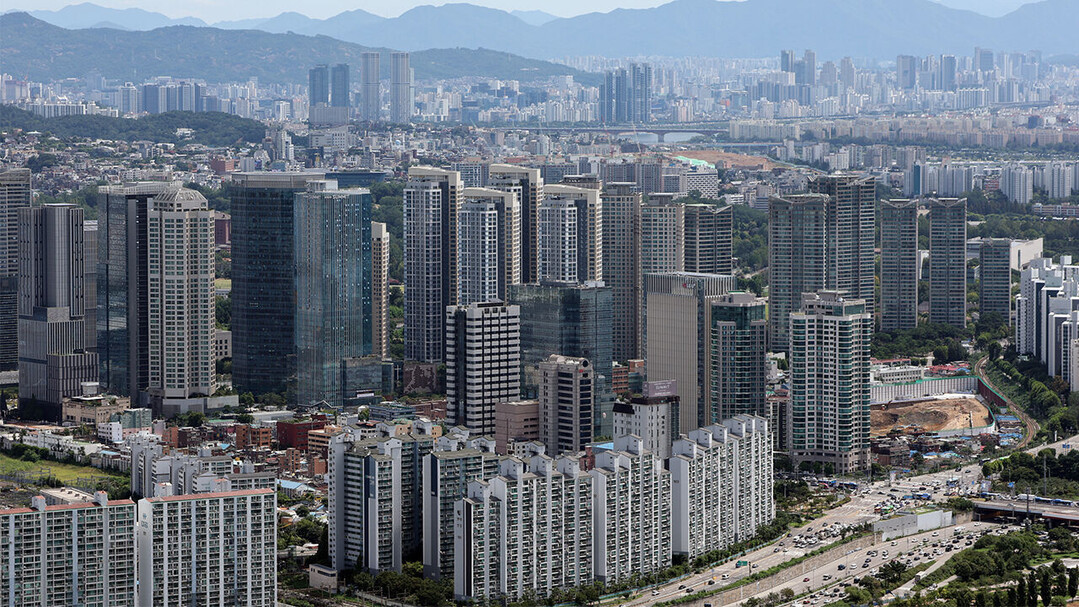
SEOUL — The upward momentum of Seoul's housing market is shifting its axis. While high-end apartment prices in core Gangnam areas have temporarily plateaued due to tightened holding taxes and stricter resident requirements following the government's tax reform proposals, real estate demand is heavily flowing into relatively affordable, mid-to-low-priced apartment clusters in outer districts such as Jungnang, Seongbuk, Nowon, and Guro.
Industry insiders report that a severe shortage of listings has turned the market into a seller's paradise. Real estate agents in areas like Sanggye-dong, Nowon-gu note that potential buyers are rushing to sign contracts out of fear that properties will vanish or asking prices will spike further within hours. This phenomenon, often referred to as "catching up," signifies a widespread market adjustment where outlying regions are rapidly closing the price gap with central Seoul.
Record-Breaking Average Prices and Regional Surges
According to the August housing price trends released by KB Kookmin Bank, Seoul’s average apartment sales price has officially crossed the 1.6 billion won threshold for the first time, hitting 1,607,390,000 KRW as of the 10th of the month. A breakdown by region reveals a stark division: the average price for 11 districts in the affluent Gangnam area approached the 20 billion won mark at 1,990,160,000 KRW, while the 14 districts north of the Han River (Gangbuk) averaged 1,001,670,000 KRW. Furthermore, the median price—representing the midpoint when all Seoul apartment prices are arranged sequentially—was recorded at 1,291,670,000 KRW.
The acceleration in outer districts is particularly stark. Seoul's overall apartment sales prices rose 1.14% compared to the previous month, widening the growth margin by 0.09 percentage points. Non-Gangnam districts led this surge: Jungnang-gu experienced the highest monthly increase at 2.25%, followed closely by Seongbuk-gu (2.08%), Nowon-gu (1.95%), Jongno-gu (1.94%), Gangseo-gu (1.86%), Guro-gu (1.81%), and Dongdaemun-gu (1.68%).
A string of record-breaking transaction highs further underlines this trend. For instance, the SK Bukhansan City complex (dedicated area 84㎡) in Mia-dong, Gangbuk-gu, was traded at 923 million KRW on the 13th, setting a new high. Given that its previous transaction just days prior on the 1st stood at 865 million KRW, values jumped by 58 million KRW in less than two weeks. Similarly, Changgyeonggung Lotte Castle Signature (84㎡) in Samseon-dong, Seongbuk-gu, changed hands at 1,677,900,000 KRW on the 14th, marking a dramatic leap from its March trading price of approximately 1.33 billion KRW.
Underlying Drivers: Jeonse Crises, Supply Anxieties, and Tax Reform
Real estate experts attribute this outward migration of buyers to a compound of chronic jeonse (lump-sum housing deposit lease) shortages, rising lease prices, and broader anxieties regarding future housing supplies. As jeonse volatility worsens and listings dry up, prospective tenants who can no longer afford core city centers are pivoting toward the sales market in suburban districts where entry barriers remain lower.
Government policy has also played a catalyst role. Park Won-gab, a senior real estate expert analyst at KB Kookmin Bank, explained that the government's recent tax reform proposals were intentionally structured to place relatively lighter tax burdens on owners of mid-to-low-priced homes meant for actual residency.
"Prolonged shortages of jeonse listings and skyrocketing lease costs are naturally expanding the influx of actual end-users into the purchase market," Park noted. "Because core areas of Seoul carry a heavy financial burden, demand is actively diffusing toward outer districts with lower entry thresholds. Combined with tax structures favorable to owner-occupiers of moderately priced housing, this real-demand-driven momentum in Seoul’s peripheries is expected to persist for the foreseeable future."
[Copyright (c) Global Economic Times. All Rights Reserved.]