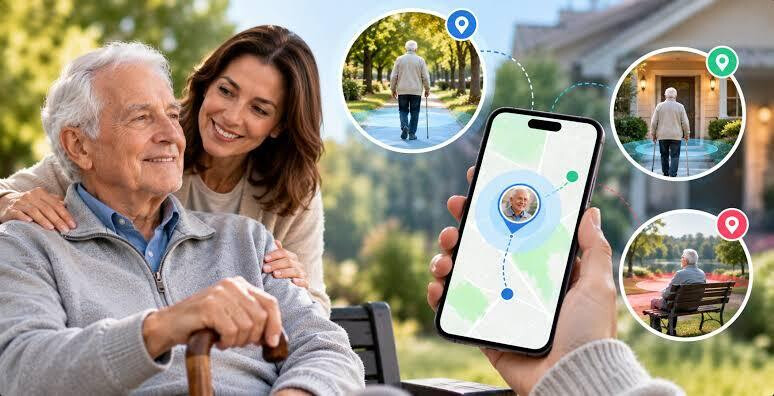
As populations age, wandering incidents involving seniors with cognitive decline are a growing concern for families. Traditional identification, such as paper name tags, often fails because seniors may remove them or leave personal items behind. To secure a reliable safety net, modern tracking technology—specifically Bluetooth and GPS-enabled smart tags combined with mobile applications—has become essential for early intervention and rapid response.
How Location Tracking Works: GPS and BLE Networks
Smart tags operate through a dual mechanism that covers both outdoor and indoor environments:
Outdoor Tracking: When outside, the tag connects to the user's smartphone via GPS or leverages the surrounding network of nearby smartphone users to pinpoint location data.
Indoor and Blind Spot Tracking: In indoor settings or signal-blind areas like subway stations, the device utilizes Bluetooth Low Energy (BLE) and Ultra-Wideband (UWB) signals.
Crowdsourced Relay: In areas with a high density of smartphone users, nearby devices anonymously relay the tag’s signal back to the caregiver’s application, ensuring continuous location updates even indoors.
Because seniors with cognitive decline may attempt to remove unfamiliar objects, discrete placement is critical. Placing tags inside jacket linings, shoe insoles, or secure compartments prevents tampering while keeping the device functional.
Key Comparisons: Traditional Identification vs. Mobile SmartTags
Response Time and Golden Hour: Relying solely on name tags can mean hours or days of searching by police and citizens, whereas mobile app path-tracking features can identify travel routes within minutes.
Alert Speed: Traditional methods leave families unaware of a disappearance for hours. Mobile apps with "Safe Zone" boundaries instantly send push notifications the moment a senior exits a designated perimeter.
Retention and Tampering Risk: While pocket-sized ID cards or necklaces are easily discarded, concealed sewing-in methods, shoe pouches, and screw-fastened keychains secure the device in place.
Family Network Integration: Single-caregiver monitoring can delay emergency responses. Modern apps allow location-sharing invitations, enabling multiple family members or professional caregivers to track movements simultaneously in real-time.
Pre-Checklist Before Setup
Before purchasing or deploying a tracking device, caregivers should evaluate the following criteria:
Ecosystem Compatibility: Verify whether caregivers use Android or iOS devices, and check if the senior frequently discards accessories.
Operational Needs: Confirm the necessity of real-time location tracking and assess potential maintenance factors like battery replacement and communication costs.
Local Government Support: Check with local community centers or senior welfare offices, as some local municipalities offer support programs or alternative devices such as wrist- or necklace-type GPS wander-detection monitors.
A 4-Step Routine for Setup and Concealment
To maximize effectiveness, caregivers can follow this four-step implementation guide:
App Installation and Device Pairing: Turn on smartphone location services and Bluetooth. Register the smart tag using a dedicated app (such as SmartThings or Galaxy Wearable), and rename the device to the senior's name for easy identification.
Configuring Safe Zones: Establish geographical boundaries—such as home or a local daycare center—within the app. Enable exit notifications, making sure the radius is wide enough to prevent false alarms while still offering meaningful protection. Share alerts with at least two caregivers.
Discrete Placement: Attach the tag out of sight. Ideal locations include inner jacket seams, under shoe insoles, or inside secure belt pouches. Because bags can be left behind, experts recommend distributing tags across at least two locations (such as apparel and footwear) to prevent tracking failure.
Permissions and Routine Maintenance: Grant sub-caregivers viewing access via the app. Regularly check battery levels through system alerts, and conduct a weekly operational test to verify that location updates and notifications function correctly.
Selecting the Right Approach
Ecosystem Match: If caregivers use Android smartphones, pairing them with compatible smart tags offers a seamless integration experience.
Alternative Devices: If the senior refuses to wear tags or clothing attachments, consider dedicated GPS wander-detection devices such as watch-type or necklace-type monitors.
Implementing mobile tracking tools transforms modern caregiving from reactive searching into proactive safety management, offering peace of mind for both seniors and their families.
[Copyright (c) Global Economic Times. All Rights Reserved.]