![[등록] 2026-09-01 15:48:31](/support/_updata/banner2/tl181982910_6749.png)


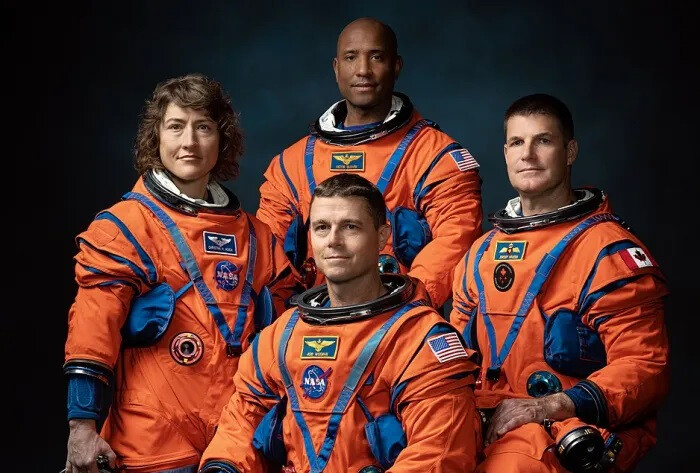
(C) NASA
The year 2026 is poised to be a watershed moment in the escalating space race between the United States and China. Both nations are intensifying their lunar exploration efforts, marking a new era of cosmic competition and potential discovery.
United States: The Artemis Program Takes Flight
NASA is leading the charge with its "Artemis II" mission, scheduled for next month. This mission will send the Orion spacecraft, carrying four astronauts, on a ten-day lunar flyby—the first manned mission to the Moon's vicinity since Apollo 17 in 1972. The crew is notable for its diversity, including Christina Koch (the first woman), Victor Glover (the first Black man), and Jeremy Hansen (the first non-American, a Canadian) to venture toward the Moon. This mission serves as a critical test of life-support systems before the planned 2028 "Artemis III" mission, which aims to land humans on the lunar surface using SpaceX’s Starship.
China: Chasing Lunar Water and Deep Space Milestones
Simultaneously, China is making significant strides with its "Chang'e 7" mission. Its primary goal is to land at the lunar South Pole to detect and harvest water ice. If successful, China will become the first nation to prove the existence of water on the Moon, a discovery vital for future lunar bases. Following the success of Chang'e 6, which returned soil samples from the far side of the Moon in 2024, China is also expanding its "Tiangong" space station activities with the Shenzhou 23 and 24 missions. Furthermore, the Tianwen-2 probe is set to land on asteroid 2016 HO3 this year to collect samples, showcasing China’s growing deep-space capabilities.
Competition, Culture, and the Future
The rivalry extends beyond technology into cultural and diplomatic realms. While NASA draws names from Greek mythology, China uses names from its own traditional legends and literature, such as "Chang'e" (the Moon Goddess). China is also expanding its "space diplomacy" by training astronauts from developing nations like Pakistan and Egypt.
However, this increased activity brings concerns. The risk of accidental collisions and disputes over lunar resource extraction is rising. Conversely, shared threats like space debris—highlighted by the Shenzhou 20’s recent collision with fragments—may provide an unexpected opportunity for the two superpowers to cooperate on orbital safety. As 2026 unfolds, the heavens will be busier than ever, reflecting the geopolitical ambitions of Earth's two dominant powers.
[Copyright (c) Global Economic Times. All Rights Reserved.]