![[등록] 2026-09-01 15:48:31](/support/_updata/banner2/tl181982910_6749.png)


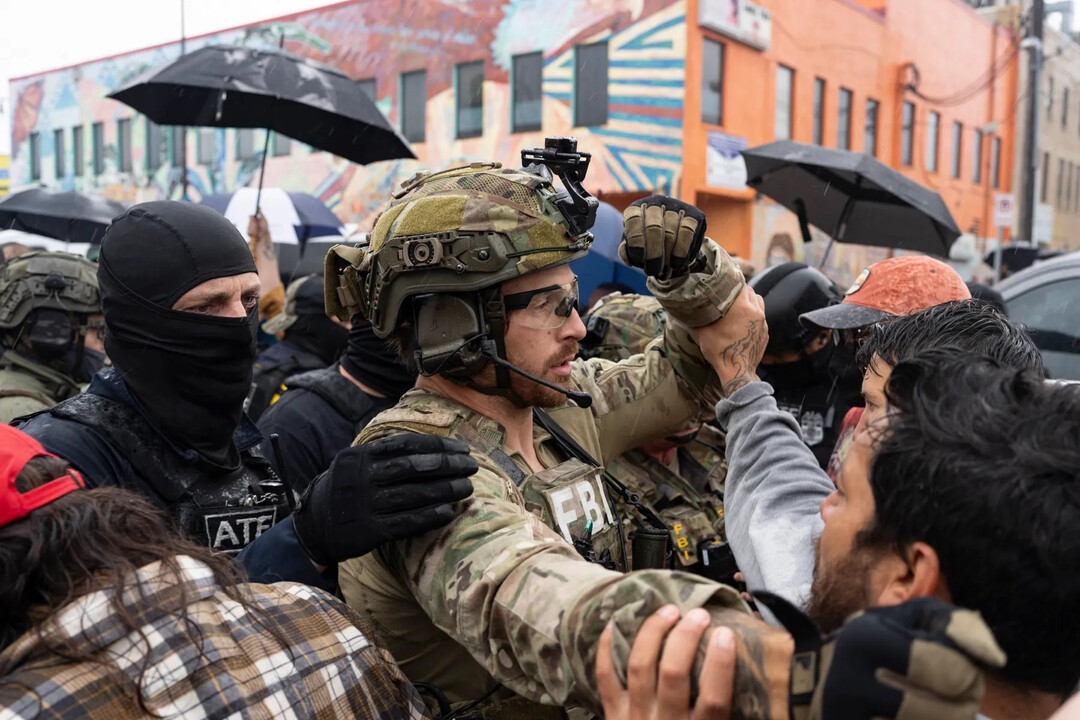
(C) Sahan Journal
MINNEAPOLIS — A fatal shooting involving a U.S. Immigration and Customs Enforcement (ICE) officer in Minneapolis has ignited a firestorm of controversy, exposing a deep and volatile rift between the Trump administration and Minnesota’s Democratic leadership. The incident, occurring in a city still scarred by the 2020 killing of George Floyd, has rapidly escalated into a national debate over federal law enforcement tactics and the limits of executive power.
The Incident: Defensive Maneuver or Excessive Force?
The confrontation took place on Wednesday, January 7, 2026, during an ICE enforcement operation in a residential neighborhood of Minneapolis. According to a statement released by the Department of Homeland Security (DHS), a 37-year-old woman was shot and killed after ICE agents perceived a lethal threat.
Trisha McLaughlin, a spokesperson for the DHS, characterized the shooting as a "defensive act" necessary to protect the lives of the agents and the public. The federal narrative suggests that a "mob" of protesters attempted to obstruct the operation, and the deceased woman allegedly "weaponized" her vehicle, attempting to ram officers.
However, video footage circulating on social media tells a more complex story. The video shows a Honda Pilot blocked by unmarked vehicles in a residential street. As masked agents approach, the vehicle reverses slightly before moving forward, at which point an agent fires multiple rounds at close range through the driver-side window.
Conflicting Narratives: "Armed Assault" vs. "Unarmed Tragedy"
The reaction from local authorities was swift and sharply contradictory to the federal account. Minneapolis Police Chief Brian O’Hara confirmed that the victim, whose identity has not been formally released, suffered a fatal gunshot wound to the head.
Critically, O’Hara stated there was no evidence that the woman was the intended target of the ICE operation. "We are looking at a situation where an apparently unarmed civilian was shot inside her vehicle by federal agents," O’Hara said, noting that the Minnesota Bureau of Criminal Apprehension (BCA) and the FBI have launched a joint investigation.
Minneapolis Mayor Jacob Frey went further, labeling the DHS’s description of the event as "state-sponsored propaganda" and a "distortion of reality." After reviewing the footage, Frey asserted that the claim of self-defense was "patently false" and demanded that ICE agents leave the city immediately.
"ICE says they bring safety to our streets, but the reality is the exact opposite," Frey told reporters. "This was a reckless abuse of power that resulted in the loss of a human life."
Political Backdrop: A City on the Edge
The shooting occurred less than a mile from the intersection where George Floyd was killed in 2020, an area that remains a symbol of the struggle against police brutality. The geographic proximity has amplified local trauma, with community leaders expressing fears of renewed civil unrest.
President Donald Trump took to Truth Social to defend the ICE agents, posting a clip of the incident and praising the officers for their "bravery in the face of violent resistance." The President’s rhetoric framed the deceased woman as a "disorderly" individual who "maliciously" attempted to harm federal officers.
This incident is the latest flashpoint in an increasingly hostile relationship between Washington and Minnesota. Just days prior, Governor Tim Walz announced he would not seek a third term following a federal investigation into a welfare fraud scandal. President Trump responded by threatening to cut off federal funding to the state, citing "rampant corruption."
The Path Ahead: Investigation and Accountability
As federal and state investigators begin their work, the legal and social implications of the shooting are profound. Key questions remain:
Rules of Engagement: Did the ICE agent follow established protocols for the use of deadly force against a moving vehicle?
Collateral Damage: If the woman was not the target of the operation, why was she intercepted by agents?
Jurisdictional Conflict: How will the joint investigation proceed given the extreme lack of trust between the Minneapolis Police Department and the DHS?
The White House has signaled it will continue its aggressive immigration enforcement policies regardless of local opposition. Meanwhile, Governor Walz has promised a "full, fair, and rapid" investigation to ensure accountability. "Do not believe the federal government's spin," Walz urged citizens. "The state of Minnesota will seek the truth."
The tragedy has left Minneapolis in a state of mourning and high alert. As the city prepares for potential protests, the national spotlight remains fixed on a single question: Was this an act of self-defense by agents under fire, or a tragic instance of federal overreach in a city that has seen enough blood?
[Copyright (c) Global Economic Times. All Rights Reserved.]