![[등록] 2026-09-01 15:48:31](/support/_updata/banner2/tl181982910_6749.png)


MOUNTAIN VIEW — Google has officially declared a "reinvention of the map." By integrating its advanced artificial intelligence model, Gemini, into Google Maps, the tech giant is shifting from a traditional navigation tool to a comprehensive "Spatial AI" platform. This transformation, marking the 21st anniversary of the service, aims to change how over 2 billion monthly users interact with the physical world.
"Ask Maps": From Search Keywords to Conversational Intelligence
The centerpiece of this update is "Ask Maps," a feature that allows users to interact with their surroundings using natural language. Gone are the days of typing rigid keywords like "restaurants near me." Instead, users can now pose complex, nuanced questions such as, "Where can I find a cozy dinner spot with outdoor seating and live music tonight?" or "Which public tennis courts nearby have lights and are available after 8 PM?"
By analyzing a massive database of over 300 million places and insights from a community of 500 million contributors, Gemini doesn't just list results—it reasons through them. It synthesizes reviews, photos, and real-time data to provide tailored recommendations. Furthermore, these suggestions are deeply personalized, leveraging a user’s past search history and saved locations to ensure the "best" spot is the best one for them.
Immersive Navigation and the 3D Evolution
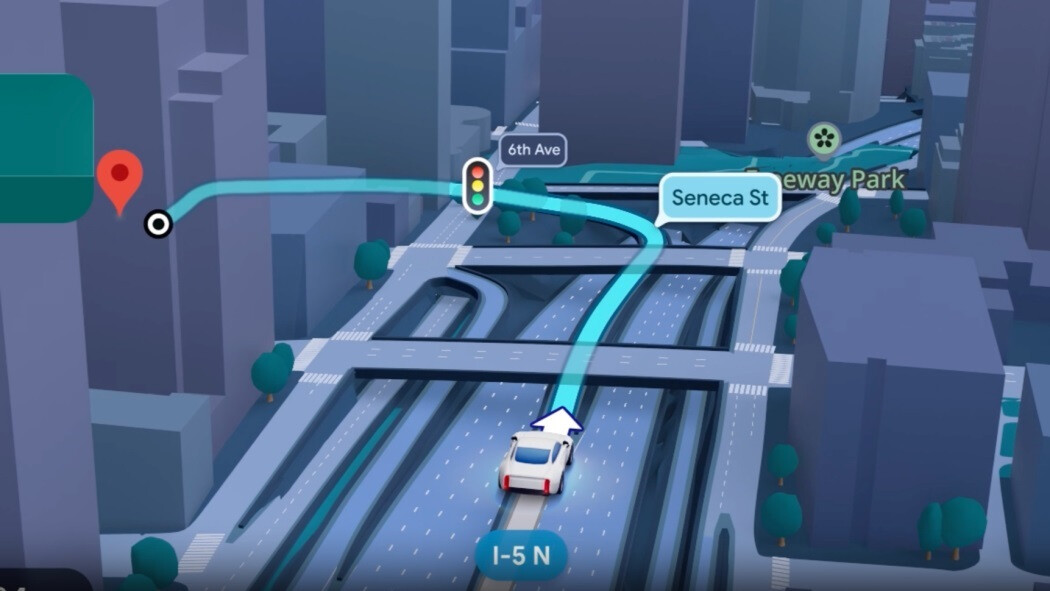
Google is also overhaulng the driving experience with Immersive Navigation. This feature utilizes 3D renderings of buildings and terrain to provide a more intuitive visual context. Key updates include:
-Smart Zoom: The camera automatically adjusts its scale based on driving conditions—zooming in during complex maneuvers and out on long stretches.
-Contextual Transparency: Nearby buildings that might obstruct a driver's view of an upcoming turn are rendered semi-transparent, ensuring "pre-emptive situational awareness."
-Enhanced Detail: Clearer markings for lanes, crosswalks, and traffic lights help drivers navigate unfamiliar intersections with confidence.
Before even arriving, users can utilize an enhanced Street View to scout building entrances, parking spots, and walking paths, minimizing the "last-mile" confusion often associated with new destinations.
The "All-in-Gemini" Strategy
Industry experts, including those from the Silicon Valley-based research firm The Milk, suggest that these updates represent a fundamental shift in the concept of cartography. Drew Brunnic, a GEO AI expert at the Overture Maps Foundation, noted that "future maps will no longer look like maps," but rather like intelligent assistants that bridge the gap between digital data and physical reality.
The integration into Maps is a critical pillar of Google’s broader "All-in-Gemini" strategy. By embedding AI across Search, Chrome, and Workspace, Google is creating a seamless ecosystem where the AI understands the user's context regardless of the app they are using.
Global Rollout and Privacy
The "Ask Maps" feature is initially rolling out on Android and iOS in the United States and India, with desktop support and broader international expansion expected shortly. Google emphasized that while the AI uses location and place data, it does not access private information from other services like Gmail to generate these map recommendations, maintaining a clear boundary for user privacy.
As Google Maps celebrates over two decades of service, this "spatial revolution" ensures it remains the dominant platform in a world where the boundary between the digital and physical is increasingly blurred.
[Copyright (c) Global Economic Times. All Rights Reserved.]