• 2026.11.25 (Wed)
  • All articles
  • LOGIN
  • JOIN
Global Economic Times
한인동포뉴스(상단)
  • Synthesis
  • World
  • Business
  • Industry
  • ICT
  • Distribution Economy
  • Well+Being
    • Pet Life
    • Halal Horizon
  • Travel
  • Eco-News
  • Education
  • Korean Wave News
  • Opinion
  • Arts&Culture
  • Sports
  • People & Life
    • International Student Report
    • With Ambassador
  • Column
    • Cho Kijo Column
    • Cherry Garden Story
    • Ko Yong-chul Column
    • Kim Bong-seon's Photo Column
    • Kim Seul-Ong Column
    • Lee Yeon-sil Column
    • Professor Lee Soo-young’s Life Essays
  • Photo News
  • New Book Guide
MENU
 
Home > Distribution Economy

Record Revenue, 7-Year Low Stocks: AI Disrupts South Korean Tech Giants' Playbook

Kim Young Min Reporter / Updated : 2026-11-25 08:28:45
  • -
  • +
  • Print
Despite doubling their earnings since 2019, Naver and Kakao face a structural crisis as generative AI bypasses traditional search and messaging gateways.


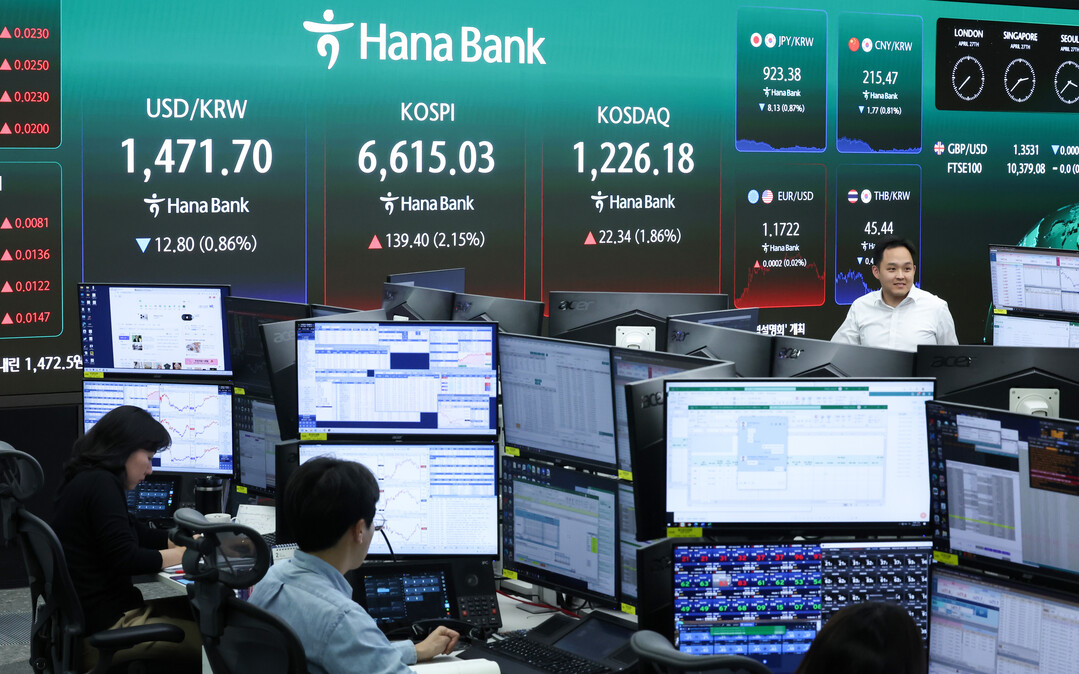
South Korea’s two dominant internet platforms, Naver and Kakao, are experiencing a stark disconnect between their financial fundamentals and market valuation. While both companies are posting record-high revenues and operating profits—more than double their figures from seven years ago—their stock prices have tumbled back to November 2019 levels.

As of market close on the 24th, Naver shares stood at 156,100 won and Kakao at 30,350 won, hovering just above their annual lows. More tellingly, their forward price-to-earnings (PER) ratios have compressed dramatically, falling from 41x and 32x seven years ago to roughly 11x and 14x today. This sharp contraction reflects deep investor skepticism regarding the sustainability of their traditional growth engines in the era of artificial intelligence.

The Erosion of Digital Gateways

For over a decade, Naver and Kakao thrived on a classic, high-margin platform formula: capture tens of millions of daily users through essential utilities—search for Naver, mobile messaging for Kakao—and monetize that traffic via targeted advertising and e-commerce. Once built, these digital ecosystems scaled with minimal marginal cost.

However, the rapid adoption of generative AI is redrawing the digital map. Consumers are increasingly turning directly to AI chatbots for answers and recommendations, bypassing traditional search engines and portals altogether.

Data underscores this behavioral shift. In South Korea, total user time on the ChatGPT app surged by 114% year-over-year in October. Over the same period, Naver’s search ad revenue growth decelerated from 9.3% in the first quarter to 5.5% in the third quarter.

Kakao faces a similar threat from autonomous AI agents capable of executing end-to-end tasks—such as comparing products, making payments, or booking restaurant reservations—on a user’s behalf. Industry surveys indicate that consumers overwhelmingly favor general-purpose AI assistants over proprietary retail chatbots for shopping, suggesting that simply bolting AI features onto existing apps may not be enough to defend market share.

The Innovator’s Dilemma and Margin Compression

Market analysts warn that AI agents are evolving into a "platform above platforms." Without a competitive, proprietary AI ecosystem, legacy tech giants risk being relegated to mere backend infrastructure, paying commissions to external AI gatekeepers while losing direct access to consumers. Furthermore, platform dominance is notoriously fragile once a rival reaches a critical mass of network effects—a dynamic Kakao itself exploited over a decade ago to unseat incumbent desktop messengers.

Yet, pivoting aggressively to AI presents a classic innovator’s dilemma for both firms:

Revenue Cannibalization: Promoting conversational AI search directly undermines Naver’s lucrative keyword-ad real estate. Similarly, if an AI agent handles user tasks automatically, Kakao loses the multi-service traffic routing that drives its ecosystem revenue.
Rising Compute Costs: Unlike traditional software platforms where margins expand with user growth, generative AI incurs heavy, ongoing computational expenses for every query processed, structurally pressuring profitability.
Having once ridden the waves of the internet and mobile transitions to dethrone legacy incumbents, Naver and Kakao now find themselves on the defensive, racing to reinvent their business models before the AI shift erodes their core moats.

[Copyright (c) Global Economic Times. All Rights Reserved.]

  • #Cherry Garden
  • #HalalFood
  • #Halal
  • #Petlife
  • #Cats
  • #Dogs
  • #Halalhorizone
  • #Hormuz Impasse
  • #Joseon
  • #globaleconomicti
Kim Young Min Reporter
Kim Young Min Reporter 前 환경데일리 발행인, mkTaiwan 편집인.

Popular articles

  • Stepping into the Shoes of a Joseon Scholar: Daejeon Museum Launches Immersive 'Life Game' Exhibition

  • Bitcoin Slumps for a Second Day Amid Record Binance Hack, Tech Sell-Off, and Rising Oil Prices

  • Gyeongbuk Beauty Talent of 110 to Compete in 10 Categories

I like it
Share
  • Facebook
  • X
  • Kakaotalk
  • LINE
  • BAND
  • NAVER
  • https://globaleconomictimes.kr/article/1065569207425198 Copy URL copied.
Comments >

Comments 0

Weekly Hot Issue

  • Halal Turkeys Take Center Stage on American Thanksgiving Tables as Mainstream Grocers Expand Offerings
  • Hugging Your Cat After a Bad Day Might Backfire, Study Suggests — While Petting a Dog Builds Resilience
  • South Korea Weighs Low-Power Signal Jamming and stricter Device Rules to Curb AI Exam Cheating
  • South Korea Pushes for Overdue Media Law Overhaul as OTT Blurs Traditional Broadcast Lines
  • From Classroom and Lab to Smart Farms: Siblings Cultivate a Second Act in Rural Korea
  • Busan Tourism Organization Takes the Lead in Local Co-prosperity Again This Year with the ‘Good-Cycling’ Campaign

Most Viewed

1
South Korean Burger Chain Lotteria Expands Singapore Footprint with Halal Certification and New Teriyaki Lineup
2
AI Semiconductor Stocks Plummet: Philadelphia Index Drops 5.28% and Micron Plunges 7.59% Amid Executive Shakeup and Export Restrictions
3
"Stay Out, Get Paid, or Have Police Stay With You": Shenzhen Imposes Strict Security Ahead of APEC Summit
4
Taiwan Bans Short-Selling Below Previous Close Starting Nov. 23, Raises Margin Ratio to 150%
5
AI Music Tops Melon Chart: Is the K-Pop Production Formula Changing?
체리가든 스토리
nutri huevos
로타리
동포저널

Hot Issue

Trump Faces Rare Bipartisan Backlash Over Jensen Huang’s Return to Nvidia

Beyond the Click: How Agentic AI is Quietly Dismantling the App Economy

Jeju Tests Solar-Powered Greenhouses to Grow Carbon-Free ‘RE100’ Tangerines

Fashion Runway Show 2026

Let’s recycle the old blankets in Jeju Island’s closet instead of incinerating them.

Global Economic Times
korocamia@naver.com
CEO : LEE YEON-SIL
Publisher & Editor : KO YONG-CHUL
Registration number : Seoul, A55681
Registration Date : 2024-10-24
Youth Protection Manager: KO YONG-CHUL
Singapore Headquarters
5A Woodlands Road #11-34 The Tennery. S'677728
Korean Branch
Phone : +82(0)10 4724 5264
#304, 6 Nonhyeon-ro 111-gil, Gangnam-gu, Seoul
Copyright © Global Economic Times All Rights Reserved
  • News K
  • 반달곰 프로젝트
  • 광고문의
Search
Category
  • All articles
  • Synthesis
  • World
  • Business
  • Industry
  • ICT
  • Distribution Economy
  • Well+Being 
    • 전체
    • Pet Life
    • Halal Horizon
  • Travel
  • Eco-News
  • Education
  • Korean Wave News
  • Opinion
  • Arts&Culture
  • Sports
  • People & Life 
    • 전체
    • International Student Report
    • With Ambassador
  • Column 
    • 전체
    • Cho Kijo Column
    • Cherry Garden Story
    • Ko Yong-chul Column
    • Kim Bong-seon's Photo Column
    • Kim Seul-Ong Column
    • Lee Yeon-sil Column
    • Professor Lee Soo-young’s Life Essays
  • Photo News
  • New Book Guide
  • Overseas Koreans
  • Multicultural News