![[등록] 2026-09-01 15:48:31](/support/_updata/banner2/tl181982910_6749.png)


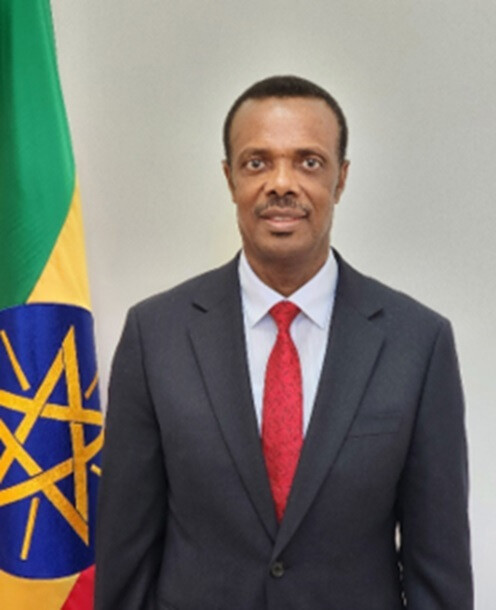
(C) Dessie Dalkie Dukamo, Ambassador Extraordinary and Plenipotentiary, the Federal Democratic Republic of Ethiopia to the Republic of Korea
In the Sidama region of Ethiopia, an elderly timekeeper, Ayyaanto, lifts his gaze to a clear night sky. After months of observing the moon and stars, they are finally ready to declare that the New Year has arrived. With this quiet but momentous announcement, Fichee Chambalaalla begins. Rooted in an indigenous lunar calendar and sustained by traditional astronomers, it is far more than a date on a calendar. Fichee Chambalaalla is a ritual of social and spiritual renewal—one that, in many ways, mirrors Korea’s Lunar New Year, Seollal. Though continents separate these cultures, both still greet the New Year by the light of the same moon.
As Sidama communities prepare once again for Fichee Chambalaalla, the festival offers a powerful lens for exploring cultural continuity and identity. When placed alongside Korea’s Seollal, striking parallels emerge: in how time is measured, relationships are healed, food is shared, and memory is preserved. Together, these celebrations reveal how diverse societies use lunar time to renew both the individual and the community.
Fichee Chambalaalla: The Sidama New Year
Fichee Chambalaalla, inscribed on UNESCO’s Representative List of the Intangible Cultural Heritage of Humanity in 2015, is the Sidama people’s New Year festival. The term “Fichee” refers specifically to the entry into the New Year, while “Chambalaalla” describes the extended period of visiting, feasting, and celebration that follows. In Sidama life, Fichee Chambalaalla marks a collective turning of the page, encompassing both ritual observances and everyday social practices that bind the community together.
Lunar Time and Indigenous Knowledge
Unlike the fixed dates of the Gregorian calendar, Fichee Chambalaalla never falls on the same day each year. Instead, Sidama timekeepers, the Ayyaanto, determine the onset of the New Year by carefully studying the positions of stars and the phases of the moon. Their work reflects a worldview in which human life is intimately linked to the cycles of the sky and nature. When the Ayyaanto announce Fichee, they are not simply naming a day; they are aligning the community with a celestial rhythm that has shaped Sidama life for generations.
Here, an illuminating comparison can be drawn with Korea’s Seollal. Historically, the Korean lunisolar calendar was regulated by court astronomers and state authorities, whose task it was to harmonise state and society with cosmic cycles. Both in Sidama and in Korea, the New Year is not arbitrarily set, but discovered through skilful skywatching. Different knowledge systems converge on a shared idea: renewal is timed to the movements of the heavens.
Cleansing the Year: Reconciliation as Ritual
One of Fichee Chambalaalla's hallmarks is reconciliation. In the days before the celebration, Sidama households clean their homes and compounds, and tend to their relationships. Elders travel from village to village, mediating disagreements and preaching forgiveness. Quarrelling neighbours are encouraged to reconcile, and estranged relatives are reunited. The concept is that previous hostilities prevent a fresh start.
Daily practice fosters this ethic. Children are taught to apologise promptly, and adults are encouraged to resolve conflicts early. Fichee is an annual social mending mechanism that weaves reconciliation into time. Fichee Cambalaa respects animals and preserves nature.
Hearth and Table: Sharing as Social Principle
Food is central to Fichee Chambalaalla, both as nourishment and as a sign of mutual care. As the festival approaches, families prepare traditional cuisine, burisame, made from enset (false banana) and milk, along with other local staples. During Chambalaalla, doors are left open. Friends, relatives, elders, and guests are welcome. Those with more are expected to share with those who have less; no one should be left out of the feast. The kitchen and table become spaces of hospitality and equality, where shared food affirms that joy is complete only when shared with others.
Korea’s Seollal: Ancestors, Family, and the Year Ahead
Korea’s Lunar New Year, Seollal, is likewise one of the most important annual festivals in Korean society. While it shares Fichee Chambalaalla’s focus on homecoming, family, and renewal, it expresses these themes through distinct practices shaped by Confucian and Korean traditions.
Many Koreans visit their roots. Families practice charye, ancestral ceremonies, at dawn on New Year's Day before a modest table with ritual delicacies. Families bow to ancestral tablets and offer these meals for blessings and the next year. Younger members bow deeply to parents and grandparents after charye. They get blessings and small presents or money. This transaction promotes Confucian filial piety, respect for elders, and intergenerational relationships. Food is symbolic. The most famous dish is tteokguk, sliced rice cake soup. Eat tteokguk to become "a year older" and bring everyone together to start the new year. White rice cakes symbolise purity and new beginnings. At Seollal, as at Fichee Chambalaalla, people share food, stories, and rituals to celebrate identity and memory.
Shared Lunar Foundations, Shared Human Values
Placing Fichee Chambalaalla and Seollal side by side reveals deep structural and ethical resonances, despite vast differences in language, history, and religious background.
Both are grounded in lunar timekeeping. Sidama Ayyaanto and Korea’s lunisolar calendar represent different knowledge systems, yet both depend on the sky to mark renewal.
Both place relationships at the centre of the New Year. Fichee focuses on reconciliation—healing conflicts and restoring social harmony. Seollal emphasises filial piety and continuity between generations and with ancestors. In each case, the New Year is less a spectacle than a deliberate strengthening of social bonds.
Both highlight sharing and generosity. In Sidama, families include those with fewer resources in their feasts. In Korea, opening the home, setting abundant tables, and offering blessings and gifts to the young serve a similar function. Hospitality becomes a way of facing the future together.
Finally, both festivals sustain cultural resilience. Fichee Chambalaalla keeps the Sidama language, traditions, and indigenous knowledge alive amid rapid change in Ethiopia. Seollal anchors Korean identity in a highly modern, globalised society. Each festival acts as an annual rehearsal of “who we are” as a people.
Under the Same Moon
In recent years, Fichee Chambalaalla has gained wider recognition across Ethiopia and internationally. UNESCO’s acknowledgment has highlighted its importance as a storehouse of indigenous astronomy and social ethics. For Sidama people in cities or in the diaspora, the festival often becomes a symbolic return home, even when celebrated far away.
Placed alongside Seollal, Fichee Chambalaalla shows that communities separated by continents still look up at the same moon and are guided by similar hopes: remembrance, respect, reconciliation, and renewal. The Sidama elder reading the night sky and the Korean elder bowing before ancestral tablets are engaged in parallel acts. Both affirm that time is not just a list of dates to be crossed off, but a relationship to be honoured.
Each year, as the Sidama celebrate Fichee Chambalaalla and Koreans gather for Seollal, they send a shared message to a rapidly changing world: renewal is not only about moving forward, but also about returning—to one another, to our elders, to our stories, and to the enduring human desire to begin each year with clearer hearts and stronger bonds, under the same moon.
[Copyright (c) Global Economic Times. All Rights Reserved.]