![[등록] 2026-09-01 15:48:31](/support/_updata/banner2/tl181982910_6749.png)


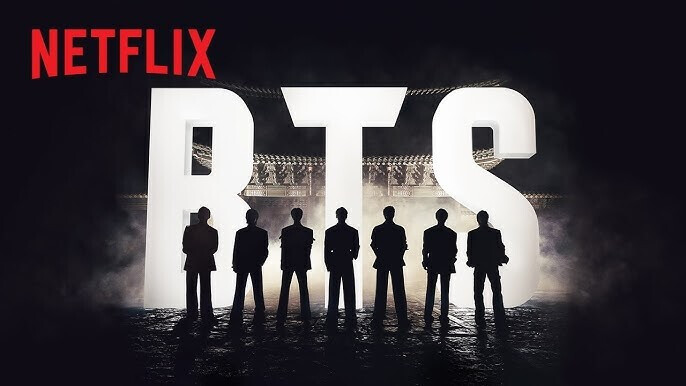
(C) Youtube
SEOUL — As the global stage sets for Bangtan Sonyeondan’s (BTS) highly anticipated "ARIRANG" comeback concert on March 21 at Gwanghwamun Plaza, a familiar conflict is brewing behind the scenes. While fans worldwide prepare their lightsticks, South Korean Internet Service Providers (ISPs) are bracing for a massive data surge—and once again questioning why they are footing the bill for a global tech giant’s profit.
Netflix, the exclusive streaming partner for the event, has officially requested cooperation from South Korea’s "Big Three" telcos—KT, SK Broadband, and LG Uplus—to ensure network stability during the broadcast. However, industry sources reveal that the massive costs associated with temporary infrastructure expansion are being borne entirely by the local carriers, reigniting the heated "Network Usage Fee" debate.
The Logistics of a Global Mega-Event
The "ARIRANG" concert is expected to be one of the largest live-streaming events in history, reaching over 300 million subscribers across 190 countries. To prevent a catastrophic network collapse, South Korean ISPs have entered an "emergency response mode."
According to industry insiders, several carriers have more than doubled their international circuit capacities, including undersea cables connecting South Korea to the United States via Japan. Domestically, companies are aggressively expanding the data processing capacity of their backbone networks.
The Ministry of Science and ICT has also stepped in, recommending rigorous pre-verification of traffic distribution plans to prevent localized internet blackouts during the peak hours of the performance.
A Structural Conflict: VOD vs. Live Streaming
While Netflix uses its proprietary Open Connect Appliance (OCA)—a caching system—to manage standard Video-on-Demand (VOD) traffic, live streaming presents a different beast entirely.
VOD Traffic: Content is pre-stored on local servers (caching), allowing for distributed traffic management.
Live Traffic: Real-time broadcasting limits the effectiveness of pre-caching. Data must travel instantly across long-distance backbone networks.
The Risk: Simultaneous access by tens of millions of users creates massive bottlenecks and buffering. To prevent this, ISPs must physically expand bandwidth—a process that incurs direct, high-level capital expenditure.
"Unlike regular Netflix shows, this live event hits the ISP networks directly," an industry official stated. "This requires dedicated edge computing setups and massive bandwidth expansion. Currently, we are handling these costs out of our own pockets, independent of existing contracts."
The "Free-Ride" Argument Gains Momentum
The core of the controversy lies in the "asymmetry of profit." Netflix stands to gain massive subscriber growth and engagement from the BTS event. Conversely, South Korean ISPs are burdened with the technical risk and the financial cost of the infrastructure required to deliver that content.
A representative from one major Korean telco remarked, "The current structure is inherently unfair. Big Tech monopolizes the content revenue while the local ISP carries the heavy burden of quality management. We need a standardized settlement system for these recurring high-traffic events."
Netflix’s Stance
For its part, Netflix maintains that it is doing its share of technical heavy lifting. A spokesperson for the streaming giant noted that they are implementing "load balancing and multi-encoder switching systems" to ensure a seamless experience.
However, when asked about compensation for the network expansion, the company remained vague. "We are in constant communication with the three major carriers at a working level, but we cannot disclose specific contractual details regarding network upgrades," the spokesperson said.
Looking Forward: Policy Implications
This incident is expected to provide fresh ammunition for South Korean lawmakers who have been pushing for "Fair Network Contribution" legislation. If the BTS concert proceeds with zero compensation for the underlying infrastructure, it could accelerate the push for global Big Tech companies to pay mandatory fees for the massive traffic they generate.
As the sun sets over Gwanghwamun on the 21st, the world will be watching BTS. But in the boardrooms of Seoul’s tech districts, all eyes will be on the data charts—and the mounting invoices.
[Copyright (c) Global Economic Times. All Rights Reserved.]