![[등록] 2026-09-01 15:48:31](/support/_updata/banner2/tl181982910_6749.png)


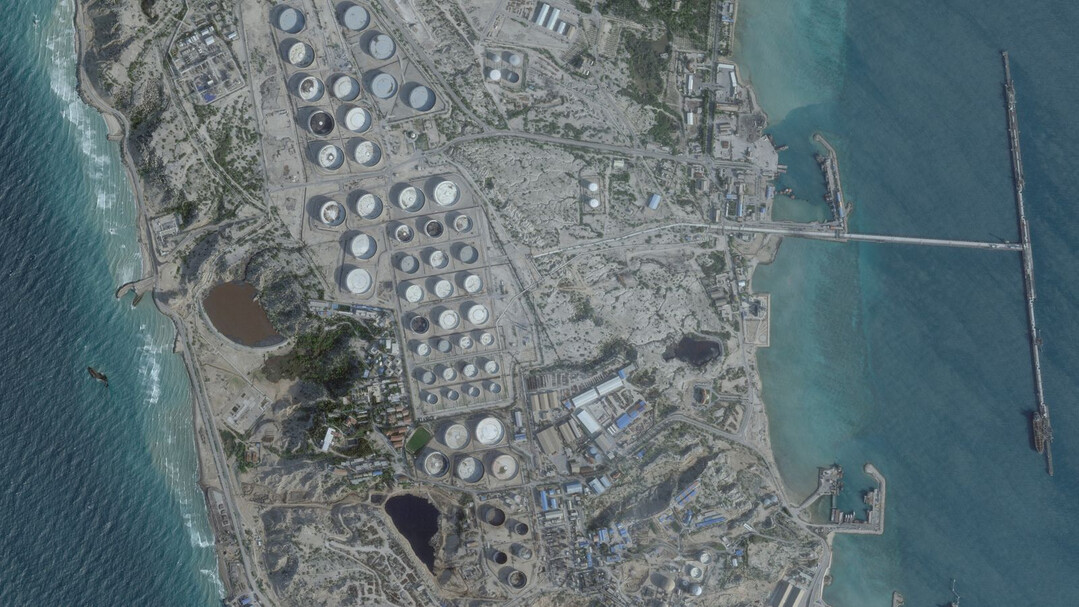
WASHINGTON D.C. / TEHRAN – In a dramatic escalation of Middle East hostilities, the United States military launched a large-scale aerial bombardment on Iran’s Kharg Island early Friday, March 13, 2026. President Donald Trump confirmed the operation, stating that U.S. Central Command (CENTCOM) successfully neutralized all designated military targets on the strategic island.
The strike is being characterized as one of the most powerful military interventions in the region’s history. Kharg Island, located in the Persian Gulf, serves as Iran’s primary crude oil export hub, accounting for nearly 90% of the country’s oil exports with a capacity of 7 million barrels per day.
“A Warning, Not an Economic Execution”
Taking to social media shortly after the operation, President Trump declared that the mission was executed under his direct orders to dismantle Iran’s defensive and offensive military capabilities on the island. However, in a calculated move to avoid a global energy catastrophe, the President noted that the island’s vital oil infrastructure remained untouched—for now.
“Our weapons are the most powerful and sophisticated in the world, yet for reasons of decency, we decided not to destroy the oil infrastructure on this island,” Trump stated. He quickly followed the remark with a stern ultimatum: “I will immediately reconsider this decision if Iran, or anyone else, attempts to interfere with the free and safe passage of vessels through the Strait of Hormuz.”
The decision to spare the storage tanks and loading terminals is seen by analysts as a "double-edged sword." While it prevents an immediate global oil supply shock, it serves as a "hostage" mechanism, keeping Iran’s economic lifeline under the constant shadow of U.S. precision-guided munitions.
The Strategic Importance of Kharg Island
Kharg Island is not merely a military outpost but the beating heart of the Iranian economy. Developed originally in the 1960s with the assistance of the American oil company Amoco, the island features dozens of massive storage tanks and extensive pier facilities capable of hosting Ultra Large Crude Carriers (ULCCs).
Connected to major mainland oil fields via an intricate network of undersea pipelines, the island also houses significant labor accommodations and an airstrip. By destroying the military installations surrounding these assets, the U.S. has effectively stripped away the island's defenses, leaving the export terminals vulnerable to any subsequent strikes.
Demands for Denuclearization and Surrender
The President’s rhetoric extended beyond the immediate military engagement, touching on the long-standing nuclear dispute. “Iran will never be allowed to possess a nuclear weapon, nor will it have the capacity to threaten the United States, the Middle East, or the world,” Trump emphasized.
He further urged Iranian military personnel and those affiliated with the regime to "lay down their arms," suggesting that their only path to survival is to protect what remains of their nation rather than continuing a confrontation with U.S. forces.
Global Markets on Edge
Despite the sparing of the oil terminals, the global energy market reacted with immediate volatility. The Strait of Hormuz is a chokepoint through which a third of the world’s liquefied natural gas and 25% of total global oil consumption pass.
Military experts suggest that this strike was a direct response to Iran’s recent attempts to blockade the Strait. By demonstrating that the U.S. can surgically remove military protection from economic hubs, Washington is signaling that the "rules of engagement" have shifted toward total dominance.
As of Saturday morning, Tehran has not yet officially responded to the strikes, though sources within the region report high-level emergency meetings within the Iranian Revolutionary Guard Corps (IRGC). The international community now watches with bated breath to see if this "sophisticated" display of force leads to a diplomatic breakthrough or an all-out regional conflagration.
[Copyright (c) Global Economic Times. All Rights Reserved.]