• 2026.11.26 (Thu)
  • All articles
  • LOGIN
  • JOIN
Global Economic Times
한인동포뉴스(상단)
  • Synthesis
  • World
  • Business
  • Industry
  • ICT
  • Distribution Economy
  • Well+Being
    • Pet Life
    • Halal Horizon
  • Travel
  • Eco-News
  • Education
  • Korean Wave News
  • Opinion
  • Arts&Culture
  • Sports
  • People & Life
    • International Student Report
    • With Ambassador
  • Column
    • Cho Kijo Column
    • Cherry Garden Story
    • Ko Yong-chul Column
    • Kim Bong-seon's Photo Column
    • Kim Seul-Ong Column
    • Lee Yeon-sil Column
    • Professor Lee Soo-young’s Life Essays
  • Photo News
  • New Book Guide
MENU
 
Home > World

South Korean Tech Firm Brings Digital Subsidies to Offline Farmers in Madagascar

Eugenio Rodolfo Sanabria Reporter / Updated : 2026-11-26 08:03:20
  • -
  • +
  • Print


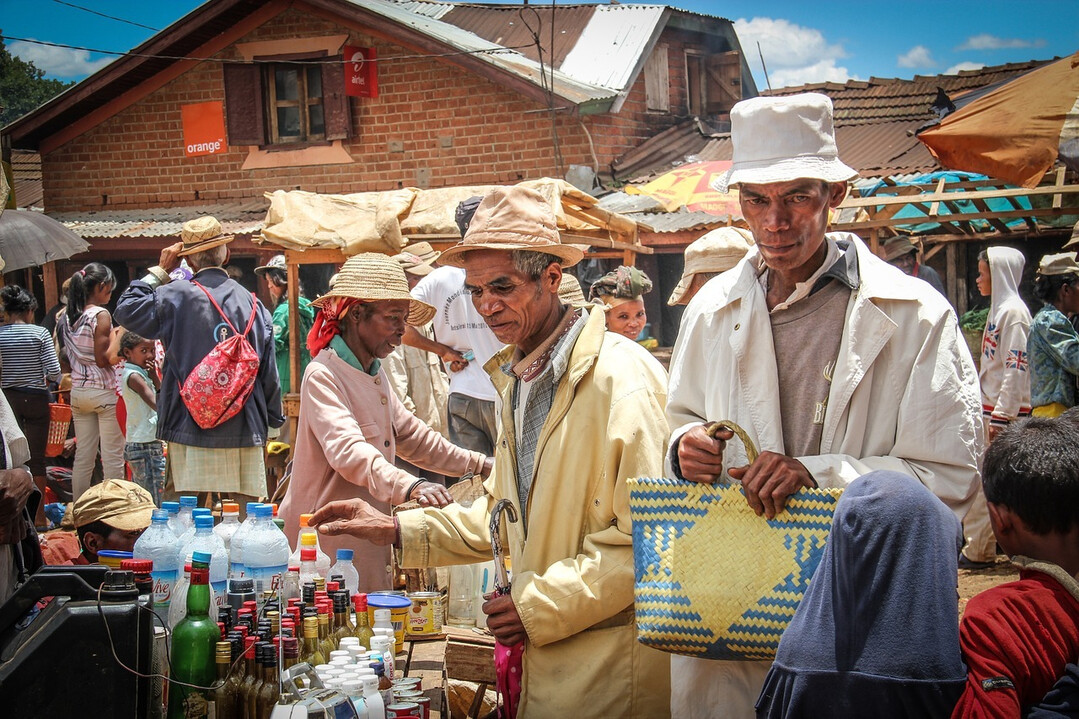
ANTANANARIVO / SEOUL — In rural Madagascar, where cellular connectivity is often nonexistent and smartphone ownership remains low, a South Korean blockchain infrastructure company has modernized agricultural subsidy distribution using offline-capable smart cards.

DSRV, a Seoul-based tech firm, has successfully scaled a digital voucher pilot program to reach 130,000 farmers across the island nation, up from an initial test group of 1,000. Supported by the Korea-World Bank Partnership Facility (KWPF), the initiative is now preparing to enter formal bidding to become a permanent national program.

Overcoming Infrastructure Gaps

Agriculture employs roughly 70 percent of Madagascar’s 33 million residents, yet traditional banking reaches only 20 percent of the population. Historically, international agencies and local authorities distributed seed and fertilizer subsidies via paper vouchers—a method plagued by counterfeiting, lost documents, administrative delays, and fraud.

When Malagasy agricultural officials and World Bank representatives visited South Korea in July 2024 seeking digital payment alternatives, DSRV pitched a solution built for low-tech environments. While a separate, parallel contract utilizing mobile apps and USSD keypad codes stalled due to poor rural telecom coverage—with nearly a quarter of farmers lacking mobile phones entirely—DSRV’s hardware-centric approach gained immediate traction.

How the Offline System Works

Rather than requiring live internet access in remote rice paddies, DSRV deployed Near Field Communication (NFC) cards paired with point-of-sale terminals that operate offline:

Delayed Synchronization: Card-to-terminal transactions take three to four seconds to log locally. Retail agents later travel to areas with cellular reception to upload batch data to a central Voucher Management System (VMS).
Biometric Security: To prevent unauthorized claims, transactions require multi-factor authentication, including fingerprint or facial scans, alongside in-person merchant verification.
Accessible Design: Interfaces rely on intuitive icons and illustrations rather than text to accommodate users with limited literacy.

To comply with local data sovereignty laws, sensitive biometric records remain housed in domestic data centers. Blockchain technology is applied selectively behind the scenes to create an immutable, auditable ledger of fund disbursements and redemptions, eliminating record tampering. Despite political upheaval in Madagascar last year that resulted in a complete cabinet reshuffle, the system remained operational and met its pilot milestones.

Expanding Across the Continent

The project reflects the founding mission of DSRV—whose name is a play on the word "deserve"—established to build financial rails for unbanked populations after its co-founders observed migrant workers relying on informal cash couriers to send money home.

Building on its track record in Madagascar, the company is expanding its footprint across Africa. DSRV recently entered an agreement with Ethiopian state-backed entity FaydaVerse to explore blockchain integration for national digital identification. In Côte d'Ivoire, the firm is partnering with major agricultural distributor FORO to develop AI-driven alternative credit scoring based on farming records. South Korean state lenders, including the Export-Import Bank of Korea, are also evaluating the model as a blueprint for future digital infrastructure exports.

[Copyright (c) Global Economic Times. All Rights Reserved.]

  • #Cherry Garden
  • #HalalFood
  • #Halal
  • #Petlife
  • #Cats
  • #Dogs
  • #Halalhorizone
  • #Hormuz Impasse
  • #Joseon
  • #globaleconomicti
Eugenio Rodolfo Sanabria Reporter

Popular articles

  • At a Crossroads: Robotaxis Caught in the Crossfire of Job Security and Innovation

  • From "Kneeling" Suppliers to the AI Era: Will Long-Term Agreements Redefine Tech’s Power Dynamics?

  • Anthropic Files for IPO with Expected Valuation of $1.5 Trillion

I like it
Share
  • Facebook
  • X
  • Kakaotalk
  • LINE
  • BAND
  • NAVER
  • https://globaleconomictimes.kr/article/1065567570755121 Copy URL copied.
Comments >

Comments 0

Weekly Hot Issue

  • Beyond the Score Sheet: Why Discarded Test Prep Reveals a Deeper Flaw in Exam-Driven Schooling
  • Beyond Costumes and Commerce: Rediscovering the Educational Value of Halloween in Korea
  • Supervision and Management of Middle and High School Internal Assessments Strengthened to CSAT Levels
  • Grassroots Group Screenings Keep Korean Film ‘Still Shining’ in Spotlight
  • LG HelloVision and CJ ENM Avert Channel Blackout Following Regulatory Mediation
  • 'Hope' Wins Best Picture at Blue Dragon Film Awards… Sol Kyung-gu and Jeon Do-yeon Sweep Best Actor and Actress

Most Viewed

1
Exercise Beats Diet in Extending Lifespan, Major Review Finds
2
South Korean Burger Chain Lotteria Expands Singapore Footprint with Halal Certification and New Teriyaki Lineup
3
AI Semiconductor Stocks Plummet: Philadelphia Index Drops 5.28% and Micron Plunges 7.59% Amid Executive Shakeup and Export Restrictions
4
"Stay Out, Get Paid, or Have Police Stay With You": Shenzhen Imposes Strict Security Ahead of APEC Summit
5
Taiwan Bans Short-Selling Below Previous Close Starting Nov. 23, Raises Margin Ratio to 150%
체리가든 스토리
nutri huevos
로타리
동포저널

Hot Issue

Surging Memory Costs Spark Pricing Disputes Across the AI Server Industry

Elon Musk and SpaceX Pledge $17.8 Billion in Stock to 'Trump Accounts' for American Youth

Washington Caps Tariffs on South Korean Goods at 15% Following Overcapacity Probe

Fashion Runway Show 2026

Let’s recycle the old blankets in Jeju Island’s closet instead of incinerating them.

Global Economic Times
korocamia@naver.com
CEO : LEE YEON-SIL
Publisher & Editor : KO YONG-CHUL
Registration number : Seoul, A55681
Registration Date : 2024-10-24
Youth Protection Manager: KO YONG-CHUL
Singapore Headquarters
5A Woodlands Road #11-34 The Tennery. S'677728
Korean Branch
Phone : +82(0)10 4724 5264
#304, 6 Nonhyeon-ro 111-gil, Gangnam-gu, Seoul
Copyright © Global Economic Times All Rights Reserved
  • News K
  • 반달곰 프로젝트
  • 광고문의
Search
Category
  • All articles
  • Synthesis
  • World
  • Business
  • Industry
  • ICT
  • Distribution Economy
  • Well+Being 
    • 전체
    • Pet Life
    • Halal Horizon
  • Travel
  • Eco-News
  • Education
  • Korean Wave News
  • Opinion
  • Arts&Culture
  • Sports
  • People & Life 
    • 전체
    • International Student Report
    • With Ambassador
  • Column 
    • 전체
    • Cho Kijo Column
    • Cherry Garden Story
    • Ko Yong-chul Column
    • Kim Bong-seon's Photo Column
    • Kim Seul-Ong Column
    • Lee Yeon-sil Column
    • Professor Lee Soo-young’s Life Essays
  • Photo News
  • New Book Guide
  • Overseas Koreans
  • Multicultural News